SpaceX wins the contract to launch NASA's StarBurst
NASA has awarded SpaceX the launch task order for StarBurst, a small satellite built to catch the first flash of gamma rays from colliding neutron stars.
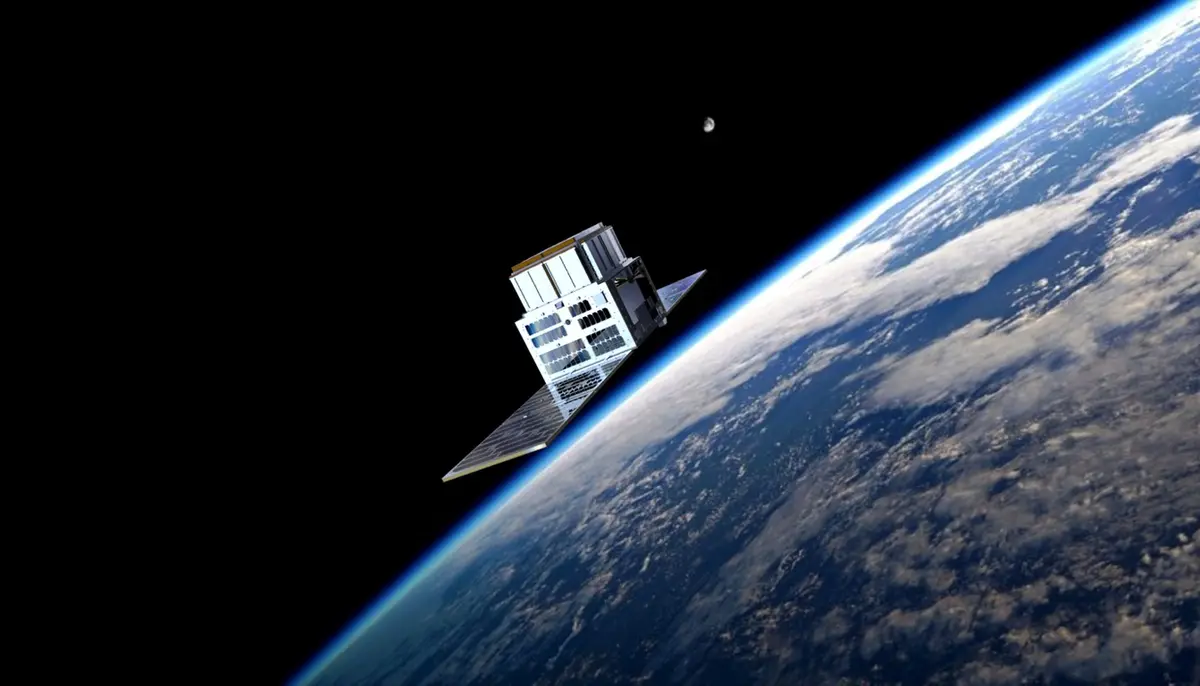
NASA has handed SpaceX the launch contract for StarBurst, a small satellite whose whole job is to catch the opening flash from two neutron stars slamming into each other. The agency announced the firm-fixed-price task order on 17 September, with the spacecraft booked to ride a Falcon 9 on a Bandwagon rideshare mission from Cape Canaveral no earlier than 2028.
What is actually going on
The task order sits under NASA's VADR contract — Venture-Class Acquisition of Dedicated and Rideshare — the agency's 10-year arrangement for buying seats on commercially operated rockets instead of owning a fleet of its own, with a maximum total value of $1 billion across all contracts.
StarBurst will launch from Space Launch Complex 40 at Cape Canaveral Space Force Station in Florida on a Bandwagon rideshare, the sort of Falcon 9 flight that carries several small payloads at once and splits the bill between them. NASA's Launch Services Program Office, based at the agency's Kennedy Space Center in Florida, manages the VADR contract.
The satellite itself comes out of NASA's Astrophysics Pioneers Program, which funds lower-cost science missions built around small spacecraft rather than flagship observatories.
Why a burst hunter is worth the ride
Short gamma-ray bursts are the universe at its most violent. They fire when two neutron stars — the ultra-dense leftovers of dead giant stars — spiral into each other and merge. StarBurst will watch the entire portion of the sky not blocked by Earth, waiting for the brief, intense spike of high-energy emission that arrives at the very start of one of those events.
The point is multimessenger astronomy: studying one event through several kinds of signal at once. If a gravitational-wave observatory feels the ripples from a merger while StarBurst catches the gamma rays, and other telescopes then chase what is left behind, researchers get a far fuller picture than any single instrument could manage on its own.
Our opinion
The quiet victory here is procurement. NASA has spent years turning launch into something closer to a commodity purchase — a $1 billion ceiling across a decade of VADR task orders, rides shared between payloads, and no rocket of its own to maintain. That model is exactly why a satellite the size of a large fridge can get a serious science mission off the ground at all.
It also explains why SpaceX keeps winning these small awards without much fuss. When the launch is essentially a delivery van and the payload is the interesting part, the cheapest reliable ride wins, and NASA gets to spend its money on instruments rather than on standing launch infrastructure.
The catch is that NASA is not saying what this particular task order costs, and "no earlier than 2028" is a target rather than a date. StarBurst's real test will not come on the launch pad either: it is whether a merger happens close enough, at the right moment, for the satellite and the gravitational-wave detectors to catch the same event. Astronomy has always leaned on that kind of luck. At least this time NASA has bought the ticket cheaply.
- SpaceX launches StarBurst on a Falcon 9 rideshare, no earlier than 2028
- Firm-fixed-price task order under NASA's VADR launch services contract
- StarBurst watches the whole sky for short gamma-ray bursts from merging neutron stars