Arctic melt season lengthening stalls after 2010
A NASA-led study finds the Arctic's sea ice melt season is now about 40 days longer than in 1979, but the lengthening largely stopped around 2010.
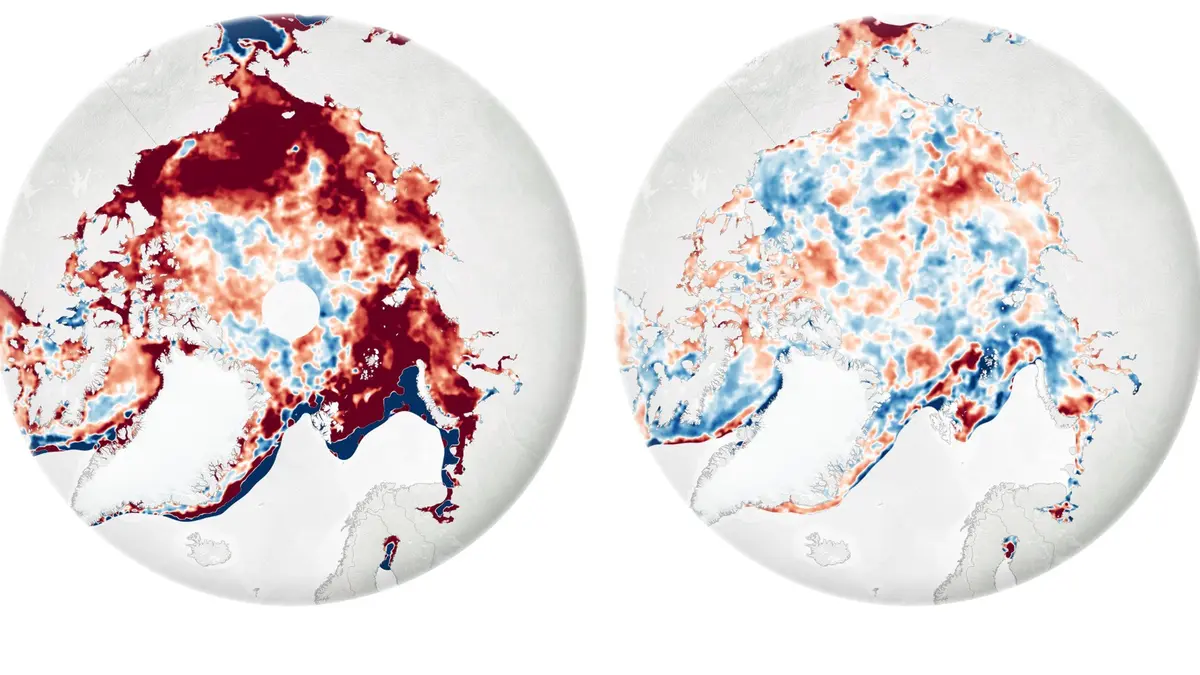
The melt season runs 40 days longer than it did in 1979
NASA's Earth Observatory published its Image of the Day for 21 September 2026 on a piece of Arctic science that reads like good news and probably is not. A NASA-led study of the satellite record has found that the Arctic sea ice melt season is now about 40 days longer than it was in 1979, but that the lengthening which defined the 2000s has largely stalled since 2010.
The researchers looked at satellite observations taken between 1979 and 2023, tracking when sea ice begins to melt each spring and when it refreezes in autumn. The extra weeks in the melt season were not added at the start: the change has been driven mainly by ice freezing later in the year rather than by it melting earlier, which is a different problem from the one most people picture when they think about a shrinking Arctic.
Why the lengthening stopped
To explain the plateau, the team worked through the Arctic's energy balance - the net difference between heat arriving from the Sun, the atmosphere and the ocean, and the infrared radiation the region sends back to space. Through the rapid ice loss of the 2000s, thinning cover exposed darker ocean water that soaked up more sunlight. That extra solar energy delayed freezing and stretched the melt season. In the decade's fastest-changing areas the reddest patches on the left-hand map above mark growth of up to five days per year.
Since 2010, the picture has been flatter. Changing cloud patterns have cut the amount of sunlight reaching parts of the Arctic Ocean, and the maps reflect it: the right-hand decade mixes lighter reds with pale blues instead of the deep reds of the 2000s. The ice that is left is younger and thinner than the multiyear ice the ocean once held all year, which leaves it far more exposed to cloud cover, storms and wind - so the season swings about from one year to the next even while the long-term trend sits still.
A pause, not a recovery
"Previously, there was more of this multiyear ice that didn't melt away each summer," said Linette Boisvert, a co-author on the study and an ice scientist at NASA's Goddard Space Flight Center. "Now that the ice is thinner and there's less of it, there's a lot more variability." Boisvert added that melt season length is "much more dependent on atmospheric effects" than it used to be, and that those effects "seem to be playing a bigger role because the ice is generally thinner and more vulnerable to begin with."
NASA is explicit that none of this means the Arctic has stopped responding to climate change. The region is still warming nearly four times faster than the global average, and the surviving ice is much thinner than it was a few decades ago. Thick ice persists year-round north of Greenland and the Canadian Arctic Archipelago, and further thinning there could set off another stretch of rapid loss. Whether the last fifteen years are a lasting change in the melt season or just a pause before the next one is an open question. The study itself appeared in Communications Earth & Environment in April 2026; the observatory's write-up and its two maps, produced by Michala Garrison from the study's data, were published on 21 September.
Our opinion
The sober reading of this is not that the Arctic has turned a corner but that we have lost the most reliable signal we had. Melting earlier and freezing later were trends you could put on a slide; what replaced them is a thinner, younger ice pack whose season now depends on whether a given autumn was cloudy, stormy or windy. That is worse for prediction, not better, because it moves the Arctic's behaviour out of the tidy physics of a warming surface and into weather. Anyone tempted to quote the plateau as evidence that ice loss has levelled off should read the next paragraph first: the same thinner ice is what makes another rapid decline possible, and the researchers say so plainly. A paused trend in a region warming nearly four times faster than the global average is a place to keep watching, not a reason to stop.