NASA gets seven states to grow its own technicians
NASA has stood up State Hubs in seven states, tasking colleges and universities with training the aerospace technicians its supply chain cannot hire fast enough.
Seven states sign up to build NASA's technician pipeline
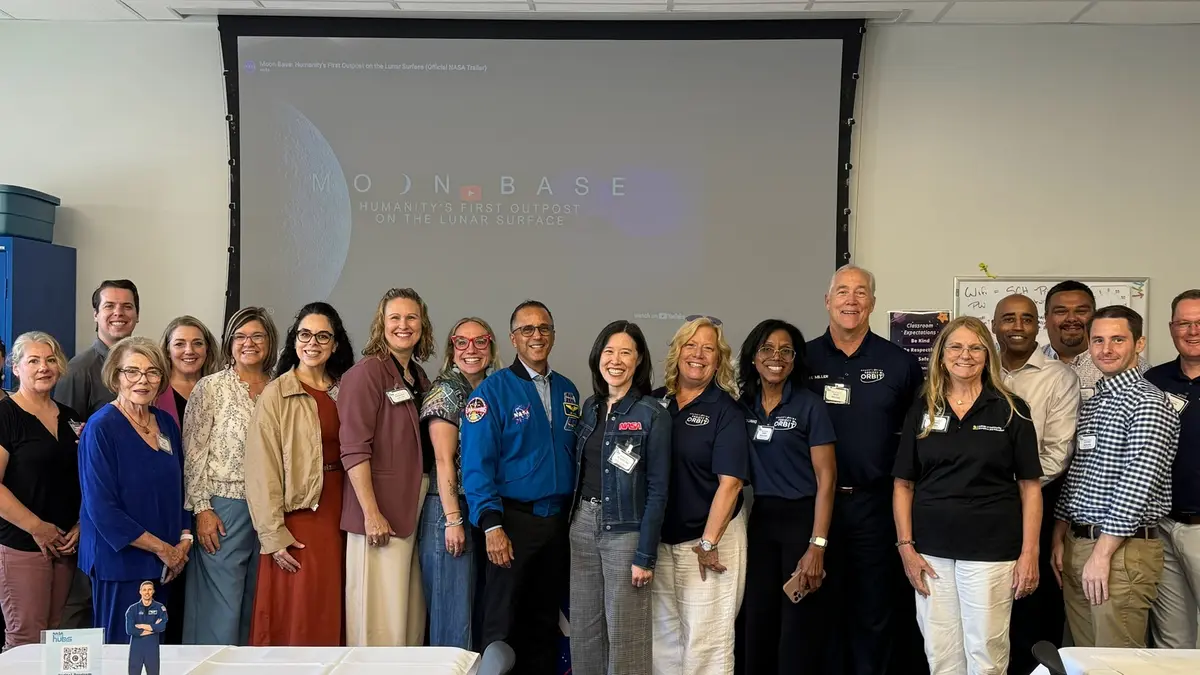
NASA has published its account of a workforce meeting it held at Space Center Houston on 15 September 2026, and the gathering marks the start of something larger than a workshop. The agency's State Hubs for Skilled Technical Workforce initiative now runs in seven states - California, Colorado, Florida, Georgia, Minnesota, Texas and Utah - with the seven projects chosen in August and the awardees brought together this month to compare notes on workforce needs, credentials and hiring trends.
The phrase to pay attention to is "skilled technical workforce". NASA is not talking about PhDs or mission scientists. It means the science- and engineering-based roles that keep a launch campaign on schedule without requiring a bachelor's degree: the welders, machinists, inspectors, electronics technicians and propulsion test crews that the agency and its suppliers need in volume. Each state Hub is meant to act as the coordination point between NASA's industry partners, education providers and state or regional economic development agencies, so that training matches what employers are actually hiring for.
What each state is building
The awardees are a deliberately varied set. Antelope Valley Community College District runs the Southern California NAS_Hub, building stackable pathways from high-school career and technical education into college programmes, micro-internships, cooperative education and registered apprenticeships, with credentials mapped across eleven disciplines including composites fabrication, non-destructive inspection, precision metrology, machining and electronics.
Georgia Tech Research Corporation leads SE-STARS, the Southeast Space Technology & Aerospace Readiness Skills Hub, with the Georgia Space Grant Consortium, the Technical College System of Georgia, Georgia Southern University and a network of college and career academies. It scales Georgia Tech's Starfleet Academy space-relevant courses - more than three dozen hands-on courses in avionics, propulsion, advanced manufacturing, systems testing, machining and assembly - across a technical college system with 22 colleges and 88 campuses, on a three-year delivery plan.
Minnesota State Colleges and Universities runs the MnASTW hub, leaning on Dakota County Technical College for welding and advanced manufacturing, Pine Technical & Community College for machining, automation and robotics, and Ridgewater College for non-destructive testing. Southern Utah University's Utah NAS_Hub builds on the state's Aerospace & Manufacturing Pathways programme and the 47G industry group, and folds in NASA HUNCH. Space Florida's Project ORBIT promises a statewide talent portal; Colorado's State Board for Community Colleges and Occupational Education, hosted by Arapahoe Community College, is using the Colorado Space Institute to launch what it calls the first Associate of Applied Science in Space Science; and the Texas Space Commission's Texas Space STEM Alliance plans a TAP+ registry of internships, apprenticeships and scholarships with an adult-education and veteran-reskilling arm.
The constraints NASA named out loud
What makes the Houston readout more useful than the average ribbon-cutting is the list of problems the agency put in writing. NASA says the meeting discussed limited coordination between industry, community colleges and state economic development entities, difficulty scaling job programmes beyond their pilot phase, and misconceptions about manufacturing jobs. Those are not curriculum problems. They are plumbing, politics and marketing problems, and they are the usual reason workforce programmes of this kind produce impressive course catalogues and modest placement figures.
"The NASA State Hubs initiative is a top priority for the agency, because we know the space economy is really accelerating across the country," said Elaine Ho, associate administrator for NASA's Office of STEM Engagement at NASA Headquarters in Washington. "It's energizing to watch our partners come together to put real plans into action to help students advance into well paying, rewarding technical jobs. I am excited about what's ahead."
What is not settled
There are no funding figures in the release, and NASA does not publish a per-state budget here; the mechanics sit with the 2026 Cooperative Agreement Notice on the programme page. Delivery is still ahead rather than underway - awardees will finalise approaches and begin delivering programming, tools and resources "in the coming months", with Georgia and Utah describing three-year build-outs. Placement data, which is the only measure that matters, does not exist yet.
Our opinion
Buying coordination instead of training is the more interesting half of this idea, and it is also where the risk sits. Every state in this list already has technical colleges and every one of them already advertises aerospace programmes; what they lack is a reason for an eighteen-year-old to believe that a two-year credential leads to a job with a future, and a mechanism that tells employers which credential they should be recruiting against. Utah's employer advisory structure and hiring agreements tied to validated competencies are the part worth copying, because they put the burden on the people doing the hiring rather than on the students being trained. The telling omission is money on the table per state and a number for how many technicians this is supposed to produce. A workforce programme with seven hubs, no placement data and no budget line in the announcement is a promise that will be judged, fairly, on whether next year's intake of machinists and inspectors actually turns up - and NASA, of all employers, should know better than to flight-test a programme without instrumentation.