NASA and Boeing test sensors that watch the runway
Field tests at NASA's Ames Research Center had aircraft taxiing on digital routes and onboard sensors flagging a vehicle sitting on a runway, work the agency now wants to rehearse inside a simulated air traffic control room.
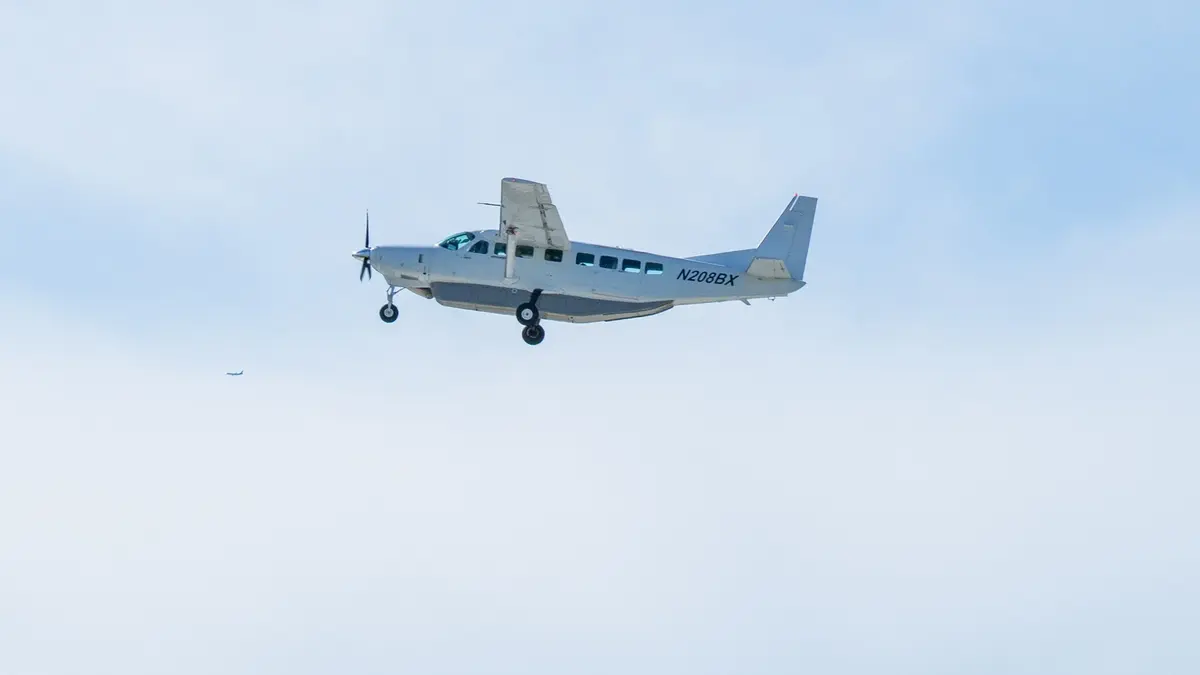
NASA has finished a set of field tests at its Ames Research Center in California's Silicon Valley that point towards a quieter, less error-prone airport. Working with Boeing, researchers advanced three strands of work at once: digital taxi information, safe taxiway and safe runways. All three target the same crowded stretch of ground, where aircraft, ground crews and service vehicles share tarmac that was never designed for the traffic now crossing it.
Three problems, one crowded tarmac
Large airports are among the busiest and most complex environments in aviation, and much of the friction happens before a wheels-up or after a wheels-down. A misheard clearance, a service vehicle in the wrong place or an aircraft waiting on a taxiway can cascade into delays that follow a flight for the rest of its day. In March 2026, testing at Ames demonstrated autonomous technology that could identify an incursion - a vehicle, a wayward suitcase or any other object that could affect an aircraft's safe landing - before it reached the runway.
Digital taxiing, without the radio
During the digital taxi tests, pilots were given taxiway guidance directly on cockpit displays or tablets instead of hearing it spoken by air traffic controllers. Aircraft followed digital routes on their own while researchers monitored a suite of sensors built to spot vehicles or other aircraft impeding the taxi path and the runway. NASA says the system reduced workloads for both pilots and controllers, and cut the risk that comes with a verbal exchange that can be misheard or read back wrongly on a busy frequency.
A sensor that flagged a vehicle on the runway
Safe runway testing works on what an approaching crew can see and know. While preparing to land a Boeing aircraft during the trials, the same sensors successfully flagged a vehicle sitting on the runway, handing the crew awareness they would not otherwise have had and room to avoid a potential collision. The next stage folds the sensor and digital taxi systems into a simulated air traffic control environment, where NASA can measure how they change the management of the wider airspace rather than a single aircraft's path.
"Aviation safety is key to NASA's research," said Parimal Kopardekar, director of NASA's Airspace Operations and Safety project. "Technology that can provide additional autonomy and support a future airspace with multiple aircraft operating in harmony is key to advancing the National Airspace System."
Some of it has already left the laboratory
In 2025, NASA worked with Boeing, United Airlines and international partners to evaluate real-time trajectory sharing on domestic and transoceanic flights. A United Airlines Boeing 737 sent frequent flight updates to airline operations centres and air traffic control while NASA studied how often those updates should be sent and which details matter most for an accurate arrival prediction. Better information lets controllers sequence traffic more precisely, which means fewer holding patterns and more direct descents for passengers.
Pre-departure rerouting technology and digital exchange tools developed at NASA let dispatchers and controllers see the same digital picture of flights preparing to depart. When a better route becomes available, the change could be coordinated digitally rather than by voice between pilots, controllers and dispatchers, which the agency expects to mean fewer delays, reduced fuel consumption and more predictable operations. NASA has handed the routing technology to the Federal Aviation Administration, and airlines will continue to test it.
Our opinion
The compelling part of this work is not the autonomy, it is the handover. NASA has spent years proving that a machine can watch a taxiway, and the release offers no measurement to back the claim that workloads fell - no controller time saved, no count of caught incursions, no false-alarm rate. For a technology whose whole case rests on being more reliable than a radio call, the missing number is the story. The FAA transfer is the more revealing line, because rerouting only pays off once every airline's dispatch desk is looking at the same picture, and that is an integration problem rather than a research one. Watch whether the simulated control room tests publish their results in the same detail NASA has always published its flight data, because that is the standard this agency is judged against.