Croatia becomes the 74th Artemis Accords signatory
Croatia signed the Artemis Accords in Zagreb on Wednesday, becoming the 74th country to back NASA’s framework for peaceful lunar and deep-space cooperation.
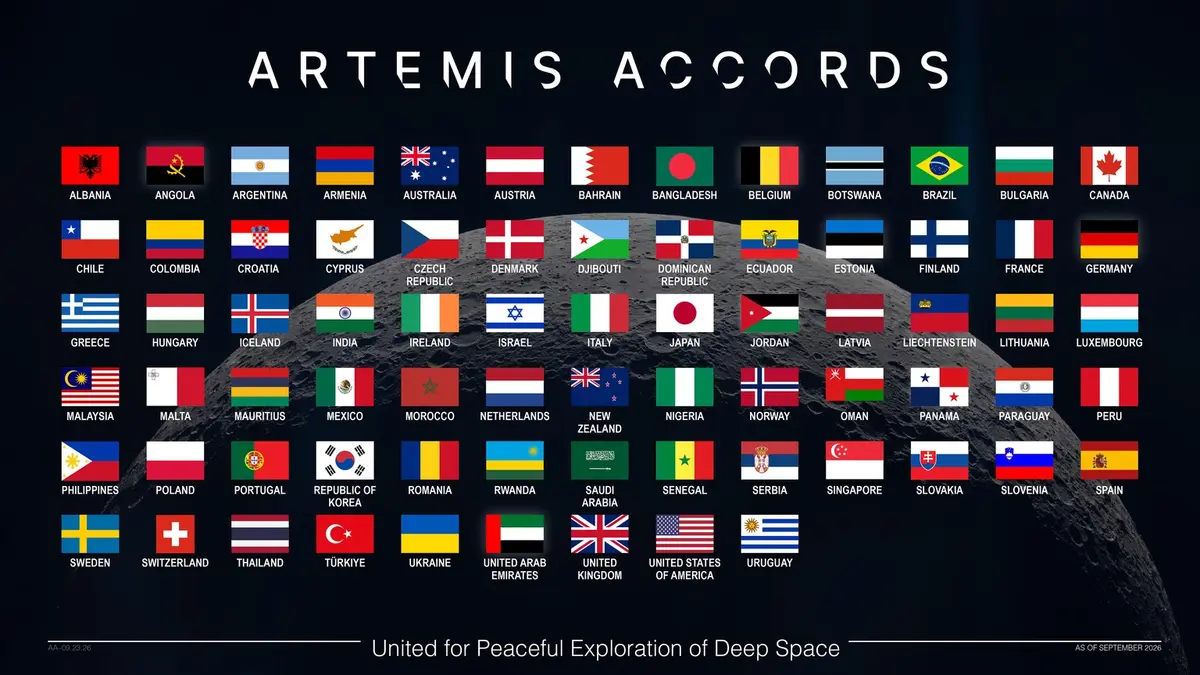
Croatia became the 74th country to sign the Artemis Accords on Wednesday, with the agreements signed at the science ministry in Zagreb in front of US and NASA officials. Radovan Fuchs, the country’s minister of science, education and youth, signed for the Croatian government, alongside US Ambassador Nicole McGraw and Gregory Mann, NASA’s representative in Europe.
What Croatia signed up to
The Accords were established in 2020 by NASA, the US State Department and seven other founding nations as the first set of practical principles for transparency, safety and coordination as countries and companies turn to the Moon, Mars and beyond. Signatories commit to explore peaceably and transparently, render aid to those in need, enable access to scientific data, avoid interfering with one another’s activities, and preserve historically significant sites and artifacts. “Joining the Artemis Accords opens another chapter,” NASA deputy Matt Anderson said in pre-recorded remarks played at the ceremony. “The opportunities to contribute are growing. And now we can look toward what the United States and Croatia can accomplish together beyond Earth.”
A satellite, not just a signature
Croatia arrives with hardware rather than only enthusiasm. Its first satellite, CroCube, reached orbit aboard a SpaceX Falcon 9 in December 2024, and Fuchs framed the accession as an investment in domestic capability. “Croatian scientists and companies are demonstrating growing interest in the space industry,” he said. “We have therefore decided to expand our international cooperation by joining the Artemis Accords. This international agreement has been recognized as a key opportunity for the robust development of Croatia’s scientific community, the introduction of new technologies, and the strengthening of the economy.” The ministry’s own account of the ceremony adds Hrvoje Meštrić, head of its science and technology directorate, to the signing party, and it notes that the agreements cover cooperation on the Moon, Mars, comets and asteroids for peaceful purposes.
Our opinion
Accession stories usually arrive with a flag, a photograph and a promise, and the reader is left to guess what the country actually brings. Croatia is a slightly better case than most, because it has already put something in orbit: CroCube rode a Falcon 9 to space in December 2024, and its minister’s statement talks about scientific capacity and technology transfer rather than prestige alone. The ceremony itself was still a ceremony. US Ambassador Nicole McGraw attached the signing to 250 years of American independence, which is a lot of history to hang on a document about sharing data.
The Accords are a framework of principles rather than a funded programme, and their value is decided later, by whether the data sharing and the cooperation turn into instruments and missions. The membership count is the easy number to report, and it keeps climbing: Albania was the 73rd, Croatia is the 74th. The harder question is whether the newer names on that list end up doing lunar science or simply signing up for it. Croatia has a satellite and a ministry that talks about building an industry, which puts it ahead of several countries above it on the register. The signature is the easy half.