Unity opens Simulation Pro early access for robotics teams
Unity has opened early access to Simulation Pro, a robotics package that brings robot import, sensor simulation and ROS 2 support into one supported toolkit for Unity Industry customers.
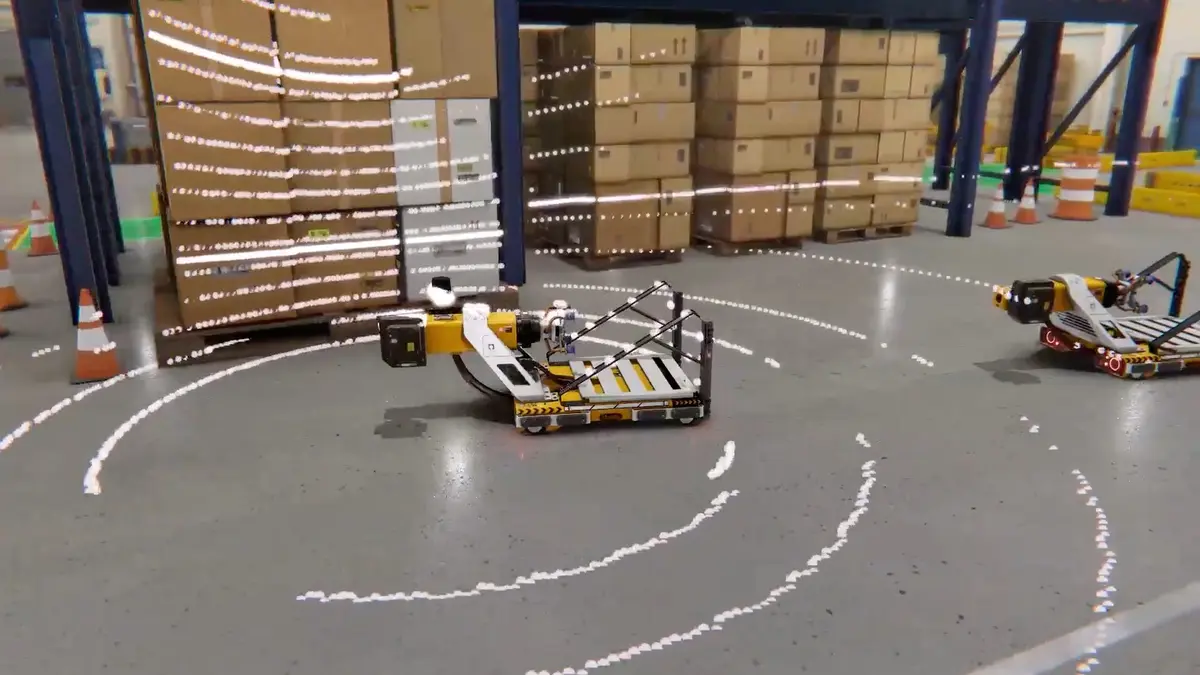
Unity is trying to sell robotics teams a shortcut through the tedious part. The engine maker has opened early access to Unity Simulation Pro, a package that imports a robot's existing physical description, simulates its sensors and talks to ROS 2 without a team rebuilding any of it by hand first.
What Unity has actually shipped
Simulation Pro needs Unity 6.3 or newer and a Unity Industry licence. Inside it are four things robotics teams have historically solved separately: a drag-and-drop URDF importer that pulls a robot's kinematic chain into the engine intact, out-of-the-box simulation for LiDAR, camera and inertial measurement unit sensors, ROS 2 compatibility for hooking into Robot Operating System 2 stacks, and a headless Linux build target so simulations can run in parallel on hardware with no display attached.
Unity's chief operating officer, Alex Blum, framed the package as the foundation the company's industrial customers kept asking for. “Robotics teams came to Unity because they needed real-time rendering, accurate physics, and sensor simulation they could trust,” he said. “Simulation Pro is that foundation, and Unity Industry customers can access this today.”
The teams already doing this the hard way
Two case studies in Unity's announcement show what the package is meant to replace. TIER IV, which builds open-source autonomous driving software, assembled AWSIM in Unity to test its Autoware stack, and some scenarios run eight or more cameras at once. Getting there took staggered rendering across cameras, time-scale controls and hardware-in-the-loop work that replays raw sensor packets, all of which cut physical test vehicle hours.
The Korea Institute of Industrial Technology had a harder problem: training data for AI that has to understand how people and robots share a factory floor, when a well-run plant is deliberately laid out so that close calls never happen. With no CAD files to work from, the team rebuilt a metal casting plant as a digital twin from point cloud scans and generated more than 100,000 pre-labelled frames in 14 weeks.
Why robotics is worth this much attention
Simulation has become the choke point for anyone training machines that move. Real-world testing is slow, expensive and occasionally dangerous, so the work shifts into engines that can fake sensors convincingly enough that software trained inside them still works on the other side. That is a different business from selling a game engine, and it is one Unity has been quietly building around its Unity Industry licence for years.
Our opinion
Unity's industrial story has always been stronger in slide decks than in products, and Simulation Pro is the first attempt in a while to sell a workflow rather than an engine. Bundling URDF import, sensors and ROS 2 into one supported package answers the complaint that has dogged Unity in robotics for years: that everything works, but only after your team has spent six months gluing it together.
The detail that matters most is the least glamorous one. A headless Linux build target is what lets a simulation live in a continuous integration pipeline instead of on somebody's workstation, and that is the difference between a demo and infrastructure. Whether teams abandon their Gazebo and ROS setups for it will depend on how the licence maths works out, but with the early access framing Unity is at least admitting this is a product in progress rather than a finished platform.