California's data centre laws put operators on the hook
California has signed seven data centre laws that force operators to disclose water and electricity use, fund grid and water upgrades, and prove a project will not push costs onto ratepayers.
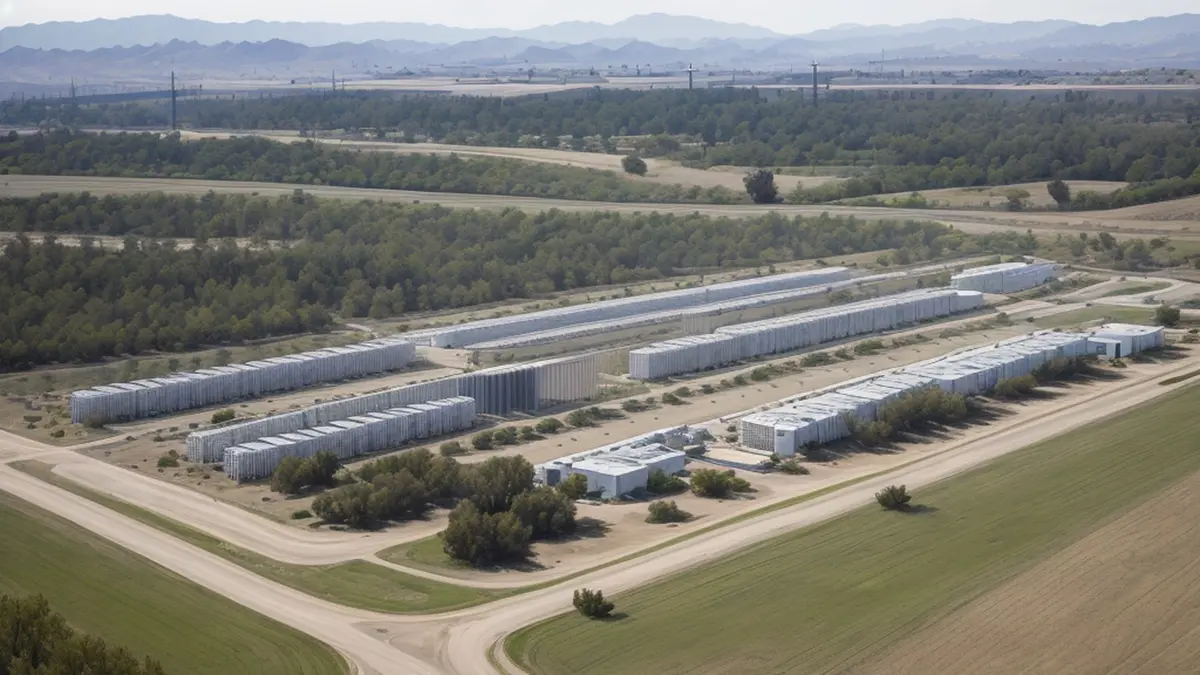
Seven laws make California's data centres pay their own way
California has signed seven bills that change what a data centre has to prove before it can plug in. Governor Gavin Newsom signed the package on 21 September 2026, and the effect is to make operators disclose how much water and electricity a proposed campus would consume, pay for the grid and water upgrades it needs, and give up the blanket environmental exemptions that used to hurry large projects through review.
The Governor's office describes the set as the most comprehensive data-centre laws in the country, and frames it against federal deregulation: its release says California is acting while communities elsewhere are left to absorb higher electricity demand, grid constraints, water use and pollution. The legislative record backs the signing date - California's Legislative Information service lists SB 886, the California Technology Innovation and Ratepayer Protection Act, and AB 1577 as chaptered on 21 September 2026.
What the laws actually change
On electricity, data centres are required to pay their fair share of grid upgrade costs while cost shifts onto low-income customers are blocked. They must also comply with California's energy procurement requirements, bring new clean energy supply onto the grid and cover the cost of any upgrades the project triggers.
On water, a proposed data centre has to give local governments and water suppliers information about its water use, supply, efficiency and drought planning. Where upgrades are needed to supply that water, the data centre pays for them rather than the ratepayer.
On land use, data centres lose eligibility for blanket environmental exemptions. A project must show it will not shift costs onto ratepayers and must meet state standards on energy, water and fuel consumption before any judicial streamlining can be approved - which turns the fast lane into an exam.
The seven bills
AB 1577, by Assemblymember Rebecca Bauer-Kahan (D-Orinda), covers data-centre reporting. AB 2383, by Assemblymember Rick Chavez Zbur (D-Hollywood), deals with electricity and data centres. AB 2469 and AB 2619, both by Assemblymember Diane Papan (D-San Mateo), cover water use disclosures and water resources respectively. SB 886, by Senator Steve Padilla (D-San Diego) and Senator Jerry McNerney (D-Pleasanton), is the California Technology Innovation and Ratepayer Protection Act. SB 887, by Padilla, amends the California Environmental Quality Act for environmental leadership development projects covering data centres and geothermal power plants. SB 1168, by McNerney, addresses data-centre rate structures.
What Newsom said
"With these laws, we are ensuring that Californians remain in the driver's seat - and that those profiting from data centers aren't doing so at our expense," said Governor Gavin Newsom. The release carries no other named quote, so the rest of its language is the Governor's office speaking rather than a person.
What is not settled
There are no cost figures in the package and no rulemaking timetable. The release names no deadline for the California Public Utilities Commission to turn SB 1168's rate structures into tariffs, and it does not say what the disclosure filings will look like in practice or which agency will publish them. Enforcement therefore sits with the existing regulators, and the industry's response is absent from the release altogether: no trade group or operator is quoted, and no project has yet been tested against the new standards.
Our opinion
Disclosure is the cheap half of this package, and it is the half that will get done first. A filing requirement costs a data centre a few lawyers and a spreadsheet; paying for a substation or a water main costs real money, which is why SB 1168's rate structures are the bill to watch. The phrase "fair share" is doing a lot of work in a state where the same commission that sets industrial tariffs also has to keep the lights on for everyone else, and the failure mode is familiar: a campus negotiates a special contract, the disclosure form is filed on time, and the number in the spreadsheet becomes the story instead of the number on the bill.
The land-use provision is the sharper instrument. Stripping blanket exemptions means a data centre has to survive the same queue as anything else unless it can demonstrate it is not passing costs to ratepayers - and that is a test an operator can fail on the paperwork before a single acre is graded. If these seven laws produce nothing else, they should at least end the assumption that a hyperscaler campus is automatically a public good with a fast pass attached.