Google Play adds prepaid metered billing and cross-app subscription bundles
Usage-Based Billing lets AI apps top up a prepaid balance automatically, seat-based purchases arrive for teams, and two developers can now sell one bundled subscription.
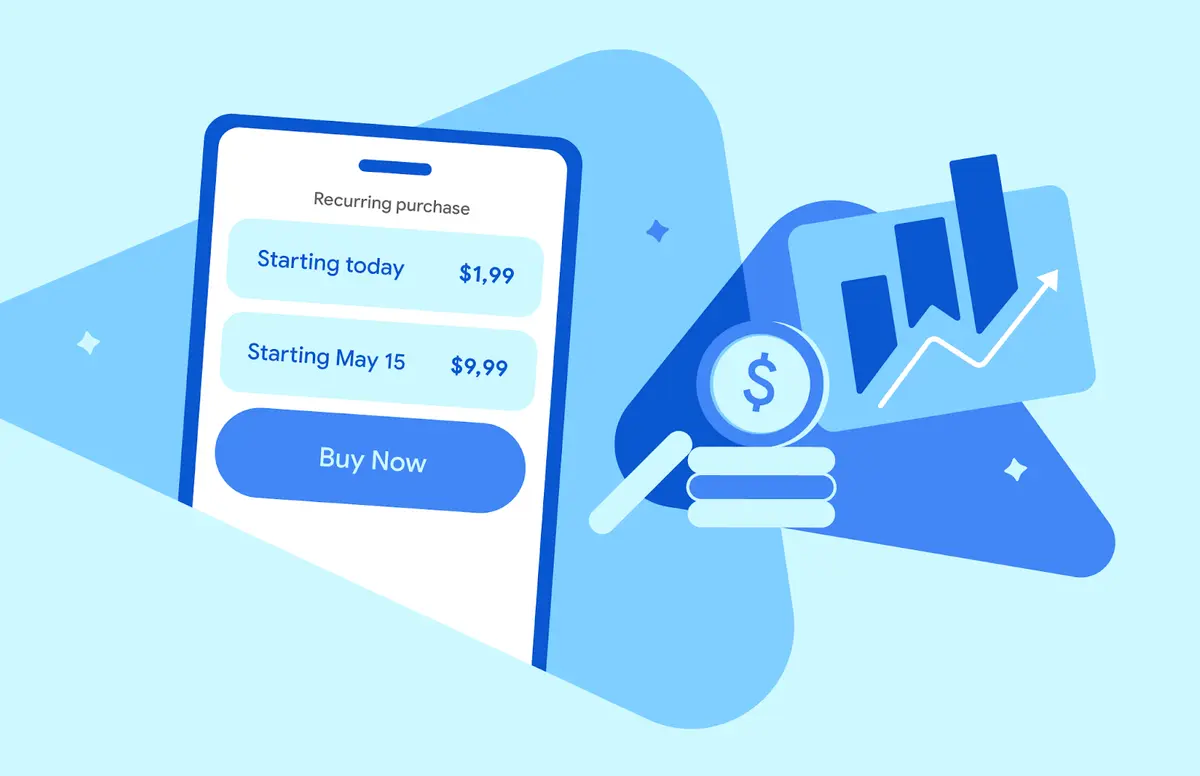
Google is rebuilding the plumbing of the Play Store subscription, and the clearest signal of where the money is heading is who the new tools are aimed at: apps with variable computing costs, which in practice means anything running a model.
Prepaid credits instead of a monthly allowance
Usage-Based Billing, set out in a post by Google Play senior product manager Sheenam Mittal on 29 September, sets up prepaid metered billing: users top up a balance automatically whenever it drops below a set threshold. For a generative AI tool, where every generation carries a real cost, that replaces the current compromise of selling a fixed monthly allowance and then throttling anybody who exceeds it. Google frames it as protecting margins as well as keeping the service running.
Multi-Quantity Subscription Purchase goes the other way and sells subscriptions as seats, so a business, a school or a team can buy several in a single transaction and allocate them to members. Cross-Developer Bundling allows a hard bundle of two or more subscriptions inside one catalogue, either with partner developers or across a developer's own apps; Google's example is a language learning membership packaged with a partner's premium travel guide subscription at a combined discount. Mixed Carts then lets an auto-renewing subscription and a one-time purchase go through a single checkout instead of two, which is where the upselling starts.
The quiet half of the announcement is about failed payments
The rest is retention engineering. The In-App Messaging API, available to all developers, lets an app tell users inside the app when a payment has declined or a price is about to change rather than hoping an email lands. Dynamic Grace Period uses machine learning to decide how long each subscriber gets to fix a failed payment before the service stops, adjusting the account hold that follows so the total recovery window stays as configured. Retention Offers put developer-funded discounts into the cancellation flow, with a downgrade to a cheaper plan offered to anyone who does not qualify, and Winback Offers reach lapsed subscribers on the Play Store rather than by email or push notification, which is the only channel that survives an uninstall.
Google also describes background work that requires no developer effort at all, including retrying payments, cycling through backup payment methods for users who opt in, reminders during grace periods and fraud prevention around promotional offers. Several of the capabilities are in active testing with select partners through its Early Access Program before a wider rollout in Play Console.
Our opinion
Metered prepaid credit is the part that will outlast the rest, because it moves the awkward conversation about cost from the middle of a session to the moment of top-up. Subscriptions were built for services where usage is roughly flat; AI tools break that assumption every time somebody leaves a long document on a prompt, and prepaid balances are the first billing model from a major store that admits it. Multi-quantity seats are the quieter land grab: a consumer storefront is quietly asking to be an enterprise procurement channel, and schools and studios are exactly the buyers who will not notice they have stopped comparing prices. The retention machinery deserves a harder look, since developer-funded discounts and machine-learned grace periods shift the cost of a failed payment onto the developer while Google keeps the transaction. None of this is sinister, but the maths is lopsided, and the studios doing the arithmetic are the small ones.