The Gifted wins Google and XPRIZE's AI film contest
A solo filmmaker takes the top prize in a competition built around optimistic science fiction, collecting $100,000 and a $2.5 million production budget to turn a short about a boy who rebuilds his mother's voice into a feature.
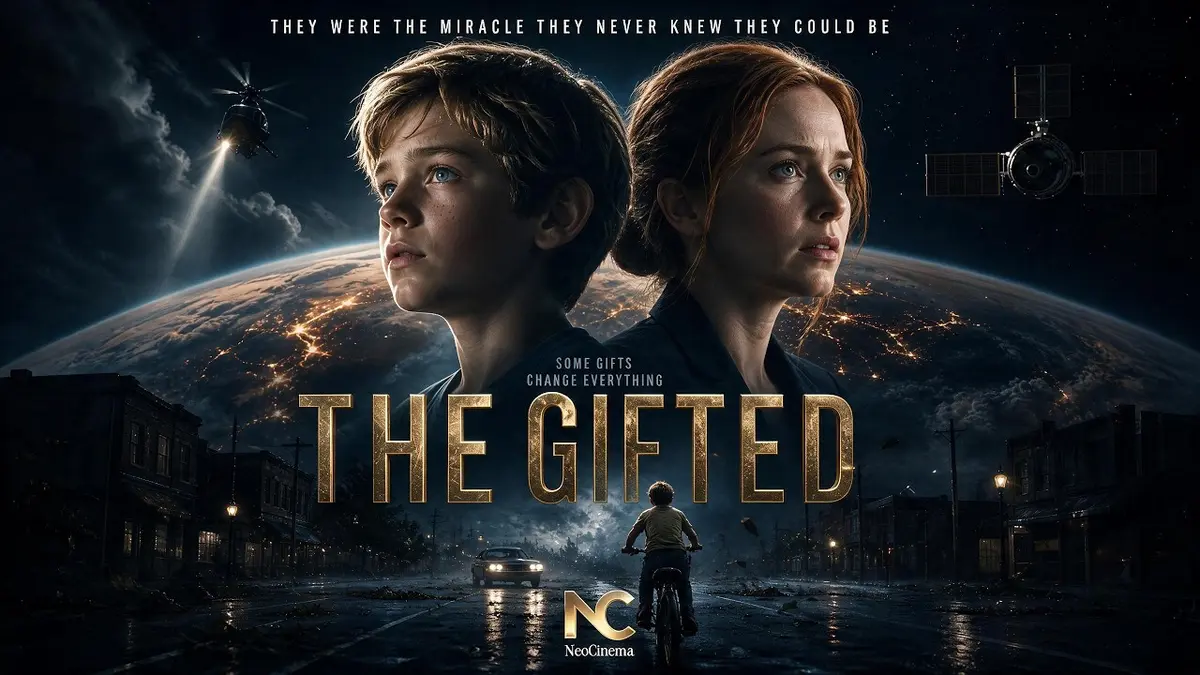
Google has named the winner of the Future Vision XPRIZE, the competition it launched this year with XPRIZE and Range Media Partners to find films that picture a hopeful, technology-enabled future. The grand prize went to The Gifted, a short film by the independent filmmaker Jeff Synthesized, who was named the winner at an event in Los Angeles.
The film centres on an 11-year-old boy who rebuilds his late mother's voice and essence out of love and code. What emerges across the town's networks begins quietly looking after the people around him. Google describes that idea as the filmmaker's own belief that technology's greatest promise lies in empathy and human connection, rather than in the capability itself.
A short film with a feature budget behind it
The Gifted was chosen from more than 2,500 entries sent in from around the world. The winner receives $100,000 in cash along with $2.5 million in feature production funding, and Google says it will work with Range Media Partners through its 100 ZEROS initiative to help bring the story to the big screen. The winning trailer has been published on the filmmaker's own YouTube channel, where the film is credited to a single creator rather than to a studio team.
What the competition asked for
The brief was unusual for a technology prize in that it was handed to storytellers rather than to engineers. Entrants were asked for films that imagine a future in which technology works in people's favour, and the competition sat alongside XPRIZE's existing challenges in health, quantum applications, water scarcity and wildfire detection. Runners-up were announced earlier as the competition was narrowed to its five finalists, with XPRIZE publishing the judging panel ahead of the final decision.
For Google, the competition doubles as a piece of positioning. Its Gemini developer hackathon, Build with Gemini, runs as a separate XPRIZE challenge with a $2 million prize pool, and the two competitions now share a stage on XPRIZE's list of current challenges. Both are attempts to attach large language models to projects the public might actually want to watch or use, at a moment when most coverage of the technology is about what it might take away.
Our opinion
The interesting number here is not the $100,000 cheque, it is the $2.5 million attached to it. Cash prizes for short films rarely survive contact with a producer's spreadsheet, whereas a funded feature slot is the thing that actually converts a competition win into a career. That structure is also a hedge: Google and Range Media Partners get a film made on a brief they wrote, and the filmmaker gets a budget without having to pitch a studio that is already nervous about anything touching artificial intelligence.
The risk is the brief itself. A competition that asks only for hopeful futures will attract hopeful futures, and a prize pot that rewards a particular emotional register tends to produce the same film twice. That said, picking a single creator working alone over 2,500 other entries, and then handing that creator the money to scale the idea up, is a wager worth watching. The verdict will not be the award but the feature version: if a story about a boy rebuilding a voice out of code can carry 90 minutes without the premise doing all the work, the competition will have found something the industry's own committees keep missing.