Dyson CameraJet puts a camera and mouthwash jet inside a US$499 toothbrush
Dyson’s new CameraJet uses a camera and machine learning to target gaps between teeth, but its plaque-removal claims still need independent scrutiny.
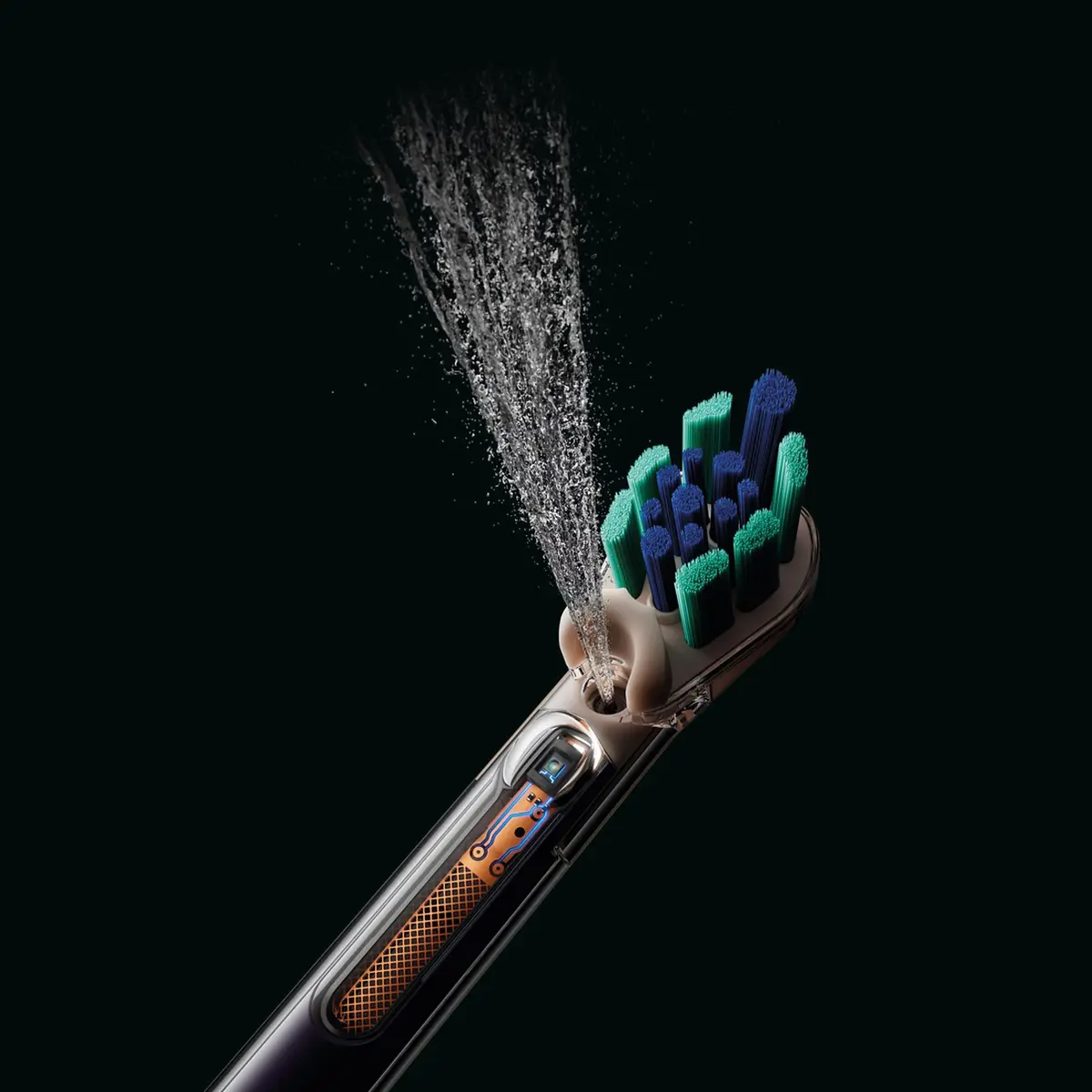
Dyson has put a camera, machine learning and a mouthwash jet inside a toothbrush. The Dyson CameraJet is designed to spot the gaps between your teeth while you brush, then fire a targeted burst of fluid at the places your normal routine may be missing.
It launches on 1 September 2026 at US$499 (about €430 / £370). That is an extraordinary amount of money to spend on a toothbrush, so Dyson will need more than a dramatic product name and a frighteningly detailed engineering explanation to justify it.
What's actually going on
Dyson says CameraJet uses a 100,000-pixel macro camera and its Gap Optical Targeting machine-learning system to analyse 28 live images per second. When the system identifies a gap, Dyson says it can trigger a precision jet within 100 milliseconds.
The conical jet is designed to dispense mouthwash between the teeth while the user brushes. Dyson says its engineers developed a proprietary proxy plaque with the National University of Singapore’s Faculty of Dentistry to test the jet’s shape and pressure in laboratory conditions.
The CameraJet connects to the MyDyson app over Wi-Fi and Bluetooth. The app provides live viewing, guided cleaning, coverage mapping, brushing and flossing insights, and feedback on technique. Dyson says the camera is active only during live viewing or automatic jetting, and that images are not recorded or stored on the device or in the cloud.
Dyson claims the CameraJet removes up to 69% more plaque than market-leading premium electric toothbrushes in hard-to-reach areas. That is a Dyson-reported laboratory result, not an independent clinical conclusion, and the release does not establish how the comparison maps to everyday brushing.
The package includes a refill dock, two regular brush heads and a charging cable. Dyson also says its own low-foaming toothpaste and mouthwash are coming soon, because apparently the toothbrush was not already complicated enough.
Why you should care
The gaps between teeth are exactly where ordinary brushing is least effective, which makes the CameraJet’s target sensible. Combining visual feedback with automated jetting could help people understand where they are missing and make interdental cleaning less of a separate chore.
The privacy design is also worth noting. A camera inside your mouth sounds like a product meeting that should have ended immediately, but Dyson says images are used for live viewing or jet detection and are not stored on the product or in the cloud. App functionality may vary by market and requires internet access.
The question is whether the technology solves a real problem better than a normal electric toothbrush plus traditional floss or water flosser. Dyson’s plaque-removal and gentler-gum claims remain manufacturer-backed laboratory claims, so buyers should not treat them as medical advice or guaranteed results.
The US launch price is confirmed, but UK pricing and wider regional availability were not established in the release. The upcoming proprietary toothpaste and mouthwash will also add an ongoing cost if users need them for the best results.
Our opinion
CameraJet is peak Dyson: take a familiar household object, add an optical system, a custom fluid nozzle and enough software to make brushing feel like operating a small dental laboratory.
The concept is genuinely clever, particularly if the live guidance helps people clean the places they routinely miss. But US$499 is a huge ask, and “up to 69% more plaque removal” is not the same as independent proof that everyone needs this gadget.
Wait for independent testing and UK pricing before buying. CameraJet could make interdental cleaning easier, but until the evidence catches up with the engineering theatre, your dentist and a sensible flossing routine remain considerably cheaper.
- Dyson CameraJet launches on 1 September 2026
- The US price is US$499 (about €430 / £370)
- It uses a 100,000-pixel macro camera and Gap Optical Targeting
- Dyson says the system analyses 28 live images per second and jets within 100ms
- The device connects to the MyDyson app over Wi-Fi and Bluetooth
- Dyson says no images are recorded or stored on the product or in the cloud
- Dyson claims up to 69% more plaque removal in hard-to-reach areas than premium electric toothbrushes in laboratory testing
- Independent clinical testing and UK pricing were not verified