ESA confirms Ariane 6 delays as turbopump checks bite
ArianeGroup and Arianespace have confirmed that this year's Ariane 6 mission schedule needs adjusting while extra checks are carried out in the production line.
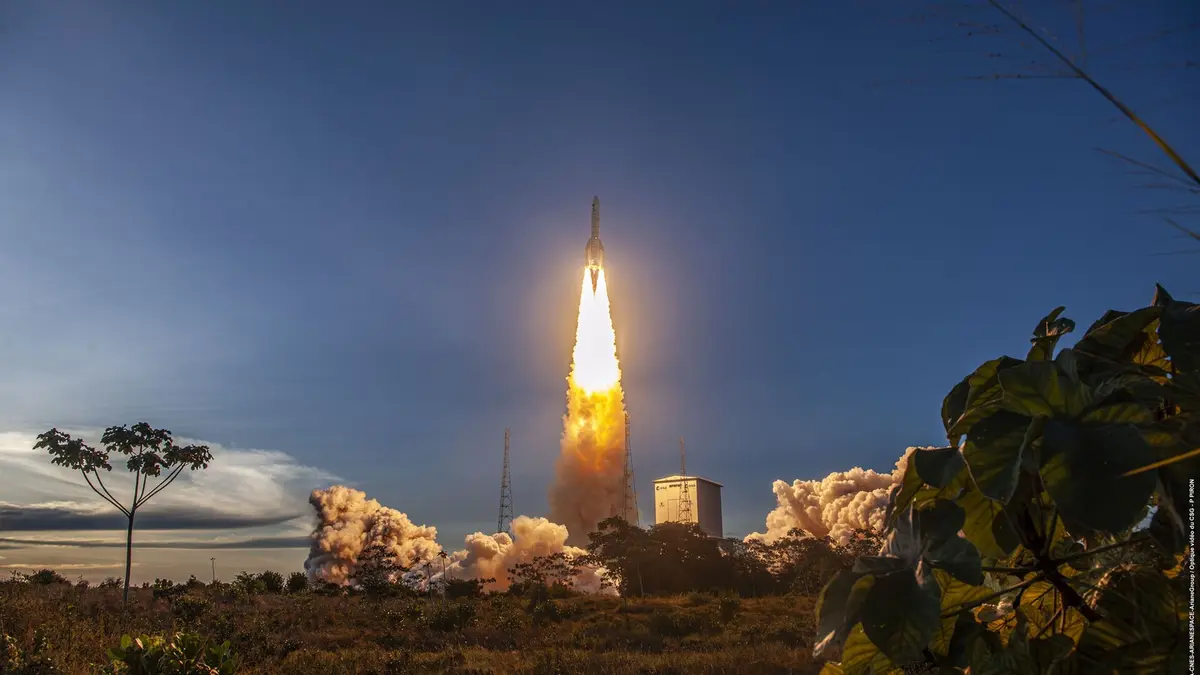
ESA says it is aware of delays to Ariane 6's launch schedule and has declined to say what caused them, after the French outlet La Tribune reported an issue with an unnamed component on 17 September. "ESA is aware of the delays," an agency spokesperson told the space trade publication European Spaceflight.
A turbopump is the reported culprit
Space Intel Report named the component the following day as an engine turbopump, saying it was found during ground evaluations in August, and reported that the problem could leave Ariane 6 with only one or two more launches this year instead of the three or four that had been planned. Neither ESA nor the launcher's builders have confirmed that account.
The builders admit the schedule moves
ArianeGroup and Arianespace did confirm that the 2026 plan changes. "The industrial ramp-up of Ariane 6 is proceeding smoothly, and the entire industrial supply chain is on track to reach the target rate of 9 to 10 launches as early as 2027," the two companies said in a joint statement. "However, we will need to adjust this year's mission schedule. This is because additional checks, currently underway, need to be carried out within the Ariane 6 production line." They did not say whether the checks relate to the reported turbopump.
Four turbopumps, two engines
A turbopump is the high-speed pump that pushes propellant out of a rocket's tanks and into its engine combustion chamber, and Ariane 6 carries four of them. The Vulcain 2.1 main-stage engine and the Vinci upper-stage engine each have one liquid-oxygen pump and one liquid-hydrogen pump. The Italian builder Avio currently makes the oxygen turbopumps for both engines while ArianeGroup supplies the hydrogen ones, an arrangement ESA member states agreed in December 2024 to move to ArianeGroup's site at Vernon in France. That transfer is not complete, and it is not yet clear which of the four pumps is affected.
Engineers are also weighing whether the affected pump can be repaired at the launch site in French Guiana or has to be replaced, according to Space Intel Report.
What it means for Europe's launch capacity
Ariane 6 is Europe's heavy-lift launcher and the continent has no operational replacement for it. Trimming the 2026 total pushes more institutional and commercial payloads into a 2027 plan that already assumes the 9-to-10-launch cadence arrives on time.
Our opinion
The handling of this is more revealing than the fault. ESA's one-line confirmation, offered with no cause attached, sits awkwardly beside ArianeGroup's reassurance that the ramp-up is proceeding smoothly. Both sentences can be true at once, but only one of them tells a customer whether their satellite flies this year. Europe has spent years treating the Ariane 6 transition as an industrial problem that had been solved, and a ground-test finding that reached the public through leaked reporting rather than an announcement suggests the checks were still turning things up.
A rocket with four turbopumps and one shared failure point in production is the price of the design, and the fix from here is as much bookkeeping as engineering: decide quickly whether the pump can be repaired at Kourou or has to be replaced, then publish what that does to the manifest. The 9-to-10-launch target for 2027 is a promise about a year nobody can check yet. Until Ariane 6 flies a steady cadence, Europe's independent access to space is a schedule rather than a capability.