Arduino UNO Q runs Linux apps from AI agents to Pi-hole
Arduino has shown what the UNO Q's Linux side can really do, running AI coding agents on the board alongside Home Assistant, n8n and Pi-hole while the microcontroller keeps hold of the real world.
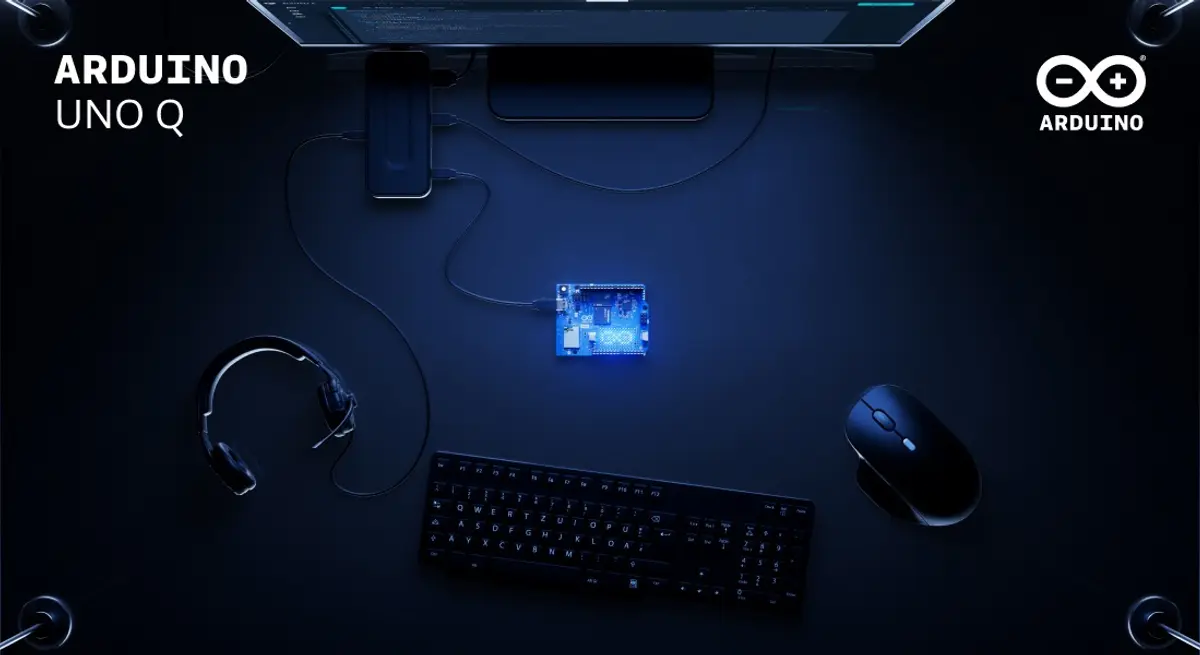
Arduino's UNO Q is not really a microcontroller board with extras bolted on. It is a dual-brain design: a Linux-capable microprocessor runs the software you would normally put on a server or single-board computer, while an STM32H5 microcontroller handles real-time control of pins, sensors and actuators.
Arduino has now spelled out what that split is actually good for, and the answer is a board that can host the software stacks makers already use, then reach out and touch the physical world without an extra device in the middle.
The first example is the most striking. Arduino says the UNO Q is designed to put an AI coding agent inside the hardware it is writing for. An agent such as OpenCode can run on the board, take a goal, process context and call tools, and then turn those decisions into real actions through the board's interfaces. The reasoning still comes from a frontier model over an API, but the tool calls run on the device, so sensors, actuators and data stay where they are.
Home Assistant is the second. Running entirely on the Linux side, it can handle scheduling, historical data, dashboards and integrations without a cloud subscription. The interesting part is what happens when custom hardware enters the picture: a Qwiic temperature and air-quality sensor feeds live readings in, and a sketch on the STM32H5 can drive a ventilation fan through a relay when they cross a threshold.
n8n adds self-hosted workflow automation, the Zapier or Make pattern but with everything running locally. A single workflow could take sensor data from the microcontroller side, store it in a local database, update a dashboard, fire off a notification and trigger a physical output in sequence.
Pi-hole rounds out the set, blocking advertising and tracking domains at the DNS level for every device on the network. On an ordinary single-board computer that is where the story ends; on the UNO Q the same board can also be the thing switching the relay.
Our opinion
The dual-brain pitch has been promised before, and it usually collapses into a Linux board with a glued-on microcontroller that nobody programs. What makes the UNO Q different is that Arduino is pushing the microcontroller half as the reason to buy, not the fallback, and the fan-and-sensor example is exactly the kind of job where a plain Pi would need a second board and a lot more wiring.
The AI agent angle is the one to be sceptical about. Running the tool calls on-device is a real improvement over shipping every reading to a model provider, but the reasoning still travels over an API, so a board marketed as private edge computing is only as offline as its least offline step. Buy it for the relay and the local dashboard, and treat the agent as a bonus.