Synspective books Japan's H3 rocket for two SAR satellites
The Tokyo radar-satellite operator has signed a launch services agreement with Mitsubishi Heavy Industries for two StriX satellites on Japan's H3 rocket in 2027.
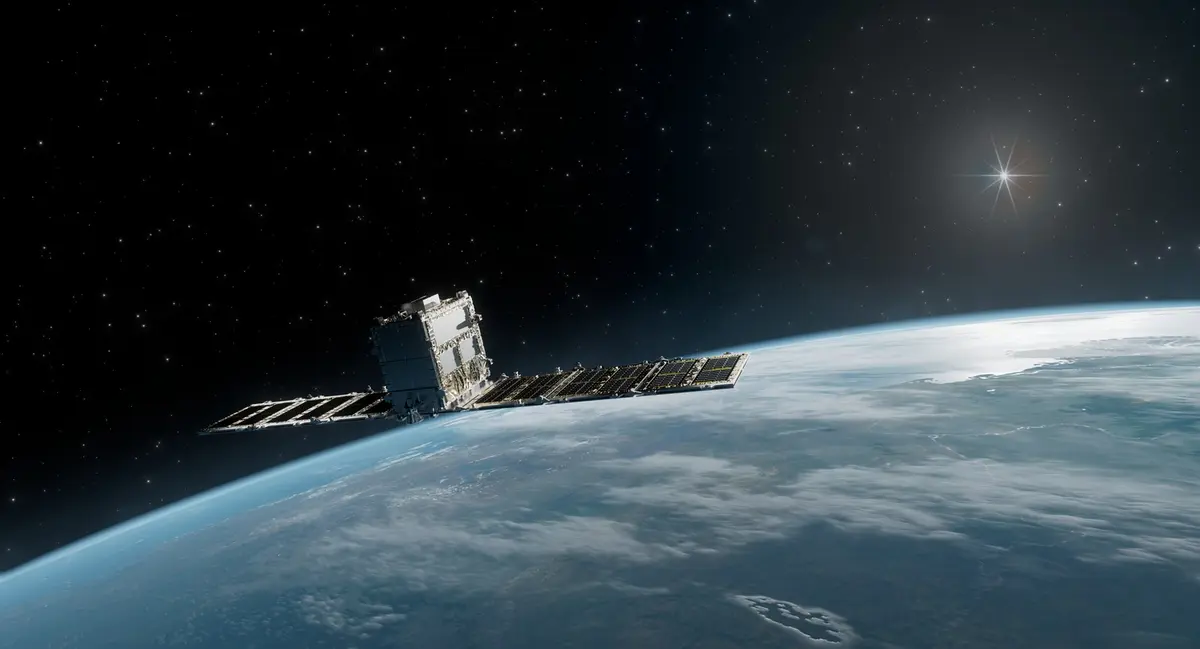
Synspective has signed a launch services agreement with Mitsubishi Heavy Industries to put two of its small radar satellites into orbit aboard Japan's H3 rocket in 2027, the company has confirmed.
The payloads are StriX spacecraft from Synspective's own constellation of synthetic aperture radar satellites, which image the Earth in cloud, rain and darkness rather than relying on visible light. Both are bound for a mid-inclination orbit, a choice the company says allows more frequent passes over major economic centres and disaster-prone regions, including the Asia-Pacific.
Why Japan's own rocket matters
Launch is set for 2027 from the JAXA Tanegashima Space Center. Synspective frames the decision as strategic autonomy: by booking the H3, the launcher Japan developed jointly with JAXA, the company keeps its route to orbit inside the country instead of depending on foreign rockets and their schedules.
Who is paying
The work sits under Japan's Space Strategy Fund, a government fund for strategic space development managed by JAXA. Selection under that programme, Synspective says, reflects the fit between its radar data and Japan's Basic Plan on Space Policy - which places the company inside the country's Earth observation infrastructure rather than on the outside as a commercial startup selling imagery.
For SAR data to become an operational, dependable asset in disaster response, infrastructure monitoring and security, satellites must be delivered into orbit continuously and reliably.— Takashi Nakamura, executive officer, Synspective
Synspective's radar satellites are used for land displacement monitoring, flood and disaster damage assessment, offshore wind surveying and forestry work. The company has been expanding the constellation steadily: it published the launch schedule for its 12th StriX satellite two days before this agreement, and the new deal covers two further spacecraft.
Our opinion
Booking your own country's rockets is the least glamorous part of building a satellite business and one of the most consequential. Japan has watched its launch sector struggle for relevance next to SpaceX, and the H3 has had a rocky road to routine flight, so a steady stream of small commercial payloads is exactly the customer base it needs. For Europe the parallel is uncomfortable and obvious: the continent has the satellites and the ambition, but still books rides abroad whenever the schedule demands it. Synspective buying Japanese is a reminder that autonomy is mostly a purchasing decision, made years before the satellites are anywhere near a launch pad.