L&T's chip designs meet Tata's factories, and India's gap closes a little
L&T Semiconductor and Tata Electronics will jointly industrialise India-designed chips on Indian soil, spanning fabrication, packaging and test.
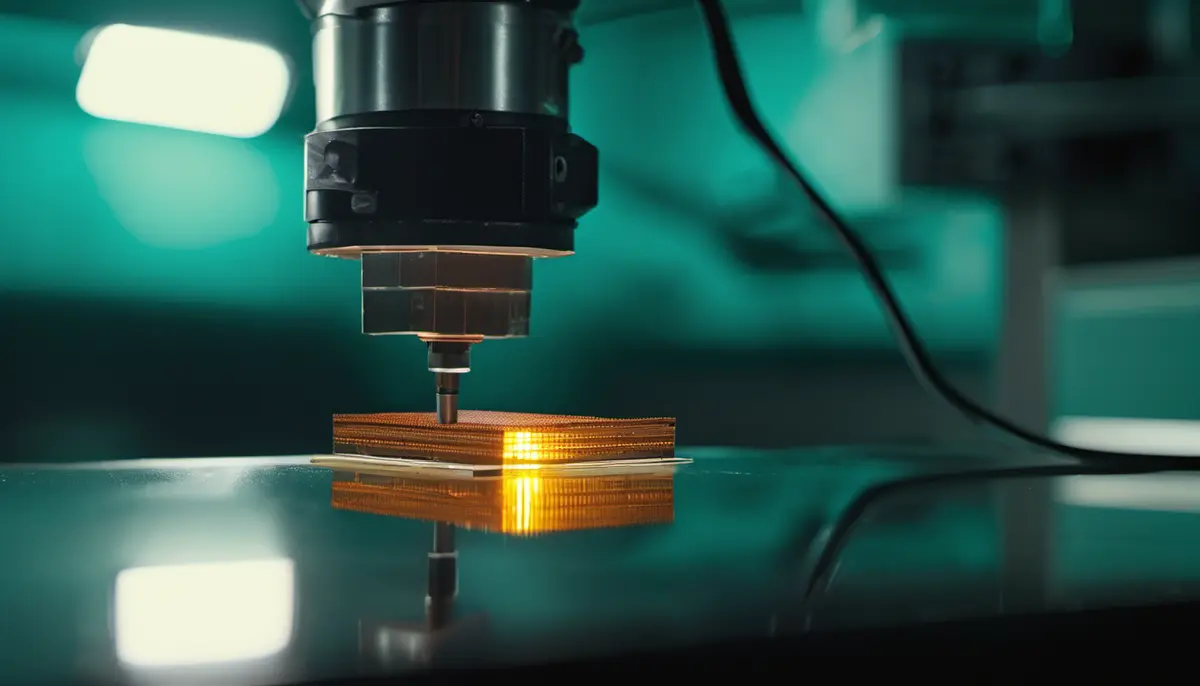
L&T Semiconductor Technologies has signed a strategic partnership with Tata Electronics to make chip products designed in India on Indian soil, with the two companies jointly exploring fabrication and packaging work for LTSCT's current and future parts across Tata's fab process technologies and packaging solutions. The release landed on 18 September, the same day LTSCT unveiled 40 products at SEMICON India 2026 in Mumbai.
It is a neat pairing of opposites. L&T Semiconductor Technologies, a wholly owned subsidiary of the engineering conglomerate Larsen & Toubro, is fabless: it designs chips and pays somebody else to build them. Tata Electronics is that somebody else. A greenfield venture of the Tata Group spun up in 2020, it runs electronics manufacturing services, semiconductor assembly and test, a foundry business and design services, with operations across Gujarat, Assam, Tamil Nadu and Karnataka.
What the two companies actually agreed
The stated scope covers the whole path from drawing board to packaged part. The two will jointly explore chip fabrication and packaging opportunities for LTSCT's current and future products across Tata Electronics' range of fab process technologies and packaging solutions, and work on design-to-fabrication optimisation to make manufacturing efficient at scale. The target markets are automotive, industrial, communications, security and intelligent-edge devices \u2014 the unglamorous sectors where chips are bought in volume and quietly have to work for fifteen years.
Sandeep Kumar, chief executive of L&T Semiconductor Technologies, framed the deal as the difference between having good designs and having an industry. \u201cSemiconductor leadership will increasingly be defined not just by design breakthroughs but by the ability to industrialise those designs through advanced packaging and manufacturing,\u201d he said. \u201cAt LTSCT, we see this as India's opportunity to move up the value chain.\u201d
Randhir Thakur, chief executive and managing director of Tata Electronics, described the same logic from the factory side, calling it \u201ca significant step which will accelerate India's vision of becoming a full-stack semiconductor nation, by combining L&T Semiconductor's deep fabless design and engineering expertise with our capabilities across semiconductor manufacturing, packaging and testing.\u201d
India has designed chips for decades. It has barely made them
The split is familiar to anyone who follows the industry: since the 1980s the fabless model has let companies design chips without owning a fabrication plant, and the plants that do the actual work have concentrated into a handful of companies in East Asia and the United States. India trained a generation of the engineers who went on to design those chips, then imported every wafer it needed. Pairing a domestic designer with a domestic manufacturer is the most practical attempt yet at closing that loop, because the customer for the factory already exists on paper.
The product showcase gives that customer something to point at. LTSCT's 40-part lineup, presented under the theme Silicon to Systems, includes its first silicon carbide platform \u2014 a 1200V SiC MOSFET family aimed at EV fast chargers, microgrids, solid-state transformers and traction inverters \u2014 and a tape-out of a BLDC motor controller that the company says is entirely designed in India, with a single platform intended to serve several motor models and cut bill-of-materials costs for things like ceiling fans. Alongside those sit an indigenous vision-camera system-on-chip with on-device AI acceleration, a secure identity platform pitched at e-passports, payment cards and national ID systems, and four in-house connectivity modules for smart metering and digital payments.
What is missing from the announcement
There is no named process node, no volume commitment, no timeline and no investment figure in the release. The verbs are \u201cexplore\u201d and \u201caim to\u201d, which is entirely normal at this stage of a partnership and also means nothing is committed yet. The honest measure of whether this worked will not be the language of the joint statement but whether an LTSCT part eventually leaves a Tata line, at a price and a quality level that makes a customer in Munich or Osaka choose it on purpose.
Our opinion
The useful thing about this partnership is the admission buried inside it. India's semiconductor story has always been long on brainpower and short on equipment, and the country has spent years trying to buy its way into manufacturing with incentives for plants it has not built yet. This deal does the cheaper thing first: it marries a design house to a manufacturer so that the demand for Indian capacity exists before the capacity does. That is a better order of operations than building a fab and hoping designers turn up, and it is more than most national chip strategies manage.
It is also, for now, a press release. \u201cJointly explore\u201d is what companies write when the lawyers have finished and the engineers have not started, and the absence of a node, a volume or a date is the sort of gap that has swallowed plenty of semiconductor announcements. Europe knows the feeling: it has spent years trying to convert design excellence into manufacturing might and is still importing the wafers. The test of this partnership is not the quote from either chief executive \u2014 it is the first invoice for Indian-assembled LTSCT silicon, and nobody has put a date on that yet.
- LTSCT and Tata Electronics announced a strategic partnership on 18 September 2026
- LTSCT designs chips; Tata Electronics provides foundry, assembly and test, and packaging
- The two will jointly explore fabrication and packaging for LTSCT's current and future products
- Target sectors: automotive, industrial, communications, security and intelligent-edge
- No process node, volume, timeline or investment figure was disclosed
- The same day, LTSCT unveiled 40 products at SEMICON India 2026, including its first silicon carbide platform