Lenovo and NVIDIA promise an AI factory in 15 days
Lenovo has launched AI Express with NVIDIA, promising validated, right-sized AI infrastructure that ships in as little as 15 business days instead of months.
Lenovo has launched Lenovo AI Express, a programme built with NVIDIA that sells validated AI factory configurations on fixed delivery timelines, starting at 15 business days for the smallest option. The announcement, published on 30 September, is less about new silicon than about the wait that sits between an approved AI budget and a working cluster.
Three sizes, three waiting times
Lenovo AI Express offers three quick-start configurations, each matched to a band of model size and user demand. The small tier handles focused inference for tens of users at 30 or more transactions per second, with average models of 7B to 70B parameters, running on a ThinkSystem SR650a V4 powered by two NVIDIA RTX 6000 PRO Blackwell Server Edition GPUs. Lenovo quotes those systems from 15 days.
The medium tier steps up to higher-throughput inference and agentic workloads for hundreds of users, with models from 70B to 400B parameters, on a ThinkSystem SR675 V3 with eight RTX 6000 PRO Blackwell Server Edition GPUs, from 20 days. The large tier targets enterprise-scale deployments serving thousands of users, with models up to a trillion parameters, on a ThinkSystem SR680a V4 with NVIDIA HGX B300, from 25 days. Across all three, Lenovo offers a choice of AMD and Intel processors, and buyers can add enterprise AI software such as Red Hat AI Factory with NVIDIA or NVIDIA AI Enterprise, plus Veeam Kasten for protecting models, pipelines and data.
Why Lenovo says the wait is the story
Lenovo is framing the programme around the gap between AI strategy and AI operations. Its 2026 CIO Playbook, cited in the release, reports that organisations moving from experimentation to scaled execution expect an average return of $2.79 for every $1 invested, with 93% of enterprise respondents anticipating positive returns. Long lead times, integration complexity and other readiness barriers are named as the things that delay that value.
"Organizations are navigating today's complexity and constraints to get AI into production faster, looking for an approach that fits their current needs while giving them the ability to scale as those needs evolve. Lenovo AI Express gives our customers an accelerated path to deploying AI infrastructure to fit their specifications while mitigating the risk of overbuilding or costly delays." — Ashley Gorakhpurwalla, president, Infrastructure Solutions Group, Lenovo
NVIDIA's enterprise platforms vice-president Chris Marriott added that ready-to-ship configurations give organisations "a faster path to deploy AI factories and scale as their workloads and demand for intelligence grow". Beyond hardware, the programme bundles deployment services that stretch from use-case selection and return-on-investment validation through proofs of concept to GPU tuning for performance, utilisation and cost. A new Premier Support Plus for Servers tier adds proactive and predictive support, and Lenovo's 360 partner framework is being used to push the same configurations through the channel.
What could still get in the way
The three tiers are defined by throughput and model size, which suits teams that already know their inference profile. Agentic workloads rarely stay inside one band: a single deployment can mix small routing models with large reasoning models and see demand spike when a new agent goes live. Lenovo's answer is that customers start small and scale, with eligibility, availability and ordering varying by region. The company also notes that the timelines quoted are for eligible configurations, so the 15-day headline is a starting point rather than a guarantee for every order.
Our opinion
The interesting number here is not the $2.79 return on every dollar - that figure comes from Lenovo's own playbook survey, so it is marketing arithmetic, not audited financial data. It is the 15 days. Enterprises have spent the last three years discovering that GPUs were the easy part: the hard part was integration, power, cooling, procurement, and the queue behind everyone else who ordered the same racks. Selling pre-validated configurations with a ship date is a supply chain promise dressed up as a product launch, and supply chains are where Lenovo genuinely differentiates itself.
There is a real risk in fixed tiers, though. A three-size menu pushes buyers toward sizing decisions made before their workloads exist, and the industry's agentic turn is exactly the moment when inference demand is hardest to forecast. The mitigation - start at the small tier and expand - is sensible, but expansion is a second order with its own lead time, which quietly reintroduces the delay the programme is meant to remove. If Lenovo wants AI Express to be more than a faster quote, the upgrade path needs the same published timelines as the initial purchase.
It is also worth reading the partner push carefully. Lenovo is extending AI Express through its 360 framework because the configurations are easy to resell when the technical risk has been absorbed by the vendor. For smaller businesses without an infrastructure team, that is likely a good trade. For larger ones, the question is whether a validated template accelerates their AI roadmap or simply locks them to someone else's idea of a standard workload.
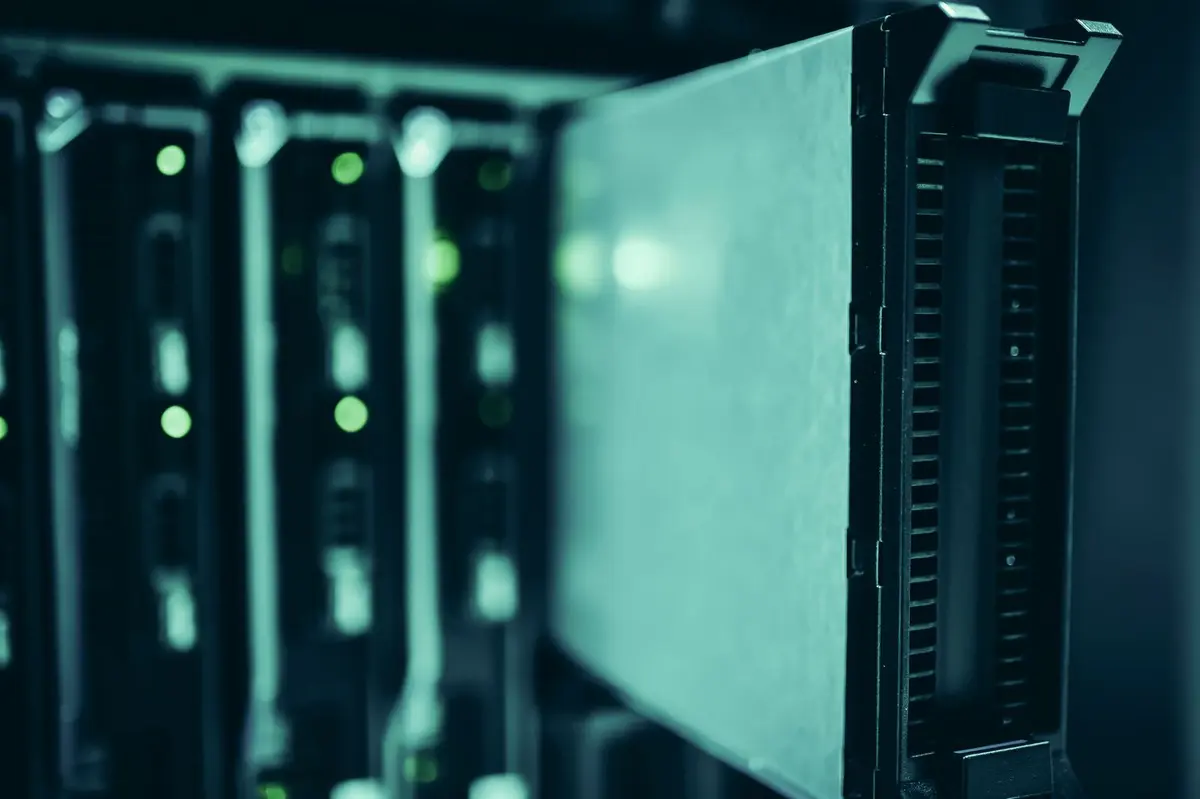
Photo by panumas nikhomkhai on Pexels Pexels.