NVIDIA's TensorRT Model Connect is built for AI agents
NVIDIA's open-source TensorRT Model Connect covers 128 model families, and the write-up is less about the code than about designing a project around coding agents from day one.
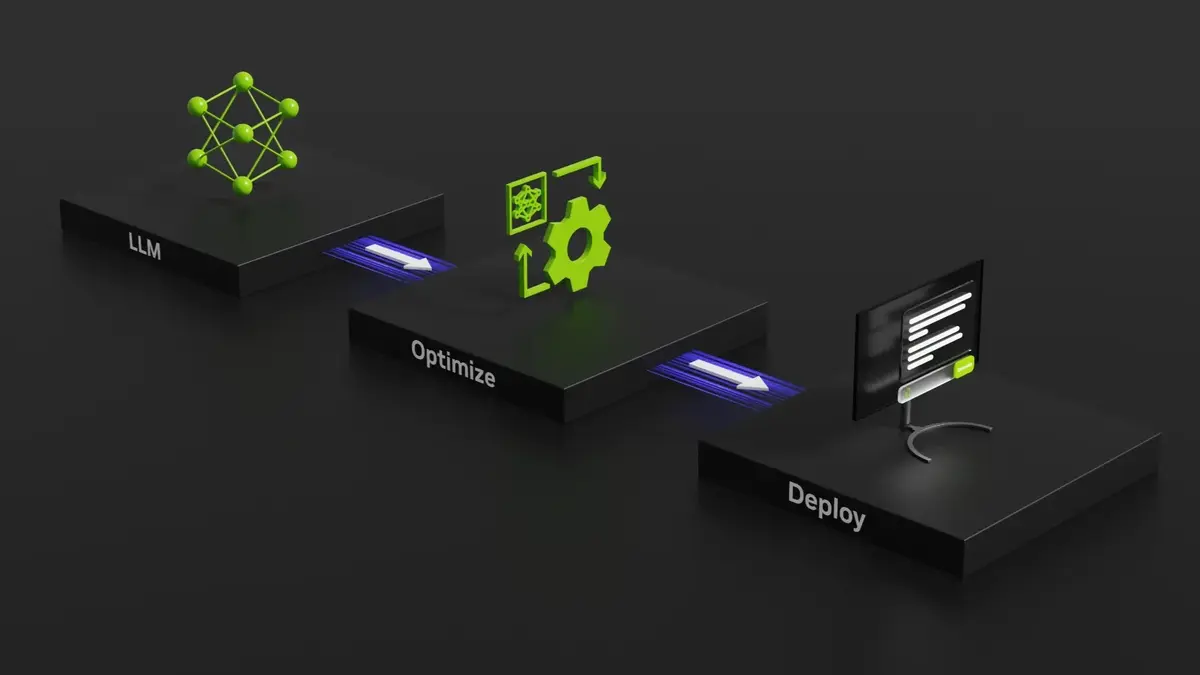
NVIDIA has published a design write-up on TensorRT Model Connect, an open-source collection of AI model reference implementations in C++ built on TensorRT, and the more interesting claim is about process rather than code: the team set out to build a serious software project around coding agents instead of bolting agents onto an existing one. The post, dated 29 September, traces what that decision actually changed.
The project started with a practical question. Could the performance of NVIDIA's inference stack be made accessible to model developers who are not TensorRT experts? The team's first move was an experiment with coding agents, and within days the question shifted to something larger, because most of what slowed the work down was not the agents themselves but the architecture they were being asked to work inside.
What AI native means here
NVIDIA uses the phrase in a deliberately narrow, operational sense. AI-native work treats AI outputs as modular, verifiable units that are isolated from each other so a bad result cannot cascade through the rest of the system. It does not mean an agent writes everything, or that human judgment disappears. It means a production system that can explore many candidate changes and put each one through repeatable quality control, where compute generates the candidates and tests, reference comparisons, benchmarks and human review decide what ships.
The first lesson in the post is problem selection. Some engineering workloads have a long serial critical path; others are made of independent streams, and only the second kind benefits much from extra agents. Model families, configurations, operators, runtime paths and validation cases mostly stand alone, which is why the project grew by adding independent units rather than by extending one integration path. As of the public comparison in the 29 July 2026 release, it covered 128 model families tested on NVIDIA GB300.
Outcomes and evidence, not recipes
Most agent runs in the project begin with an outcome, such as supporting a model family, closing an accuracy gap or improving a performance path, and the evidence needed to accept the result is identified at the same time. That evidence is usually behaviour from an established reference implementation plus project-specific tests and constraints. The implementation route is left open; the acceptance criteria are not. Humans still start most of the long-running tasks, and NVIDIA describes the approach as minimal orchestration rather than minimal control.
In practice the repository supplies family-owned reference implementations that turn supported Hugging Face or local checkpoints into versioned artifacts, then expose native C++ APIs for text, vision, audio, diffusion, segmentation, embedding and forecasting work. Components that change at different speeds are kept apart: TensorRT and CUDA as the stable execution foundation, the project itself as the faster-moving integration layer, and model-family code owning everything specific to a model.
Validation is the production limit
NVIDIA's conclusion is that the constraint on this way of working has not been the agent's ability to finish a task but the architecture surrounding it. Its validation stack leans on human-legible evidence, tests that improve themselves, reproducible continuous integration and adversarial collaboration between quality assurance and developers. Human judgment moves upstream, into designing the system and setting acceptance criteria, and it stays accountable for release decisions.
Our opinion
Most write-ups about coding agents sell throughput. This one sells a constraint, and it is more convincing for it. The number worth repeating is not the 128 model families, it is the refusal to let generation outrun verification: you can produce candidate implementations faster than you can honestly accept them, and a project that treats validation as the real production limit is one that has noticed where the bottleneck moved.
The trap that follows is already visible elsewhere. When the same agent loop writes the code and the tests, a green suite is weaker evidence than it looks, and calling it validation does not make it independent. NVIDIA at least names reference parity and human-legible evidence as the bar rather than pass rates. Whether a small team with a GPU budget can hold that bar once the novelty wears off is the open question the post does not answer.