Google commits €13bn to Finland’s AI infrastructure
Google has pledged €13 billion for Finnish data centres and clean energy across 2027 and 2028, pairing the build-out with a 22-year agreement that keeps the Loviisa nuclear plant running to 2050.
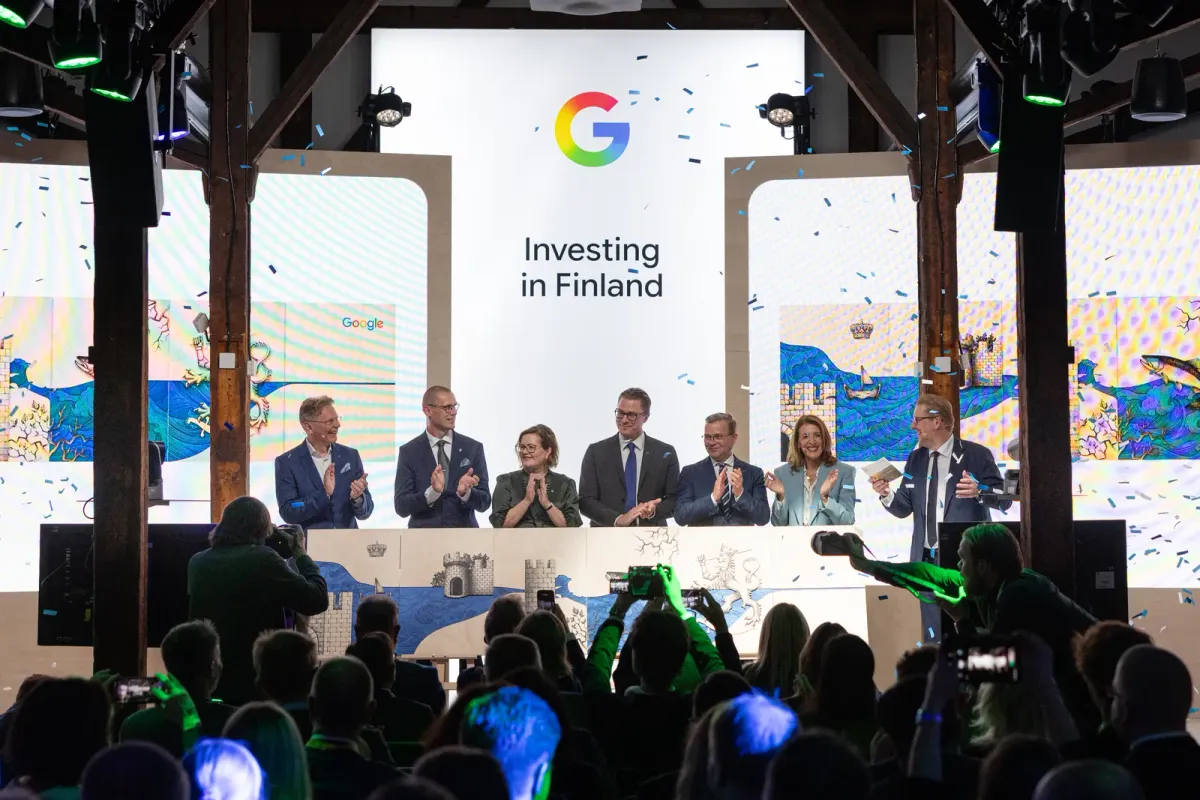
Google will spend €13 billion on Finnish digital infrastructure, clean energy projects and regional partnerships across 2027 and 2028, the largest single investment the company has made in Europe. The money covers three new data centres and an expansion of the existing Hamina campus, which Google converted from a disused paper mill 15 years ago.
Where the money goes
The new sites are planned for Kajaani, Muhos and Vaala, with Hamina expanded alongside them. Google says the initial construction phase will support more than 37,000 jobs nationally and add an estimated €3.6 billion a year to Finland’s economy, followed by thousands of permanent roles covering everything from computer technicians and electrical engineers to security and catering staff.
A further €31 million is set aside for the four host communities over the next four years, funding college partnerships, AI upskilling for more than 4,400 workers and training places for 100 Finnish students. Google’s existing Finnish operations already use a seawater-based cooling system and send recovered heat to nearby homes and businesses.
A 22-year nuclear agreement
The energy side is where the deal gets interesting. Fortum and Google have signed a 22-year power purchase agreement covering up to half the output of the Loviisa nuclear power plant, which supplies roughly 10 per cent of Finland’s electricity. The contract starts at a smaller volume in 2028 and reaches 50 per cent of capacity between 2030 and 2049, giving Fortum the revenue certainty to fund a lifetime extension that keeps the station online until its operating licences end in 2050.
Without that extension the plant could not have run beyond 2030. Fortum has an investment programme of roughly €1 billion under way, with about €700 million of the spending still awaiting a final decision, and expects the Google contract to lift its return on net assets by around 1.4 percentage points once half the capacity is contracted. The agreement should also unlock an additional 10 megawatts of output on top of a planned 38 MW uprate due in 2028.
Alongside the nuclear deal, Google is adding new onshore wind capacity and has contracted a 94-megawatt battery system intended to steady prices during cold, windless periods — a direct hedge against the kind of sharp demand swing that large data centre clusters create.
Our opinion
The most encouraging thing here is that the electricity question was answered before the shovels arrived, not after. Extending a working nuclear station is slower and far less quotable than announcing a solar farm, but it is the kind of decision that actually shows up in grid planning. It also exposes how narrow the window is: Fortum needed a 22-year contract to justify spending on a plant that already exists, which tells you how hard new capacity will be to finance. If AI infrastructure is going to keep growing in Europe, deals like this one need to stop being remarkable and start being routine.