EPB turns on America's first commercial quantum hub
EPB has switched on an IonQ Forte Enterprise in Chattanooga, making its Quantum Center the first US site to sell commercial quantum computing and networking together.
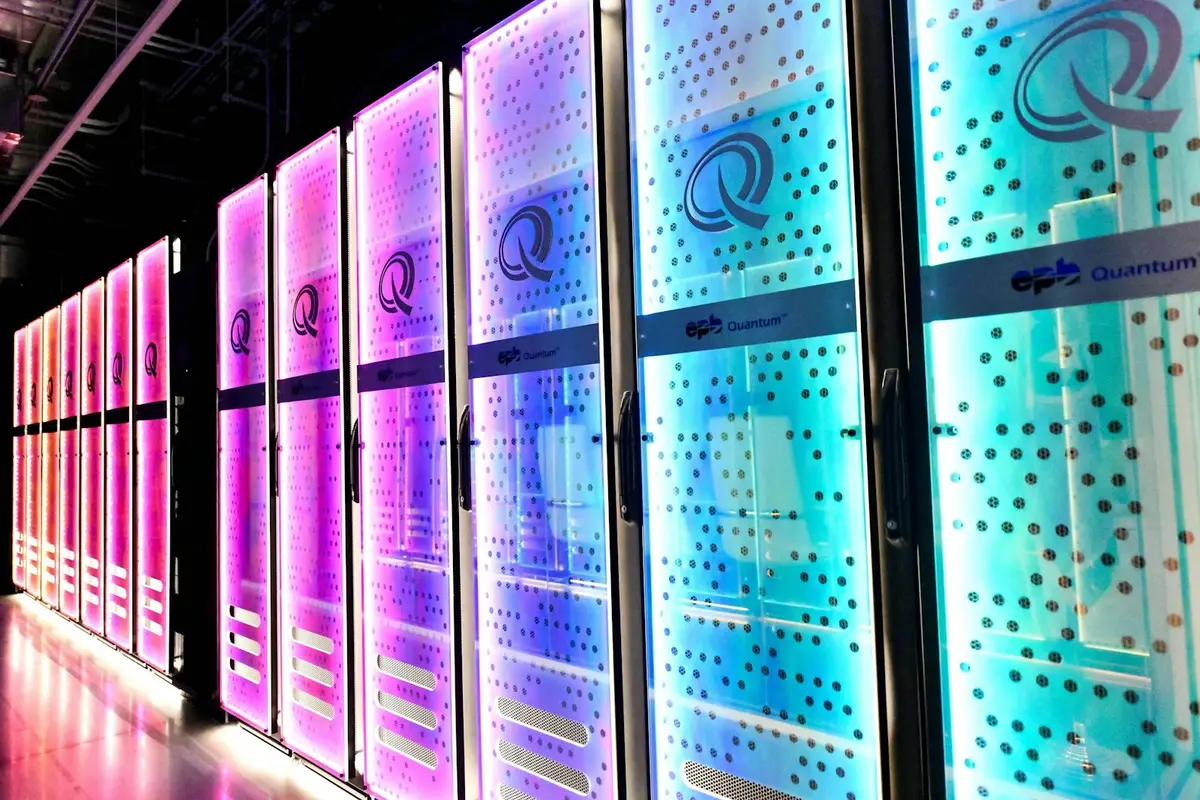
Chattanooga has switched on a quantum computer and put it on sale. EPB launched an IonQ Forte Enterprise at its EPB Quantum Center on 18 September, the first time commercial quantum computing and quantum networking have sat in the same American facility, and the city's municipal utility says the system takes paying customers from early October.
What's actually going on
The first users are EPB's own Quantum Computing Fellows, eight graduate researchers recruited from across the United States on a $4 million grant from the National Institute of Standards and Technology. They will run algorithms they have been building to optimise circuits on EPB's heavily automated power grid, aiming to cut costs and harden supply for local customers. The University of Tennessee at Chattanooga becomes the first paying customer, with Vanderbilt's first project being lined up behind it.
The money is already moving. IonQ is spending $15 million on a Tennessee Quantum Communications Research Center in the city, creating roughly two dozen jobs for quantum scientists and researchers. UTC, which in 2023 became the first American university to connect to a commercial quantum network, plans to add 135 to 240 faculty, staff and students, while Vanderbilt's Institute for Quantum Innovation is expected to anchor a campus of about 250 researchers and staff.
There is a hybrid project too. EPB, IonQ, Oak Ridge National Laboratory and NVIDIA have installed a classical supercomputer inside the Quantum Center and are bolting it to the quantum machine, splitting grid optimisation work between the two.
Why you should care
A quantum computer is not a quicker server. It is an awkward, error-prone instrument that is genuinely good at a narrow set of shapes: optimisation, simulation and problems where the number of combinations explodes. Grid scheduling is one of those shapes, which is why the first workload here is a utility checking its own homework rather than a headline benchmark.
Chattanooga has form for this. Vicky Gregg, chair of the EPB board, said the launch grows “a quantum ecosystem found only in Chattanooga”, and compared it to EPB's 2010 decision to build community-wide gig-speed internet before anyone could see the use for it. IonQ's chief executive Niccolo de Masi said the two companies had built “something unique”, with the Forte Enterprise complementing EPB's existing quantum networking. Janet Rehberg, EPB's chief executive, framed the sequencing bluntly: “Access to a quantum computer is rare and valuable.”
Treat the big numbers as projections. EPB points to $2.7 trillion in economic value that near-term quantum computing is expected to generate across industries, and Chattanooga's mayor, Tim Kelly, says the city's quantum initiatives are projected to produce up to $1.1 billion in local gains over the next decade. Those figures come from the announcement itself, not from anything that has been measured yet.
Our opinion
The most interesting thing here is who gets the first slot. A municipal utility with a power bill to shrink is a far stranger first customer than a bank or a carmaker, and it is a much more honest one: it owns the grid, so it can measure whether the machine earns its keep instead of writing a press release about a pilot. Quantum vendors have spent years selling a decade-away future to companies that mostly wanted a logo on a slide. Chattanooga has skipped that theatre and pointed the thing at dull, specific, high-value arithmetic. The sceptical read is that “America's first commercial quantum hub” is a real milestone and a small one, since a hub with one tenant is a lab with better marketing, and the $1.1 billion is a projection from the people who benefit from it. But EPB built fibre when it looked like a folly and was right, and the instinct behind this bet is the same one. Watch the second customer: if another business signs up before the novelty fades, this is infrastructure. If not, it is a very well-funded experiment.