Albania becomes the 73rd country to sign the Artemis Accords
Albania will sign the Artemis Accords at NASA Headquarters on Monday 21 September, becoming the 73rd country to join the framework for lunar and deep-space cooperation.
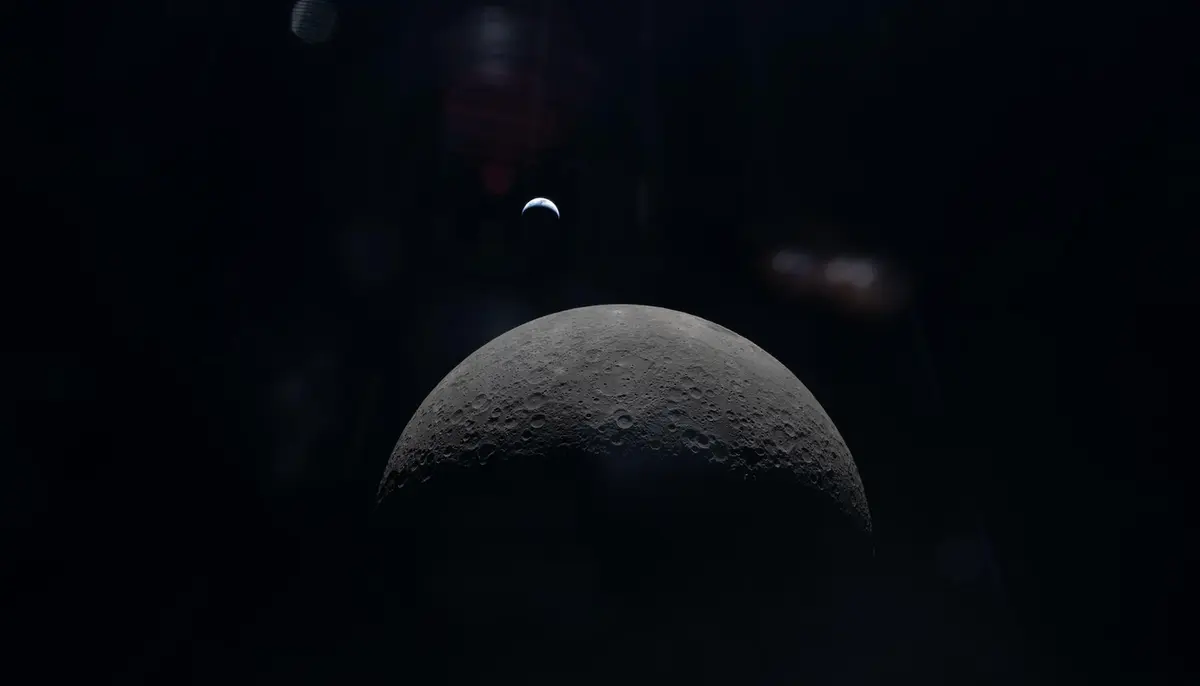
Albania will sign the Artemis Accords at NASA Headquarters in Washington on Monday 21 September, becoming the 73rd country to commit to the framework the United States established in 2020 to govern civil activity on the Moon, Mars and beyond.
Who signs, and where
NASA's media advisory, published on 18 September, puts the ceremony at 12 p.m. EDT - 5 p.m. UK time - on Monday. NASA Deputy Administrator Matt Anderson will host Albania's Minister for Europe and Foreign Affairs, Ferit Hoxha, and the country's ambassador to the United States, Ervin Bushati, alongside officials from the US State Department. The event is in person only, and news organisations that want to attend have to reply to NASA's media office by 10 a.m. on the day of the signing.
What the accords actually say
The Accords date to 2020, when the United States - led by NASA and the State Department - joined seven other founding nations to write down a shared approach to lunar activity, in response to growing government and commercial interest in the Moon. NASA describes them as the first set of practical principles for the safety, transparency and coordination of civil space exploration, covering everything from registering spacecraft and releasing scientific data to protecting heritage sites and disposing of hardware so it does not become orbital debris. They are commitments rather than a treaty: countries sign up voluntarily, and there is no court or inspector enforcing any of it.
Why the count matters more than the text
Seventy-three signatories is a number NASA can point at whenever the question of who sets the rules in space comes up, and the list has been growing steadily - Djibouti signed recently enough to still sit at the top of NASA's own signatory news list. The practical value sits in the unglamorous clauses. Space cooperation tends to fail over details: who registers an object, who answers a distress call, who gets to work where, and who is told about it afterwards. Settling those questions on paper before they become incidents is the entire point, and each new signature widens the group of countries that has already agreed to the same answers.
Our opinion
Signing ceremonies are normally where news goes to die, and the Artemis Accords are the rare space document that keeps producing them. The clever part is that they are not a treaty. There is nothing to ratify, nothing to enforce and no penalty for ignoring the fine print, so the reason countries queue up is not the text but the room: the Accords are effectively the guest list for a lunar programme the United States is building, and a guest list of 73 is a useful thing to wave at anyone arguing that the Moon needs somebody else's rulebook instead. Albania's signature will not alter a single crater. It does show where the queue is standing - and at 73 names deep, the interesting question has stopped being who is inside the Accords and started being who is deliberately outside them.