Nature-inspired 3D printing could improve renewable energy storage
A nature-inspired 3D-printed electrode improved redox flow battery performance by 52 per cent in University of Waterloo experiments, pointing to a safer way to store wind and solar power at grid scale.
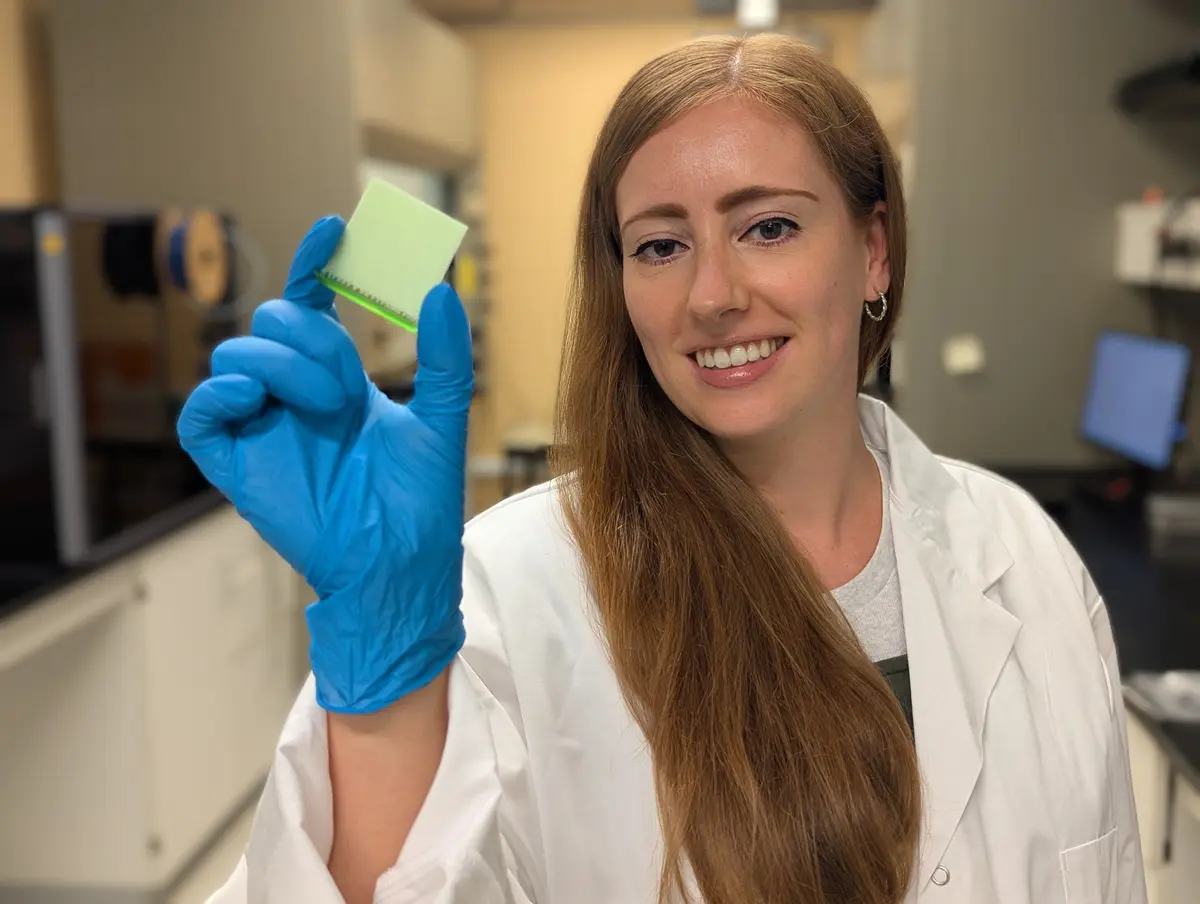
A nature-inspired 3D-printed electrode improved redox flow battery performance by 52 per cent in University of Waterloo experiments, pointing to a safer way to store wind and solar power at grid scale.
Researchers led by University of Waterloo chemical engineering professor Maxime van der Heijden have redesigned a key component of redox flow batteries using 3D printing. The team says the porous electrode helps battery liquid move more efficiently, improving the chemical reactions that store and release electricity.
Why redox flow batteries matter
Unlike the lithium-ion batteries in phones and electric vehicles, redox flow batteries store energy in water-based electrolytes held in external tanks. Increasing storage capacity can therefore be as straightforward as using larger tanks, making the technology a potentially safer fit for wind farms, solar farms and grid applications.
A diamond-shaped breakthrough
The team tested several triply periodic minimal surface geometries — complex repeating structures inspired by nature — and found that the design known as the “diamond” performed best, increasing performance by 52 per cent. A digital light-processing 3D printer produced the porous structures, which were heat-treated into conductive carbon electrodes.
The electrodes worked in laboratory flow-cell experiments and in an operating vanadium redox flow battery. Waterloo describes the work as a proof of concept; future research will focus on increasing surface area, improving manufacturing methods and using advanced design tools to create more effective structures.
Our opinion
This is the sort of battery research that deserves more attention than another lithium-ion chemistry press release. Flow batteries already have the right basic idea for the grid — put the energy in liquid tanks and scale the tanks when you need more storage — but their efficiency and physical footprint have held them back. A 52 per cent improvement from a printable, nature-inspired structure is promising. It is not a commercial battery yet, but it is a credible step towards making renewable power less dependent on whether the sun is shining or the wind is behaving.
- Waterloo researchers created porous redox flow battery electrodes with 3D printing
- The diamond TPMS geometry increased performance by 52 per cent in the reported experiments
- The electrodes were tested in laboratory flow cells and a working vanadium redox flow battery
- The work is a proof of concept, not a commercial storage system