Raspberry Pi's $30 Smart Display Module is available now
Raspberry Pi's Smart Display Module turns a Compute Module 5 into a slide-in Intel SDM board for signage, with 4K output, no fan and an optional M.2 accelerator.
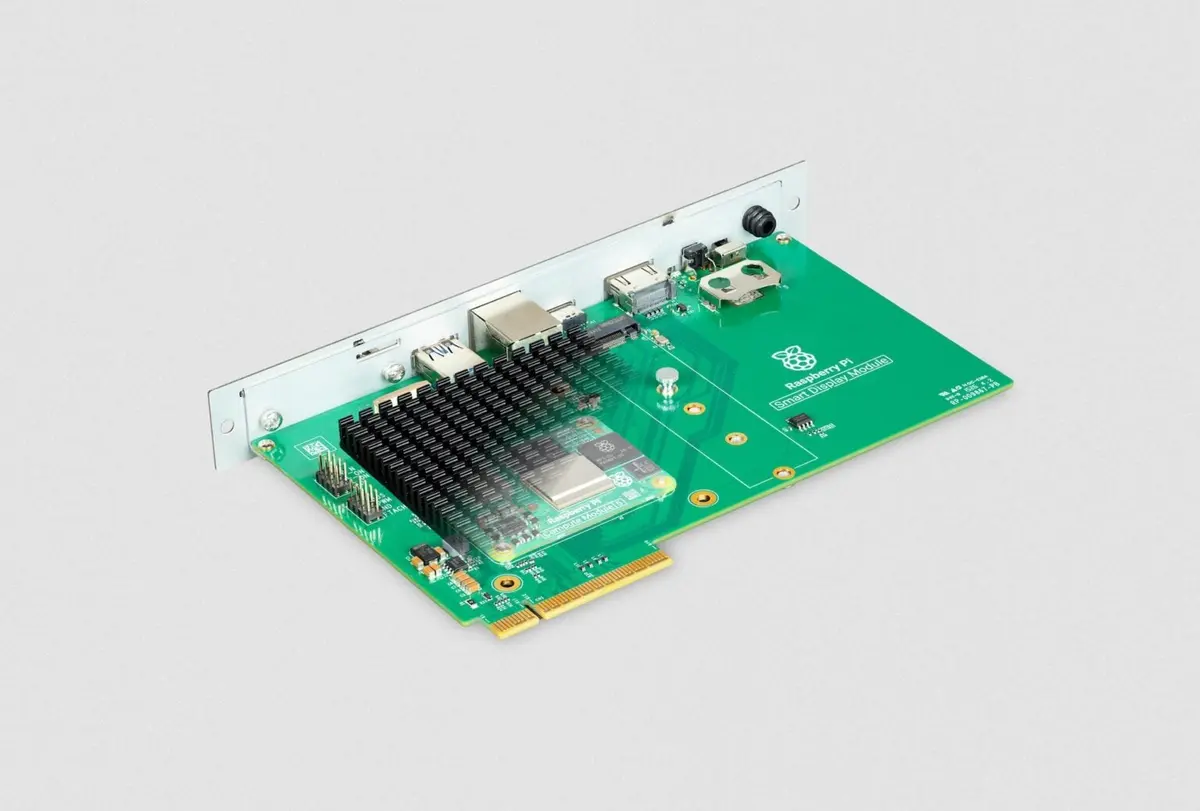
Raspberry Pi has put its Smart Display Module on sale for $30, an adapter board that lets a Compute Module 5 slide into commercial displays built to Intel's Smart Display Module specification. The board was developed with Sharp Display Solutions Europe, and it is aimed at digital signage, wayfinding and flight information displays rather than the desktop.
A Compute Module 5 that lives inside the panel
The idea is the same one behind the media players that have sat behind shop screens for years, except the computer is now built into the panel instead of bolted behind it. Power, video, audio, data and control all travel over the display's internal connectors, so there is no separate power supply, no HDMI run and no bracket for a passer-by to knock. Raspberry Pi says the module handles 4K video playback and works with content management systems that already support the Raspberry Pi 5 and Compute Module 5.
There is an on-board M.2 slot for extra high-speed storage or an AI accelerator, which Raspberry Pi says can be a Hailo processor or another compatible part. The board is fanless and silent, pitched at continuous 24/7 operation, and Raspberry Pi lists flight information display systems, wayfinding, and retail and corporate signage as the obvious fits. Paired with an Intel SDM projector, the same board can drive exhibits and immersive installations.
Three months on a Sharp display
The module was shown at Integrated Systems Europe in Barcelona in February, and Raspberry Pi says several businesses have since taken it for a test drive. Media Looper, which runs managed digital signage for small businesses, spent three months with the module inside a Sharp display. Founder Jon McIntosh said: “It does everything our Raspberry Pi 5 does, with no cable, power supply, or bracket for a customer to disturb. We would deploy it as our default for any customer whose display has an SDM slot.”
The pricing is the part that will travel further than the product. An SDM slot is standard on a great many commercial panels from the big display vendors, and the players that fill those slots have historically been expensive, locked-down boxes sold on multi-year contracts. A $30 board that accepts a Compute Module 5, plus an M.2 drive if the job needs one, changes the arithmetic on a signage rollout from a capital project into a component purchase. The Compute Module 5 itself is sold separately, so the real cost of a screen depends on how much compute and storage a site actually needs.
Our opinion
Raspberry Pi has spent years being told it is a hobbyist company that occasionally sells to industry. This is the opposite move: a dull, unglamorous, genuinely useful board that makes the company the cheapest way to put a computer inside somebody else's display. The $30 sticker matters less than the M.2 slot and the Sharp collaboration, because those are the details that turn a maker curiosity into something a signage integrator can specify without a fight.
The risk is the one every Raspberry Pi industrial product carries. Signage fleets live for years behind walls, in airports and in shop windows, and the buyer is not the person who will maintain them. If a content management vendor fails to certify the module, or a rollout discovers that a Compute Module 5 is not enough for the video wall it was priced against, the saving disappears into truck rolls and support calls. The hardware looks right. The ecosystem around it is what will decide whether it stays in the slot.