NASA’s Roman Space Telescope launches to survey the universe 1,000 times faster than Hubble
NASA’s Nancy Grace Roman Space Telescope has launched on a five-year mission to map billions of galaxies, study exoplanets and probe dark energy.
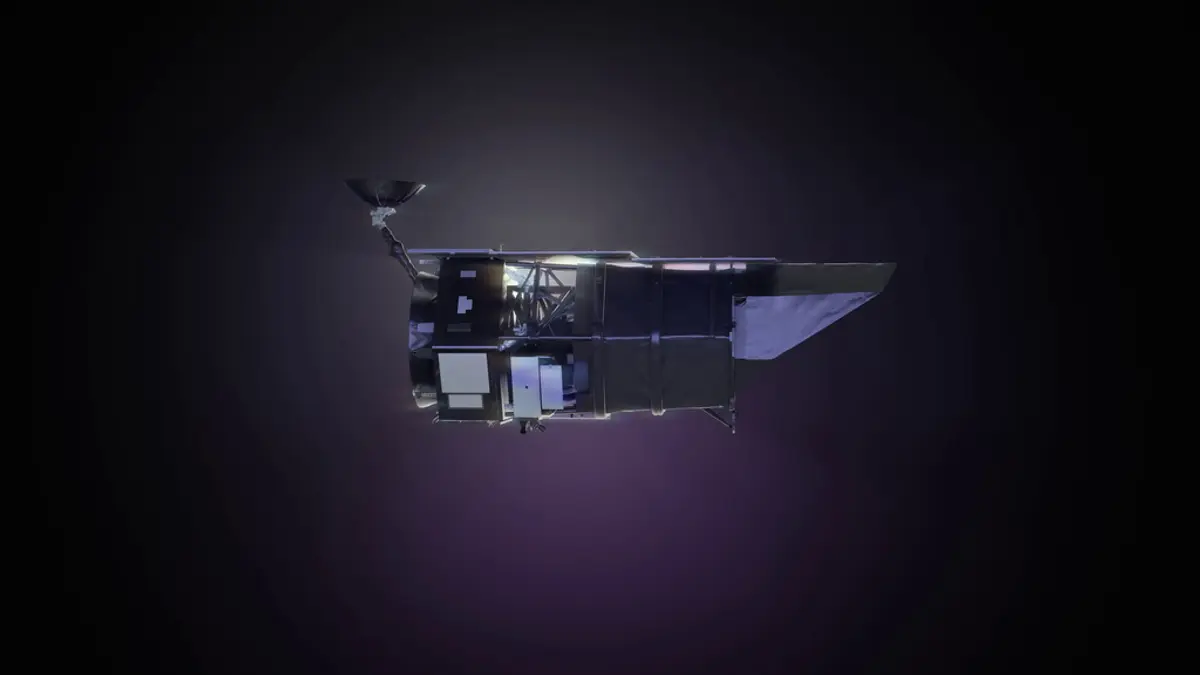
NASA’s Nancy Grace Roman Space Telescope has launched, beginning a five-year mission designed to survey the universe at a scale that makes ordinary stargazing look like peering through a letterbox. The observatory will map billions of galaxies, investigate exoplanets and help scientists examine dark matter and dark energy.
What’s actually going on: NASA says Roman lifted off at 7:26 a.m. EDT on 30 August aboard a SpaceX Falcon Heavy from Launch Complex 39A in Florida. The observatory is expected to travel to the Sun–Earth L2 point, roughly one million miles away, over approximately three months.
The telescope’s wide field of view is the headline feature. NASA describes it as 100 times larger than Hubble’s, while reporting from The Verge says its 300-megapixel infrared camera could survey the sky up to 1,000 times faster. That does not make Roman a simple “faster Hubble”; it is a different tool built to capture enormous areas and enormous amounts of data.
That data will feed research into how the universe expands, how galaxies form and where planets sit beyond our Solar System. NASA has not yet published post-launch deployment milestones or a final spacecraft-health update in the material checked, so the next stage is careful commissioning rather than instant cosmic fireworks.
Our opinion
Roman is exactly the kind of space technology that earns its keep quietly: less spectacle than a crewed launch, far more potential to change what we know. The “1,000 times faster” figure is NASA’s claim and still needs to be understood in context, but a wider, sharper survey of the universe is a genuinely exciting upgrade to the cosmic toolbox.