MusicBrainz Picard 3.0 arrives with a Qt6 rebuild and a new plugin system
The MusicBrainz tag editor's first major release since 2.13.3 moves to Qt6, replaces its plugin system and drops support for older versions of Windows and macOS.
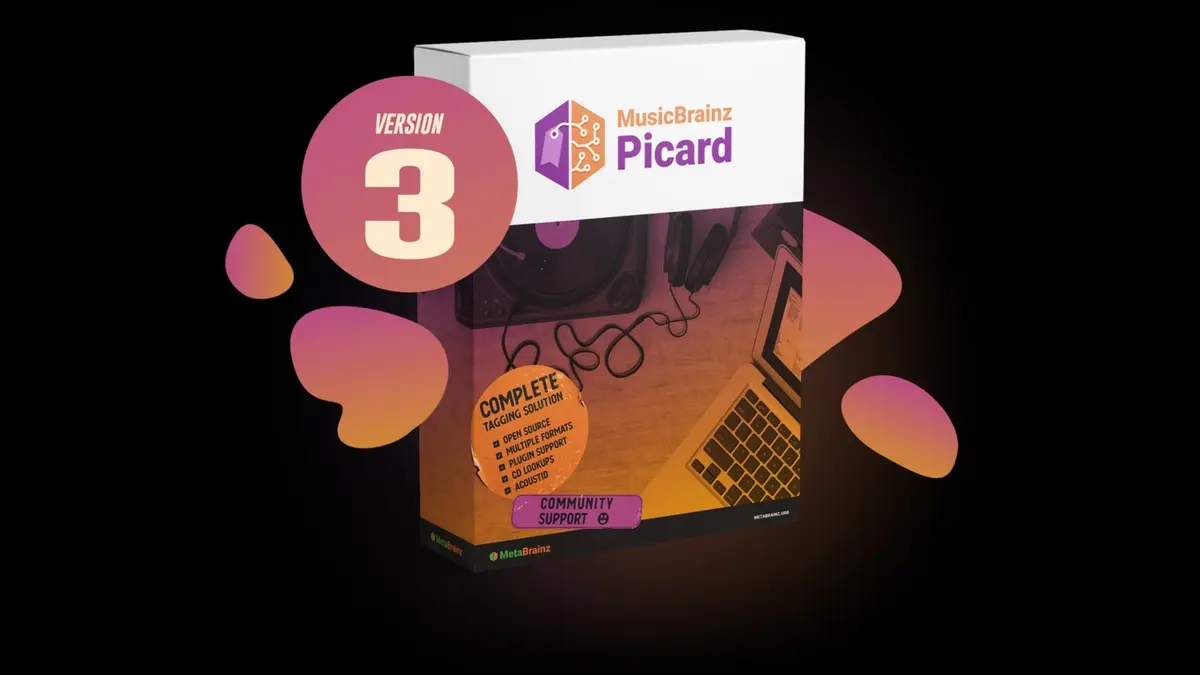
MusicBrainz Picard has reached version 3.0, its first major release since 2.13.3 and the product of roughly three years of work that began in late 2023 with a move to PyQt6. The MetaBrainz Foundation says the release covers 687 merged pull requests, close to 6,800 commits from more than 100 contributors and almost 400 resolved tickets, spread across 14 pre-releases.
The plugins are the real change
Picard's new plugin system is the biggest change after the toolkit upgrade. In version 2, the application loaded and partly ran the code of every installed plugin at every start, whether or not that plugin was enabled, and third-party development meant committing code into a single central repository. Picard 3 separates plugin metadata from code behind a mandatory MANIFEST.toml file, defines a typed plugin API, versions and updates plugins through Git, and installs them from a central registry, a third-party repository or a local directory. Plugins carry one of four trust levels, from official down to untrusted, and can be blacklisted centrally, which gives the project a way to react to a bad plugin without shipping a new release. The cost is compatibility: Picard 2 plugins do not work and must be migrated, and about 30 are available so far.
Qt6, and what it repairs
Picard 2 was built on Qt5, and version 3 moves to Qt6. The practical gains are better handling of display scaling, a dark mode that works across every platform without restarting the application, and the end of the inconsistent font scaling Windows users had lived with. The interface also gains columns that can be defined with scripts, a pre-defined Match column for sorting releases by match quality, filters for the list views, and copy-and-paste across several tags at once. New users get a setup wizard on first launch and short tutorials the first time they load or cluster files.
Tags, cover art and a command line
Synced lyrics arrive as a new %syncedlyrics% tag in the LRC format, supported for ID3 and WMA, and a composer's MusicBrainz identifier is now available as a tag of its own. Cover art can be filtered and processed, so images below a size threshold are ignored and others are resized or converted, a feature written during Google Summer of Code 2024. The release also reworks the algorithm that matches files to releases after a lookup, adds ISRC lookup and submission, and ships picard-cli, a command-line tool for managing plugins and importing or exporting option profiles.
Older systems are left behind
Picard 3 requires Windows 10 or later, macOS 13 or later, and, on Linux, Qt 6.6 with Python 3.10 or newer, so anyone on an older system is asked to stay with Picard 2, which is promised at least one more release with important fixes. Native Apple silicon builds are new. The team lists three known issues: restoring a large session takes a long time and freezes the interface, macOS sometimes fails to draw check marks in the global menu, and picard-cli is missing from the macOS application bundle, though it can be installed from PyPI. The Microsoft Store build has not been updated to 3.0 yet, and the Linux Flatpak package follows separately.
Our opinion
Picard is the rare free tool whose release notes read like a maintenance ledger, and here that is the story rather than a complaint. The Qt6 migration and the plugin rewrite buy future freedom more than present features, and the trust levels and central blacklist are the sort of plumbing a project installs only once it has decided to stay around for another decade. The cost lands on the people who feel it most. Anyone on an older Mac or an unsupported Windows build is frozen at 2.13.3, and anyone who depends on a plugin nobody maintains has to wait or port it themselves. A tag editor is not meant to be exciting, but a major version that spends most of its budget on foundations is the dull version of good news.