Microsoft puts $10bn into Middle East AI by 2030
The company has set out a framework for Kuwait, Qatar, Saudi Arabia and the UAE, with more than $10 billion of capital and operating spending planned by 2030.
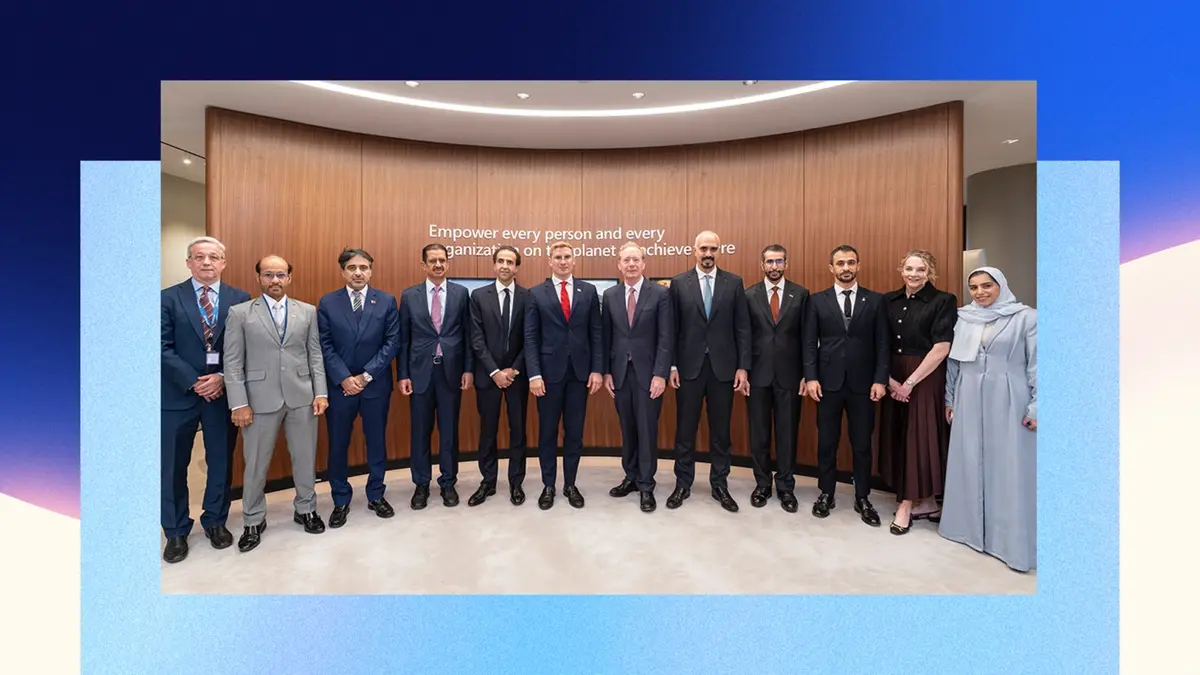
Microsoft has set out a Middle East framework covering Kuwait, Qatar, Saudi Arabia and the United Arab Emirates, and attached a number to it: more than $10 billion in capital and operating expenses across the region between now and 2030. A further $400 million is earmarked for subsea and terrestrial connectivity over the same period. The company published the plan on 23 September, framing it as an expansion of partnerships rather than a single construction programme.
Sovereign cloud and partners on the ground
The partnerships are the substantive part. Microsoft names HUMAIN, G42, QAI and the Government of Kuwait, alongside digital-government work such as TAMM in the UAE, SDAIA's ALLaM in Saudi Arabia and TASMU in Qatar, and says Microsoft 365 Copilot is being adopted across Kuwait's government. The technical offer behind those relationships includes Microsoft Sovereign Public Cloud and Sovereign Private Cloud, plus a programme called Project Digital Shield.
Resilience is the newer argument
Microsoft has also made digital resilience one of three pillars of its regional strategy, an argument it grounds in the conflict that has disrupted infrastructure across the Middle East. The company points to SeaMeWe-6, the subsea cable system with landings in Qatar, Saudi Arabia and the UAE, and to a global network of more than 275,000 miles of terrestrial and subsea fibre that it says has let it reroute traffic around disruptions. Microsoft says it will extend its existing data-protection sovereignty and business-continuity commitments to eligible governments and customers in the four countries.
Water, power and the fine print
Datacentre growth in the Gulf carries a resource bill. Microsoft says it will work with its lessor partners to advance its water-positive goals, prioritising zero-water cooling where that is feasible, and to work with regulators, utilities and those lessors on the market conditions for carbon-free electricity procurement. All of it is a plan rather than a completed build, and the timeline runs to the end of the decade.
Our opinion
A $10 billion figure is easy to announce and slow to spend, and Microsoft has been careful to call this capital and operating expense rather than one programme, which leaves the money free to arrive over six years in whatever mix regional demand dictates. The more revealing line is the $400 million for cables. AI capacity is now a bandwidth and power problem as much as a chip problem, and subsea routes are where the region's cloud map is genuinely being redrawn: a landing decides which countries keep a second path when a cable is cut, and redundancy is the thing being paid for. Sovereignty is doing double duty here too. It is a real promise about where data sits, and it is also the commercial argument for buying Microsoft rather than building local capacity. Only one of those two is a strategy, and the region's governments will work out which before the decade is out.