Microsoft puts governed business data inside Copilot
Fabric IQ brings Power BI semantic models into Microsoft Copilot, part of a Barcelona batch of Fabric and Azure data announcements.
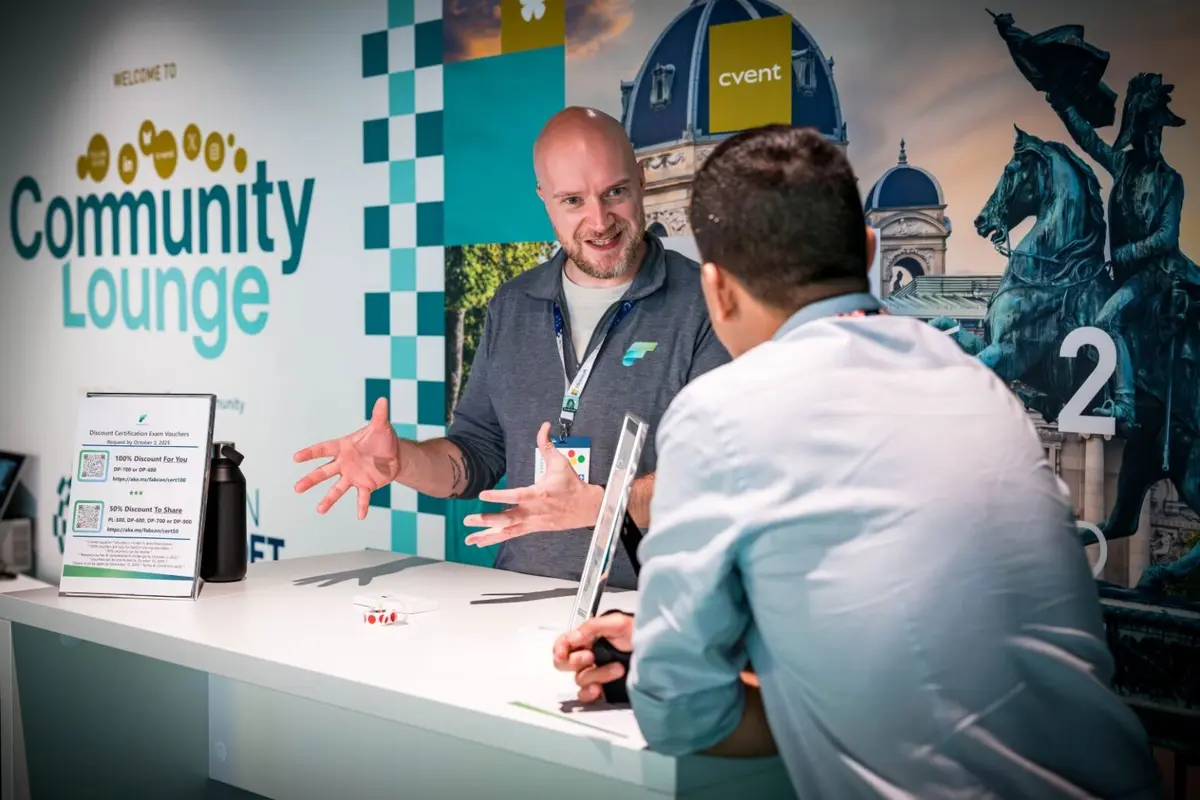
Microsoft used the European Microsoft Fabric and SQL Community Conference in Barcelona on 28 September 2026 to announce Fabric IQ, IQ Sharing, observability in Fabric and Fabric Apps, a set of changes aimed at grounding AI answers in the governed data an organisation already trusts rather than in whatever a model happens to remember.
Fabric IQ is the headline. It brings governed business context — Power BI semantic models, metrics, relationships and business definitions — into Microsoft Copilot Chat and Cowork, and it is now generally available. In practice, asking Copilot for a sales forecast returns an answer grounded in the same semantic model that powers the organisation's own reports, rather than a differently derived number that then has to be argued about in a meeting. Existing access controls and governance carry across.
Sharing context without giving up the data
IQ Sharing, in preview as part of Fabric IQ, is the more interesting commercial move. It lets organisations share Fabric IQ artifacts and the business context that gives them meaning across company boundaries — to customers, partners and suppliers — while keeping governance over the underlying assets. Microsoft pairs it with OneLake mirroring and shortcuts as the foundation for moving governed context between platforms.
Two further pieces round out the batch. Observability in Fabric adds cross-workspace monitoring and an enhanced Monitor Hub so teams can see jobs, capacities, workspaces and workloads in one view, with Operations Agents and Activator handling investigation and automated response. Fabric Apps moves application development directly onto governed data inside Fabric.
Microsoft frames the whole set as a continuous learning loop in which AI draws on an organisation's own data and expertise and improves the systems around it, explicitly “without making the organization dependent on any single model provider”.
Our opinion
Every enterprise AI pitch this year has been about grounding, and most of them quietly mean retrieval over documents. Grounding over a semantic layer is a materially harder promise, because a metric has an agreed definition and a number in a slide has a lawyer. Microsoft already owns the semantic layer that a large share of finance and operations teams argue from, so this is the one place where being the incumbent is a real technical advantage rather than a marketing one. Copilot answering with the same number as the Power BI report removes an entire class of meeting.
The risk sits in IQ Sharing. Federating governed business context across company boundaries asks organisations to trust a shared definition of things like revenue and active customer with a partner who may define them differently, and semantic models have historically been where political arguments go to hide. The technology is the easy part; the governance conversation that follows is the one that decides whether this ships beyond a pilot. Note also how exactly Microsoft words its model-independence claim: the context layer stays portable, the platform it lives in does not.