Meta opens its Muse gadget SDK and gives away Home Link
Meta has published an open-source SDK that puts its Muse AI agent on ESP32 and Raspberry Pi hardware, alongside a free Home Link gadget for US subscribers.
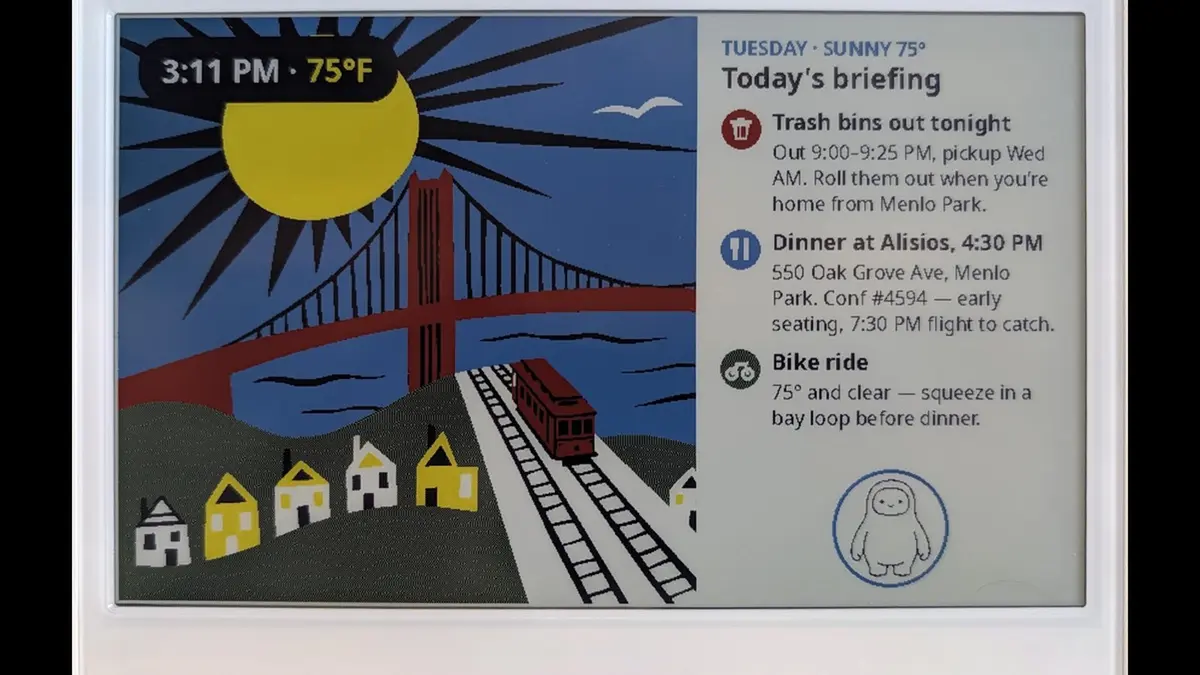
Meta has published an open-source SDK that puts its Muse AI agent onto hardware you build yourself, and paired it with a small device the company makes itself. The toolkit lives on GitHub and is documented on a new Muse Gadgets site that walks through assembling a device from off-the-shelf parts.
Build your own Muse
In Meta's words, Muse gadgets are open source devices you build yourself: program an ordinary ESP32 board or set up a Raspberry Pi with the company's SDKs, then connect the agent to displays, buttons, sensors and actuators. The site's examples include giving Muse a colour e-ink screen for a morning briefing, reminders or a shopping list, and an HDMI stick that puts the agent on a television.
The free Home Link
Meta is also handing out Muse Home Link, a USB-C gadget built on the ESP32-C5 chip. It joins a home Wi-Fi network so Muse can reach compatible devices or anything with a local HTTP API, and community-built skills let it switch on a light, control a television or send a document to a printer. It is free with an active Muse subscription in the United States only, limited to one per subscriber, shipping in October on a first come, first served basis. Home Link runs Meta's firmware and cannot be reflashed, though its firmware is built on the open source ESP32 Device SDK, so it can be studied.
Meta warns that community skills can change or break and should not be trusted with anything safety-critical, and that it does not endorse the third-party devices the skills talk to.
Our opinion
This is what platform owners do when they want an ecosystem without the overhead: hand out the schematics and let the workbench crowd find the use case. An SDK for ESP32 and Raspberry Pi costs Meta almost nothing and buys something marketing cannot, a shelf of gadgets nobody had to design, certify or support. The lock on Home Link is the honest tell. You may build anything you like around Muse; you may not replace Muse. That is generous open source and shrewd platform defence at once, and it parks the failure modes where Meta wants them, in the community skills it cheerfully tells you not to trust with the lights.