Lucid and Bolt plan 25,000 Level 4 robotaxis for Europe
Lucid and Bolt will build a Level 4 vehicle platform and put at least 25,000 autonomous Lucid cars into European cities, part of Bolt's ambition of 100,000 robotaxis by 2035.
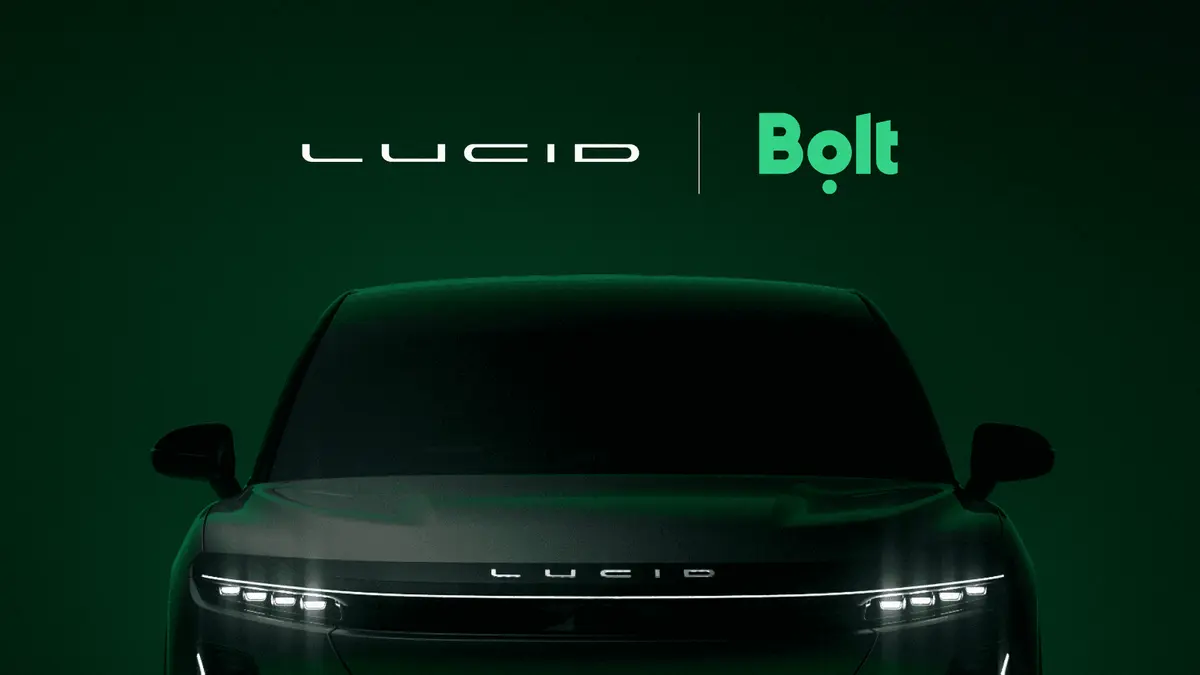
Lucid and Bolt have signed a strategic partnership to develop and run autonomous mobility across Europe, with Bolt aiming to deploy at least 25,000 fully autonomous vehicles built on Lucid's upcoming Midsize platform. The two companies announced the deal on 17 September, and it is the first hard European commitment behind Bolt's ambition of 100,000 autonomous vehicles on its platform by 2035.
What the two companies actually agreed
Bolt's half of the work sits with Bolt Autonomous Driving Solutions, the unit it set up to co-design, integrate and commercialise Level 4 autonomy in Europe. Bolt will define the vehicle requirements, along with the software, safety and rider-experience parameters, and will build the fleet infrastructure, operating systems and city partnerships. It intends to own and operate the fleet itself. On the Lucid side the programme is run by Lucid Technologies, a newly established division that pulls the carmaker's artificial intelligence, driver-assistance and autonomy work into one structure. Silvio Napoli, Lucid's chief executive, said shared autonomous mobility was a chance to extend the company's technology beyond cars people buy, and called Bolt an ideal partner to scale it across Europe.
A Level 4 car that does not exist yet
The vehicle will be co-designed from the product-development stage as an autonomous-driving-system ready platform built for SAE Level 4, the level at which a car drives itself inside a defined area without a human expected to take over. That is a long way past the hands-on-wheel assistance sold on new cars today, and Lucid's Midsize family, the volume platform the company has promised beneath its Air and Gravity models, has not launched. Both firms expect the platform to use Nvidia Hyperion, the production-ready hardware platform and sensor reference architecture Nvidia sells as a route to Level 4 autonomy.
Where the details run out
There is no launch date, no list of cities and no order of markets. Markus Villig, Bolt's founder and chief executive, framed the pitch around operating experience rather than silicon, saying autonomous driving in Europe requires data, software, vehicles and operations to work as one system built for European roads and regulation. Both companies say they will work with European regulators and policymakers on the introduction of the services, which is the slowest and least glamorous part of the plan.
Our opinion
Europe has spent years watching American robotaxi pilots from a safe distance, so 25,000 cars carrying Bolt's green logo would be a properly loud answer. Numbers this size are cheap before the first permit is signed, though, and what makes the deal interesting is not the target but the split of work. Bolt intends to own and operate the fleet, which puts the messy, real-world risk on the company that already runs cars in more than 850 cities, while Lucid supplies the vehicle and the autonomy stack and banks a volume order for a platform it has not launched. That is a sharper division of labour than the licensing handshakes most carmakers have settled for. The catch is the calendar. Europe approves driverless operations city by city, and neither company has named one. Until a city, a date and an approval exist, 25,000 is a target, not a plan.
- Lucid and Bolt announced a strategic partnership on 17 September 2026
- Bolt aims to deploy at least 25,000 fully autonomous Lucid vehicles across European cities and countries
- The cars will be based on Lucid's upcoming Midsize platform
- The platform is being designed for SAE Level 4 autonomy and is expected to use Nvidia Hyperion
- Bolt intends to own and operate the fleet through Bolt Autonomous Driving Solutions
- The target sits inside Bolt's ambition of 100,000 autonomous vehicles on its platform by 2035
- No launch date, city list or market order has been announced