Joby's hands-off Caravan crosses the United States
A converted Cessna Caravan fitted with Joby's autonomy system flew 3,199 miles across the United States while its onboard safety pilot made no control inputs, supervised remotely from California and South Carolina.
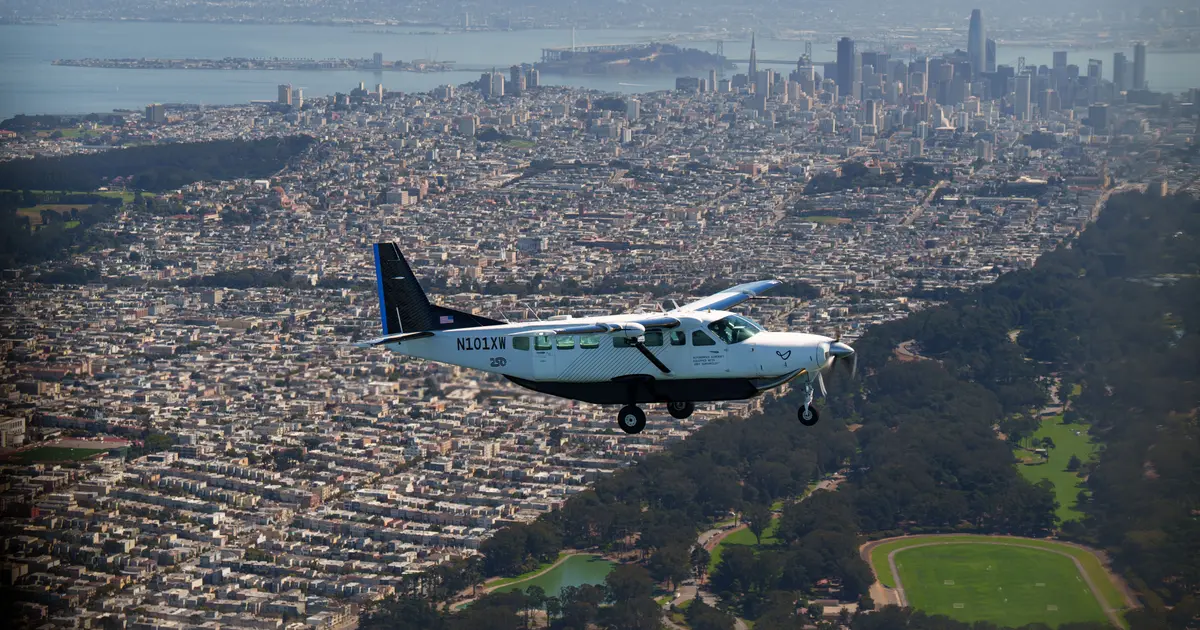
A converted Cessna Caravan fitted with Joby Aviation's autonomy system has flown across the United States, covering 3,199 miles with no control inputs from the safety pilot aboard. The aircraft landed at Dare County Regional Airport in North Carolina's Outer Banks on 18 September, finishing the eastbound leg of a month-long tour that began at Buchanan Field in Concord, California.
What was actually flying
The Caravan is a high-wing single-engine aircraft already certified to carry passengers, and it performed its own taxiing, take-offs, route navigation and landings while being supervised remotely from Joby's autonomy headquarters in California and from Shaw Air Force Base in South Carolina, up to 2,323 miles away. On the way it flew into Phoenix Deer Valley, one of the busiest general aviation airports in the country, and re-routed around thunderstorms in real time without any prior familiarity with the airports it was using. Joby says the autonomy stack behind the flight came from Xwing, the autonomous flight company it acquired in 2024, and that the system has now been proven across more than 400 flights and 800 automated flight hours.
Why an old airframe is the point
Joby's proposition is not a new aircraft but a bolt-on: put autonomy on an airframe that is already certified and you have a route to autonomous logistics without waiting for a new type certificate. The stops on the way east were chosen to sell that argument. Phoenix hosted dual-use demonstrations for Arizona's uFLY coalition, Fort Worth Alliance Airport hosted a freight showcase that coincided with the company's first air-taxi eIPP flight, and Shaw Air Force Base hosted a capability demonstration of military flight operations. After the arrival, the aircraft flew a low pass near the First Flight Monument at Kitty Hawk, a piece of theatre with a point to it: 3,199 miles with nobody touching the controls, ending a short flight from where the Wright brothers managed 852 feet. Flights in North Carolina supported the state transport department's eLIFT-NC healthcare logistics programme, and western legs fed a multi-state effort with Utah to evaluate high-altitude airspace integration for the FAA. The aircraft now begins the return journey west, with stops planned at Raleigh, Fredericksburg, Louisville, Wichita, Oklahoma City, Salt Lake City and Portland.
Our opinion
For all the distance covered, the important detail is the person still sitting in the left seat. Joby's safety pilot made no control inputs, but that pilot was aboard, which is where the rules put them until regulators have a framework for flying cargo, and eventually passengers, with nobody on the aircraft at all. That is the real bottleneck: the technology has now demonstrably crossed a continent while the rulebook is still deciding what to do about it. Bolting autonomy onto a certified airframe is the clever part of the plan, because it sidesteps the years of certification work a clean-sheet autonomous aircraft would need, and it explains why a design that first flew in the 1950s is doing the flying here rather than Joby's own electric aircraft. The defence work deserves more scepticism than the tour stops invite. Exercises such as Agile Flag, where the system delivered replacement parts 24 hours faster than conventional logistics, and a REFORPAC flight where aircraft in Hawaii were operated from Guam, are genuine demonstrations, but they are not civil airworthiness approvals and they do not settle who is accountable when an autonomous aircraft makes the wrong routing call in busy airspace. There is also a commercial gap that the 3,199-mile headline papers over. An aircraft that cannot legally fly without a supervising pilot has not yet delivered the saving that makes remote logistics attractive, and in Europe the picture is less settled than in the United States, where the FAA is at least actively testing integration. The capability is real. The business case is still a promise.