ispace signs Argo to fly its first lunar relay satellite
ispace-U.S. and Argo Space have signed a definitive agreement that puts the first Lunar Connect relay satellite, Alpine, on a path to lunar orbit aboard Argo's water-powered Argonaut vehicle, with Mission 2.5 targeted for launch as early as 2027.
What has ispace actually signed?
ispace technologies U.S. and Argo Space Corp. have signed a definitive agreement that puts the first satellite in ispace's Lunar Connect constellation on a path to the Moon. The deal, dated 17 September, hands Argo the job of delivering the relay satellite to lunar orbit, and it finalises an arrangement the two companies first announced in March 2026.
The mission is called ispace Mission 2.5. ispace says it can launch as early as 2027, which is the company's own schedule rather than a booked flight: no launch vehicle, no fixed date and no contract value were disclosed in the announcement.
Why is the satellite called Alpine?
The satellite is named Alpine after the view of the Colorado Rocky Mountains just outside ispace's U.S. headquarters in Englewood, and it is the first orbital asset in the Lunar Connect Service. That service is the part worth watching. ispace intends to sell communications and positioning to anyone operating in lunar orbit or on the lunar surface, which makes a relay satellite the company's attempt to own the plumbing of the Moon rather than a single delivery.
ispace-U.S. is the American arm of ispace, inc., the Japanese lunar exploration company listed in Tokyo, and it describes itself as providing transport to the lunar surface and lunar orbit for government, academic and commercial customers.
What is Lunar Connect meant to do?
ispace plans a constellation of at least five satellites orbiting the Moon, providing communication, positioning, observation and Space Situational Awareness for customers it hopes will build a business in what it calls the cislunar economy. The remaining satellites are expected to be deployed into lunar orbit by 2030.
Argo will not fly all of them. ispace says it will use a mix of transport methods, including its own lunar landers and orbital transfer vehicles as well as third-party services such as the one Argo provides. That is a sensible hedge for a company still proving its own landing hardware, and it also shows how much of the wider constellation is a plan rather than a purchase order.
The delivery vehicle is water-powered
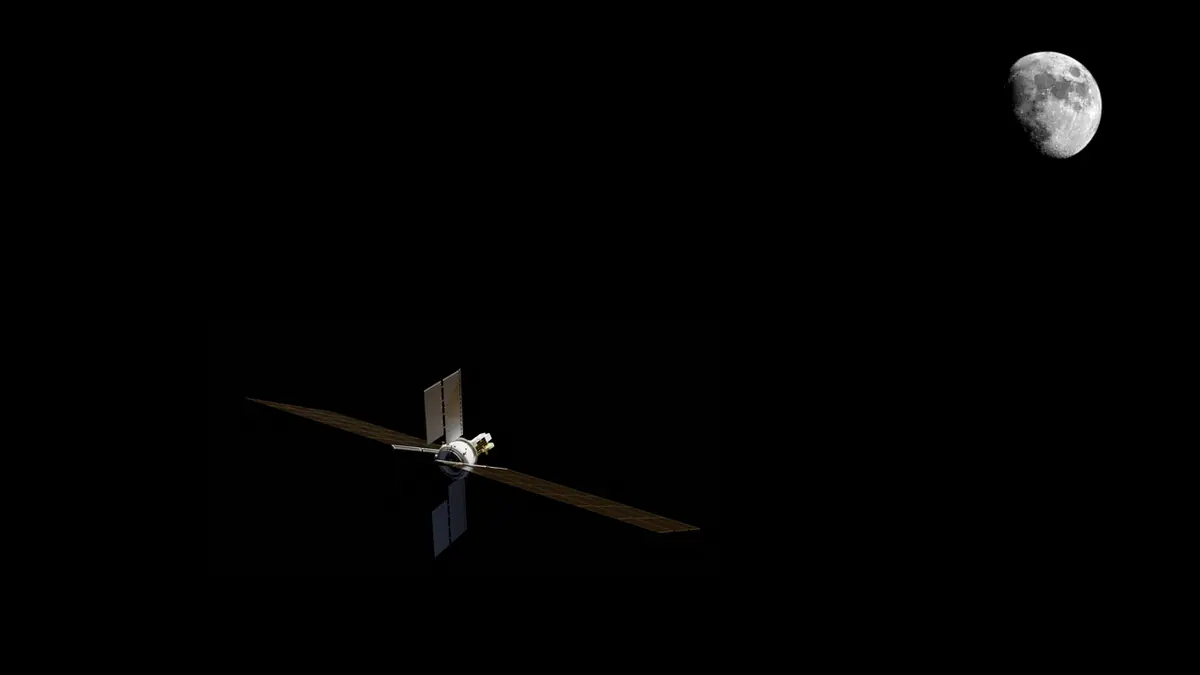
Argo will transport Alpine to lunar orbit using Argonaut, a space logistics vehicle the company describes as water-powered. Argo says the design was architected for responsive, affordable delivery of customer assets to any orbit, including cislunar space, where distances and timing windows make conventional upper stages expensive to adapt.
Water is an appealing propellant on paper. It is stable, non-toxic, easy to store and, in the long run, potentially available away from Earth, which is why several propulsion companies are working on it. It is also the sort of claim that deserves a flight record, and Argonaut has not published one. The description is the company's own.
Who is paying, and for what?
Neither company put a price on the contract, and neither named a customer. What ispace does say is that NASA's recent IGNITION announcement and the agency's plans to develop a Moon Base as a central part of the Artemis programme leave ispace-U.S. positioning itself for future Commercial Lunar Payload Service task orders, as well as private payload service contracts for work near the lunar South Pole.
In other words, this is infrastructure aimed at future government work. A communications relay is exactly the unglamorous capability that has to exist before anyone else can build a business around the Moon, and ispace is staking out the first slot in orbit rather than the first footprint on the surface.
What we still do not know
The announcement leaves the commercial details unresolved. There is no contract value, no launch vehicle, no firm launch date beyond "as early as 2027", no customer list and no price for the relay services Alpine is meant to sell. The five-satellite constellation, the 2030 completion date and the water-powered Argonaut are all company statements rather than independently verified milestones, and Argo has published no flight history for the vehicle that is supposed to carry ispace's first orbital asset.
Alpine's own capabilities are equally thin in public. The release says the constellation will provide communication, positioning, observation and Space Situational Awareness without specifying bandwidth, latency, orbit or ground segment, so what a customer can actually buy in 2027 is still undefined.
Our opinion
The tempting read is that this is two companies with ambitious slide decks agreeing to help each other look credible, and there is a version of this story where nothing flies. That version is not the interesting one. The interesting one is that ispace has just bought itself a reason to exist beyond landers, and bought it cheaply: a delivery contract for one small satellite is a far smaller commitment than building the relay constellation itself, and it converts a March memorandum into a signed obligation.
Four agencies and a dozen startups are all racing towards the same lunar South Pole, and every one of them will need to talk to Earth. Whoever owns the relay owns the toll booth. ispace is not first to that idea, but it is unusually explicit about it, and naming the first satellite after the mountains outside the office is the sort of small, confident gesture a company makes when it believes the follow-on satellites will actually get built.
Fairness cuts the other way too. Water-powered propulsion has been promised for years without a commercial flight to point at, and "as early as 2027" is the phrase companies use when they mean 2028 or later. The Moon does not need a press release; it needs hardware that arrives. Until Argonaut flies and Alpine is transmitting, this is a contract to be judged on delivery, not on ambition.
Image: ispace.
- ispace technologies U.S. and Argo Space Corp. executed a definitive agreement on 17 September 2026 for Argo to deliver ispace's Lunar Connect relay satellite to lunar orbit
- The signing finalises an agreement the two companies announced in March 2026 and clears the way for ispace Mission 2.5 to launch as early as 2027
- The satellite is named Alpine, after the Colorado Rocky Mountains near ispace's U.S. headquarters, and becomes the first orbital asset in the Lunar Connect Service
- Argo will carry it to lunar orbit aboard Argonaut, a space logistics vehicle Argo describes as water-powered
- ispace plans at least five satellites in lunar orbit to provide communication, positioning, observation and space situational awareness, with the remainder expected in orbit by 2030
- ispace says it will use its own landers and orbital transfer vehicles alongside third-party transport such as Argo's
- No contract value, launch vehicle, firm launch date, customer list or price was disclosed
- Argo has published no flight history or independent performance data for Argonaut