Henry Cavill is building a video game on a Googlebook
Google has signed the British actor to build a game on its new Android laptop, with the finished project promised for November — and no name, studio or genre attached.
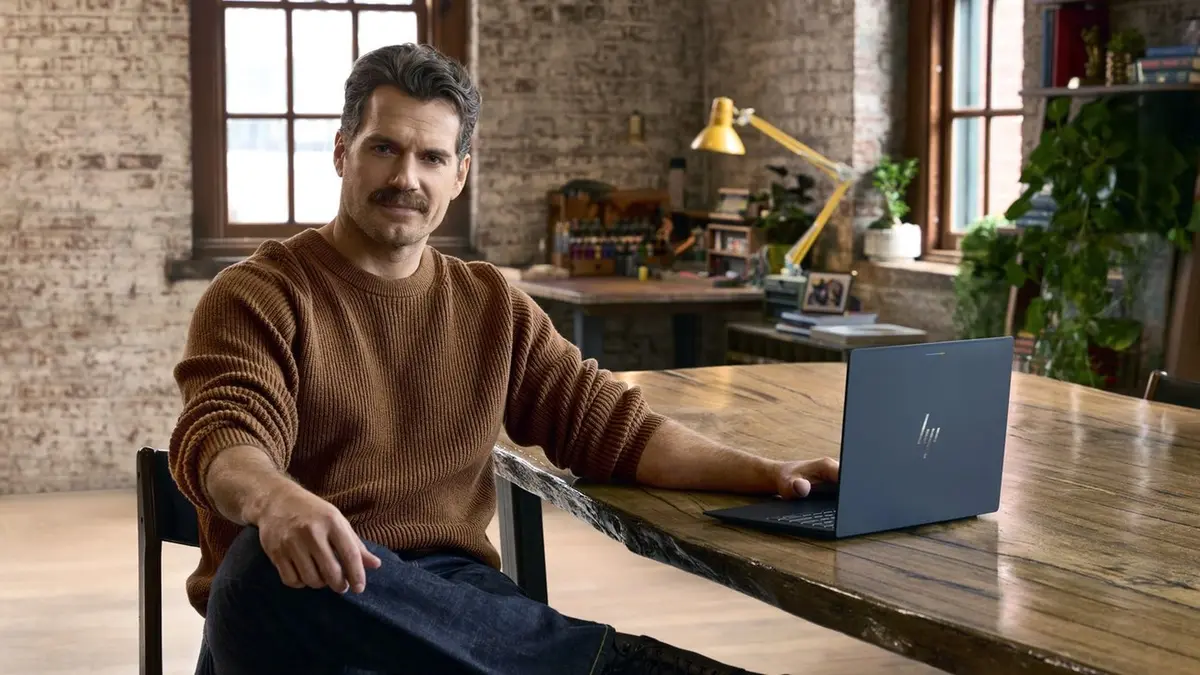
Henry Cavill is building a video game, and Google has handed him the laptop. The British actor, best known for Superman and The Witcher, is partnering with the company to make a game on a Googlebook, its new premium Android laptop, with the finished project due to appear in November.
Google announced the pairing on its blog on 29 September, in a post signed by Menaka Shroff, its vice president of marketing for the global Android ecosystem. The framing is refreshingly blunt about what this is: a showcase for hardware rather than a studio signing. Cavill, the post says, is using the Googlebook "to build his personal passion projects", and the game is the proof that the laptop can keep up with him.
He is a sensible choice for that job. Cavill is one of the few actors whose enthusiasm for games and fantasy predates any sponsorship — he paints Warhammer miniatures, has a well-documented weakness for high-end hardware, and runs his own production company alongside his acting work. Google describes him juggling several ventures "all while maintaining a passion for gaming, fantasy lore, and high-performance technology".
The game itself is a blank. Google gives no name, genre, studio or platform, and says only that Cavill is "teaming up with Google to build a video game using Googlebook" in November. Building something from scratch in a matter of weeks is not how games with budgets are made, which tells you the deliverable is a demonstration rather than a release.
What Google is actually selling
The laptop is the substantive half of the story. Googlebook is a new premium line built on Android with ChromeOS desktop plumbing underneath and Gemini baked into the system, and Google is selling continuity with your phone as the reason to buy one. Sign in and your Android phone's settings, saved passwords, Wi-Fi networks and messages move across, end-to-end encrypted.
Hardware starts at $899 and the first machines, from Acer, ASUS, Dell, HP and Lenovo, reached "select countries" from 4 October. Google is promising up to 2.8K OLED touchscreens, dedicated NPUs rated above 45 TOPS and battery life of up to 14 hours, with 12 months of its advanced AI tools and cloud storage bundled with every purchase.
Two features do the showing off. Magic Pointer turns a wiggle of the cursor into a Gemini prompt that understands whatever is on screen, and Rambler is voice dictation that turns a rambling brain dump into organised bullet points and action items, switching languages mid-sentence. Antigravity lets you write and deploy your own apps, and there is a full Linux terminal for anyone who would rather run coding agents on the machine itself.
The timing will be tight. Googlebook went on sale on 4 October, which leaves Cavill roughly four weeks to produce something watchable, in a premium laptop market where the MacBook Air and a wall of Windows machines with dedicated graphics already own the creative crowd.
Our opinion
This is a laptop advert wearing a game's clothes, and it is a smarter one than most. Cavill is not an actor being handed a controller for a photo call; he paints miniatures, cares about frame rates and would happily tell you what he thinks of the cooling. If anyone can sell "make something on this", it is him.
Be clear-eyed about November, though. A game built in a month by one enthusiast, on a laptop, for a launch campaign, is content — a short video, an interview, a demo at best. That is fine, provided nobody dresses a hobby project up as a studio. The part worth watching is not the celebrity but the bet underneath: that Android, Gemini and your phone are finally enough to sell a laptop. Cavill gets to enjoy himself either way.