ClearSpace signs ESA contract to extend satellite life
The Luxembourg-based in-orbit services company will mature the docking and proximity operations needed to keep ageing satellites working in geostationary orbit.
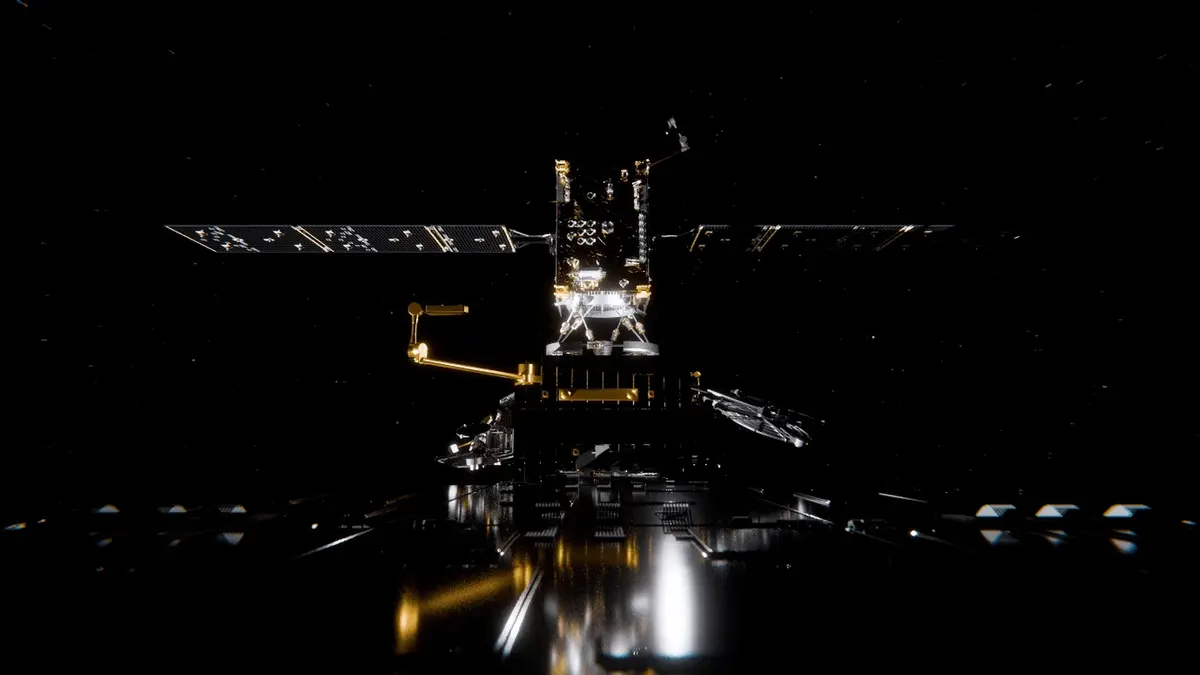
ClearSpace has signed a contract with the European Space Agency for the next phase of Phoenix, the company’s mission to keep satellites in geostationary orbit working for longer. The Luxembourg-based in-orbit services company announced the agreement on 23 September.
Phoenix docks to a satellite and takes over the flying
Phoenix is being built so that a servicing spacecraft can rendezvous with and dock to a satellite that is already operating, then supply extra propulsion and attitude control. By taking on station-keeping and repositioning, the servicer is designed to extend the useful life and operational value of hardware already in orbit, and to support responsible end-of-life operations once a satellite is finally done. Docking is the capability everything else rests on: a safe, predictable mechanical connection from first touch to firm contact, in an orbit where nothing can be reached by hand.
A €100 million programme enters its ESA-funded phase
The wider Phoenix development programme is currently estimated at approximately €100 million. The newly signed contract covers the next stage of that work, advancing the mission architecture and the core rendezvous, proximity operations, docking and servicing technologies needed before commercial operations can follow. The activity is funded under the Industrial Competitiveness programme line inside ESA’s Advanced Research in Telecommunications Systems (ARTES) programme. It builds on development already done by ClearSpace Luxembourg with the support of the Government of Luxembourg and the Luxembourg Space Agency, whose early backing let the company and its industrial partners establish the concept and its technical foundations.
ESA and ClearSpace on why docking is the hard part
Laurent Jaffart, Director of Resilience, Navigation and Connectivity at ESA, said: “ESA is dedicated to helping Europe build the capabilities needed for the next generation of in-orbit services. In cooperation with our Member States and European industry, we’re taking Phoenix to the next level by working to mature the dual-use technologies that will deliver clear benefits for sustainability, resilience, and the competitiveness of Europe’s space industry.” Luc Piguet, CEO and co-founder of ClearSpace, called the mission the result of a shared ambition to make in-orbit servicing a practical and valuable capability for satellite operators, and said the company is committed to building a safe, competitive and commercially sustainable European in-orbit servicing capability with ESA, its Member States, industrial partners and customers.
Our opinion
In-orbit servicing has a marketing problem. The dramatic version is dragging dead hardware out of the sky, which is expensive, unglamorous and paid for mostly by agencies. The version with an actual business behind it is quieter: keeping a working satellite working, because station-keeping fuel runs out long before the electronics do. That is the bet Phoenix is built on, and it explains why ESA is funding a technology phase rather than buying a service. Docking is the whole trick here. Propulsion and attitude control are commodities once something is attached, but a mechanical connection that holds on the first attempt, in geostationary orbit, with no second chance at the hardware, is a capability you either have or you do not. The other detail worth noticing is where the early money came from. Luxembourg’s space agency backed the concept well before a European institutional programme would pay for this phase, which is how a Swiss-founded company ends up headquartered in Luxembourg with its foundations already poured when the ESA contract arrived.