China's New Robot Jobs Put Humans on Training Duty
China has formally recognised 11 new professions for embodied AI, while JD.com plans robot bases and 10 million hours of training data.
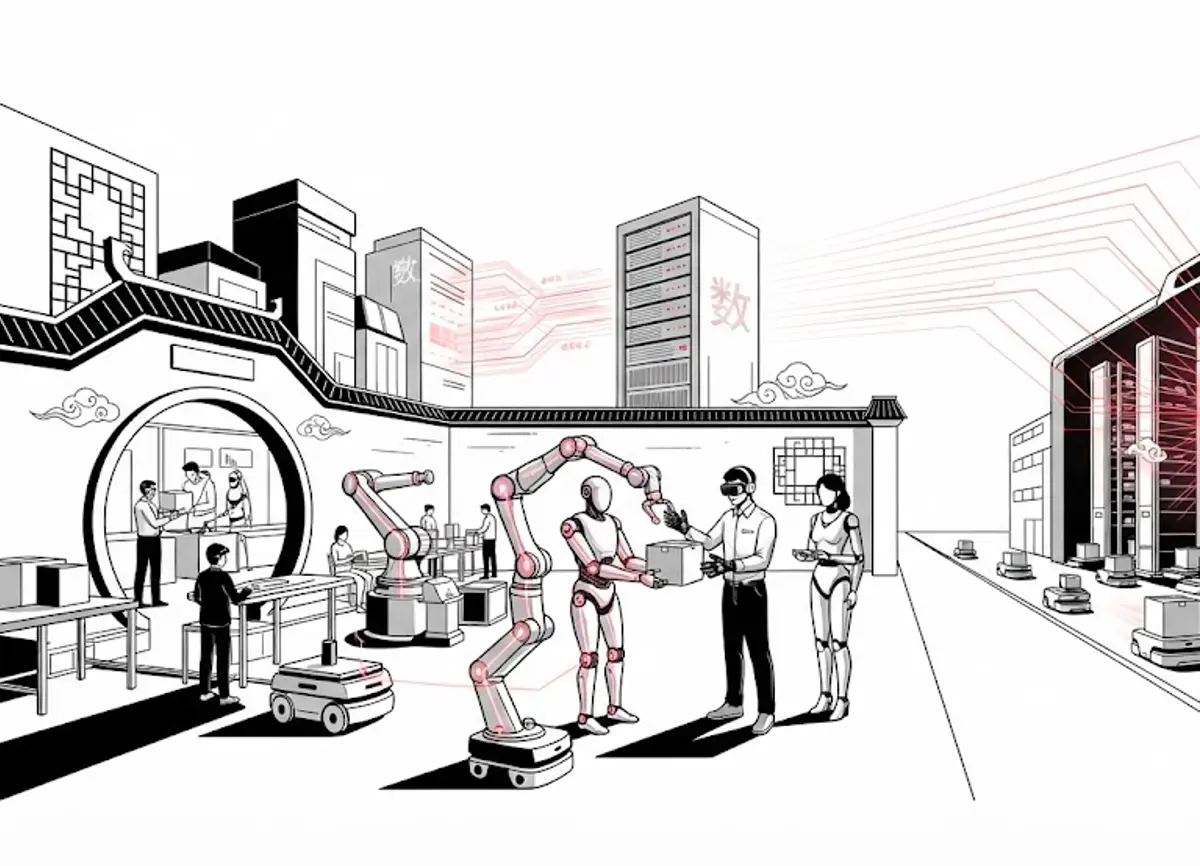
China has officially created jobs for people who teach robots how to behave in the real world, proving that the future of work may involve telling a metal colleague that, no, it cannot simply walk through the wall. Beijing has recognised a new batch of professions around embodied artificial intelligence, just as JD.com prepares a huge physical-AI infrastructure push.
ChinaTechNews reports that the Ministry of Human Resources and Social Security released 11 new professions on 9 September, including embodied intelligence robot application technicians and motion data analysts. The update takes the number of recognised digital professions in China to 113.
What's actually going on
The new roles are aimed at a talent shortage in embodied AI, the branch of artificial intelligence that lets machines understand and act in physical environments rather than merely generate text or images. Regional research-and-development posts reportedly face a supply-demand ratio as high as 1:10.
To help fill that gap, Chinese municipalities and companies are setting up specialist robot schools. The source describes a 1:1 real-world simulation facility run by the Xiongan Group, covering industrial logistics, retail and household settings. Technicians guide robotic arms through physical tasks and feed the resulting training data into foundation models, helping machines learn to repeat human movements autonomously.
JD.com is also planning what it calls the world’s largest embodied-intelligence data centre. The company says it wants to capture more than 10 million hours of real-world human operational video over the next two years. Over the next five years, JD plans more than 80 RoboBase industrial sites across China, covering robot research and development, manufacturing, testing, data collection and maintenance. JD Cloud is involved, alongside partners including Moore Threads, while JD is developing models such as the JoyAI-Echo WM interactive world model.
Why you should care
Training a chatbot mostly means feeding it text. Training a robot means giving it enough examples of gripping, lifting, sorting and navigating without turning every cupboard into a blooper reel. That makes physical AI desperately hungry for carefully captured data, which is why these apparently odd jobs matter: humans are becoming the demonstration layer between messy reality and machine learning.
The scale of the investment is equally significant. A network of dedicated bases could move robotics development out of tightly controlled laboratories and into warehouses, shops and homes. It also shows that the next AI race is not only about bigger models; it is about who can gather the most useful real-world data and deploy it quickly.
Our opinion
This is a sensible direction, even if “robot whisperer” makes it sound like China is opening a school for unusually obedient horses. Physical AI will need skilled people who understand both machines and the environments they operate in, and formalising those roles is better than pretending the expertise will appear by magic. The bigger question is whether the promised data centres produce genuinely capable robots or simply a very expensive collection of footage showing machines falling over. For now, watch the infrastructure rather than the hype: the bases, training standards and real deployments will tell us whether this is a breakthrough or just paperwork with a shiny robot attached.