Bell to quadruple its Saskatchewan data centre to 1.2GW
A CA$50 billion commitment would add 900MW to Bell's existing 300MW campus, making Saskatchewan Canada's largest AI hub if the plan proceeds.
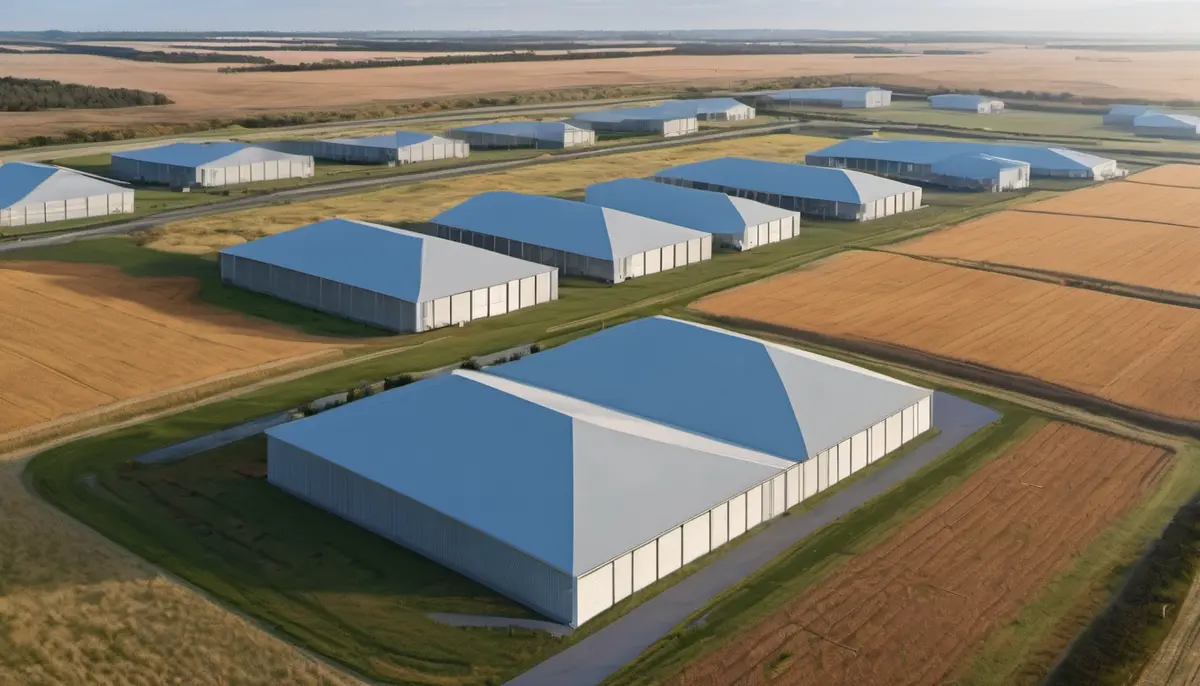
Bell is preparing a CA$50 billion expansion of its data centre in Saskatchewan that would take the site from 300MW to 1.2GW, quadrupling its capacity and making the province Canada's biggest AI hub if it proceeds.
What's actually going on
The existing 300MW campus began construction in April 2026, and Bell expects it to start opening through 2027. The new commitment would add up to 900MW on top, and power generation is likely to account for a large share of the total spend.
That is because Saskatchewan recently introduced rules requiring large data centre developments to bring their own power rather than lean on the local grid. The additional 900MW will have to be self-sourced, and the campus is also set to use closed-loop cooling to cut its resource consumption, both decisions aimed at heading off the local opposition that has slowed projects elsewhere.
Bell's figures suggest 500 to 600 data centre jobs, with further roles in construction, logistics and security across the build phases. The province is now weighing more than 30 development applications, according to August 2026 reporting, and Bell chief executive Mirko Bibic framed the plan as sovereign AI capacity, saying the site would give governments, businesses, researchers and innovators "the secure, sovereign foundation they need to deploy AI at scale and compete globally".
Why you should care
Data centre economics have become an energy story wearing a computing hat. A 1.2GW campus draws roughly what a large power station produces, and Saskatchewan's new rules are the clearest sign yet that provinces are no longer willing to hand over grid capacity for free. Whoever builds the generation also controls how fast any of this can grow.
Our opinion
The eye-catching number is the CA$50 billion, but the interesting one is 900MW of self-supplied power, because that is where the business case either holds or collapses. Building generation next to your own load is unusual for a telecoms company and makes Bell something closer to an energy developer with a data centre attached. In a province with oil, gas, wind and a regulator now insisting that new loads pull their own weight, that is a more durable answer to local opposition than another round of tax-break negotiations. The scepticism belongs on timing. Saskatchewan is evaluating more than 30 applications, and if several proceed, the province will be competing with itself for the same turbines, transformers and tradespeople.