ASUS Ascent QN10 puts an 80 TOPS NPU in a 0.7-litre PC
ASUS says its Ascent QN10 is the first mini PC to clear Copilot+ on an 80 TOPS NPU, and the whole machine fits inside a chassis smaller than 0.7 litres.
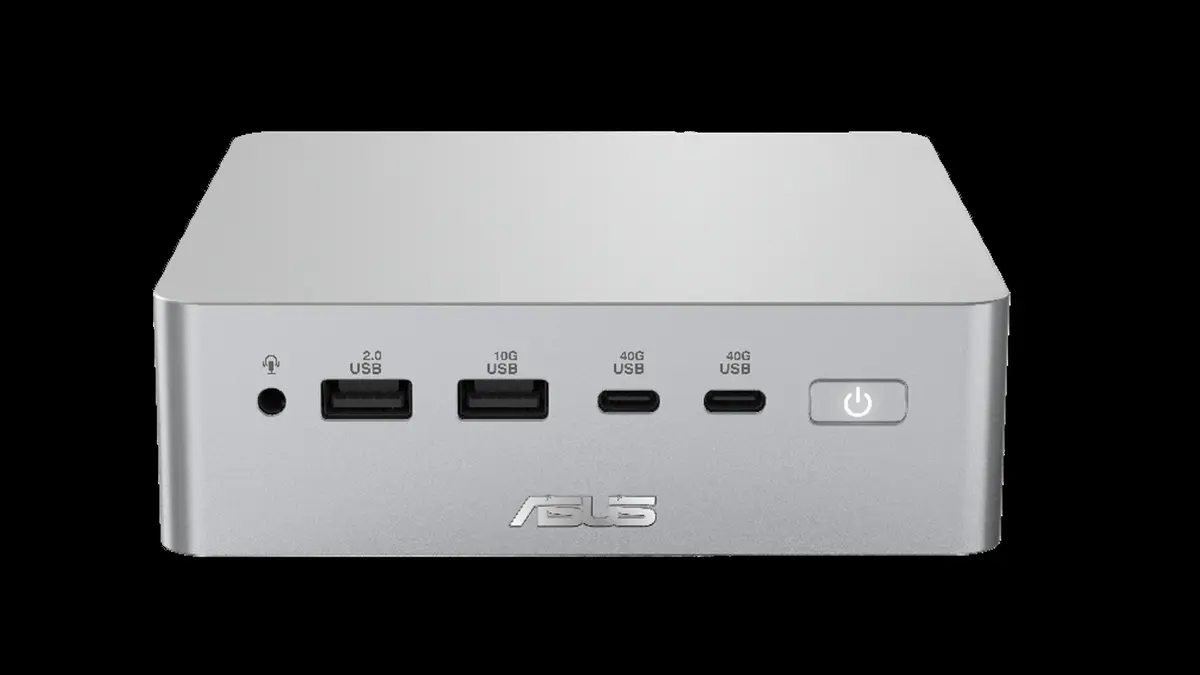
ASUS used 17 September to announce the Ascent QN10, a mini desktop built around Qualcomm's Snapdragon X2 Elite platform, and it came with a badge attached: the first AI mini PC to carry an 80 TOPS NPU. The company says the machine exceeds Copilot+ PC requirements, which matters less than where it sits in the market. This is a desktop-class AI claim in a case small enough to hide behind a monitor.
What ASUS is actually claiming
The headline figure is the 80 TOPS neural processing unit, drawn from Qualcomm's Hexagon NPU inside the Snapdragon X2 Elite. ASUS pairs that with an 18-core Qualcomm Oryon CPU and integrated Adreno graphics that the company says are 2.3 times faster than the previous generation. The chassis measures under 0.7 litres, which ASUS claims is 86 per cent smaller than a conventional five-litre desktop tower, and it delivers all of that without a fan loud enough to notice, at least on paper. ASUS says the Ascent QN10 is aimed at creators, developers, enterprises and edge AI deployments. Notably absent from the announcement are a price and a release date.
Why the size is the interesting part
An 80 TOPS NPU in a laptop is a spec sheet entry. An 80 TOPS NPU in something smaller than a hardback book is an argument about where AI work should happen. Copilot+ features such as live translation, image generation and local model inference are designed to run on the device rather than a server farm, and the case for that is latency, cost and privacy in roughly that order. A box this small can sit on a workshop bench, a studio desk or a factory floor and keep inference local, which is precisely the scenario ASUS is invoking when it talks about edge deployments. Apple has been selling the same idea for years with the Mac mini, and the PC side has spent that time waiting for Arm silicon good enough to answer it.
Security, software and the fine print
ASUS bundles fTPM 2.0 for hardware-rooted keys and credentials, plus Microsoft's Pluton security processor for identity and key protection, which is the combination an IT department wants before it will hand out a fleet of anything. On the software side, the Ascent QN10 can reach Qualcomm's AI Hub, a developer catalogue that ASUS says holds more than 175 pre-optimised models and supports bring-your-own-model and bring-your-own-data workflows. Those are the details that decide whether a small Arm desktop is a curiosity or a purchasing decision. The Snapdragon X2 Elite is a new platform, and every Windows on Arm launch so far has lived or died on how much of a real workload runs native rather than through emulation.
Our opinion
Mini PCs have quietly become the most honest hardware category on the PC side, because you cannot hide a compromise behind a screen hinge or a thin chassis. Eighty TOPS is a number that will look ordinary within a year; the number that decides the Ascent QN10's fate is how many of the applications an office actually pays for run natively on Arm. ASUS's own phrasing gives the game away. It names creators, developers and enterprises rather than consumers, which is the sensible read of a machine with no price attached and a security stack clearly aimed at managed fleets.
That said, the comparison everyone will make is with the Mac mini, and it is not a kind one. Apple has spent a decade and a silicon roadmap making Arm feel free on the desktop, and Windows on Arm is still the platform where a small percentage of software quietly runs at half speed. An enterprise already inside the Microsoft management stack will find plenty to like here, particularly if it wants local inference without sending data anywhere. A household looking for a cheap, silent desktop should wait for a price and a benchmark, in that order. Until ASUS publishes both, the Ascent QN10 is a promising shape rather than a recommendation.
- ASUS announced the Ascent QN10 on 17 September, describing it as the first AI mini PC with an 80 TOPS NPU
- It runs Qualcomm's Snapdragon X2 Elite with an 18-core Oryon CPU and an Adreno GPU ASUS rates 2.3 times faster than the previous generation
- The chassis is under 0.7 litres, which ASUS says is 86 per cent smaller than a conventional 5-litre desktop
- ASUS has announced no price and no on-sale date