Amazfit puts solar panels on both sides of its new watch
Amazfit's new T-Rex Dual Solar is the first AMOLED smartwatch the company says can top up its battery from solar cells in the screen and in a glass-ceramic back plate, for $649.99.
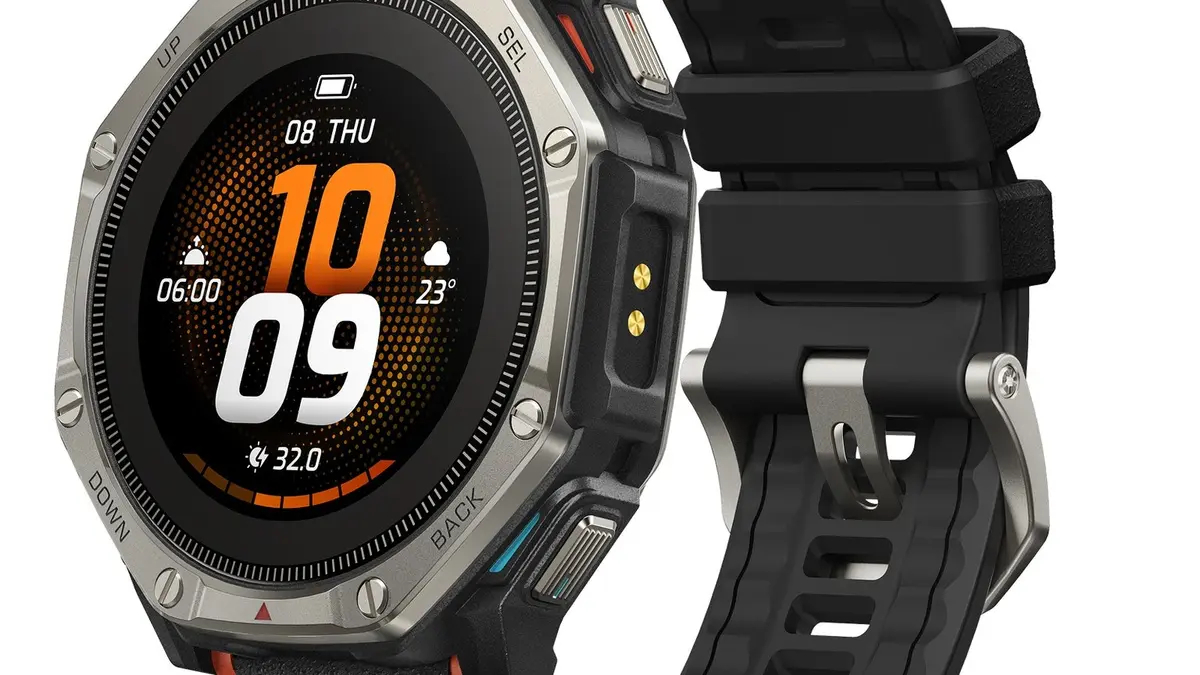
Amazfit has put solar charging on both faces of its newest outdoor watch. The T-Rex Dual Solar collects power through the AMOLED display and through a glass-ceramic back plate, an arrangement the company calls the world's first dual sided solar charging system for an AMOLED smartwatch. It is on sale in Amazfit's US store at $649.99.
What the second surface buys you
Solar smartwatches have always had an awkward geometry problem. A panel in the lens only harvests when the watch face is pointing at the sun, which is roughly never the case on a wrist walking west in the afternoon. Adding a second surface on the underside means one of the two is usually exposed, and the charging trickles in rather than arriving in one burst. Amazfit is careful about what it promises here: the back plate “continuously supplements battery life”, in the company's own wording, rather than replacing the charger. Its listing quotes up to 25 days of battery life, and it does not publish how much of that comes from the sun.
Built for the trail, priced for the top of the range
The rest of the specification is aimed squarely at long days outside. The case is Grade 5 titanium with sapphire crystal over the screen and military-grade durability claims, and the software adds offline maps and route planning, hybrid training tools and LiveShare location tracking so somebody at home can follow a route. That is a similar package to the rugged flagships from Garmin and Suunto, at a price that undercuts both.
Amazfit's US store list started carrying the watch on 22 September, and it now sits at the top of the storefront's new arrivals. The company's global newsroom pages, including its blog, do not yet carry a post about this model.
Our opinion
The solar watch category has been stuck for years on a compromise nobody enjoys: a faintly blue-tinted screen that looks worse than the non-solar version of the same watch. Moving the second panel to the back is the first genuinely new idea the category has had in a while, because it improves harvesting without touching the display. The honesty about it matters too. Amazfit is not claiming the watch runs on sunlight, and 25 days is a real battery figure rather than a solar figure in disguise. What remains unproven is the real-world gain on a cloudy British hillside in February, which is exactly where a dual-sided panel has to justify itself. Buy it as a rugged watch that happens to sip power from the sky, not as a watch that never needs plugging in.