Thales unveils HexaForce, a sovereign AI brain for NATO
The French defence giant has put large language models inside battlefield command, and it is selling sovereignty rather than software.
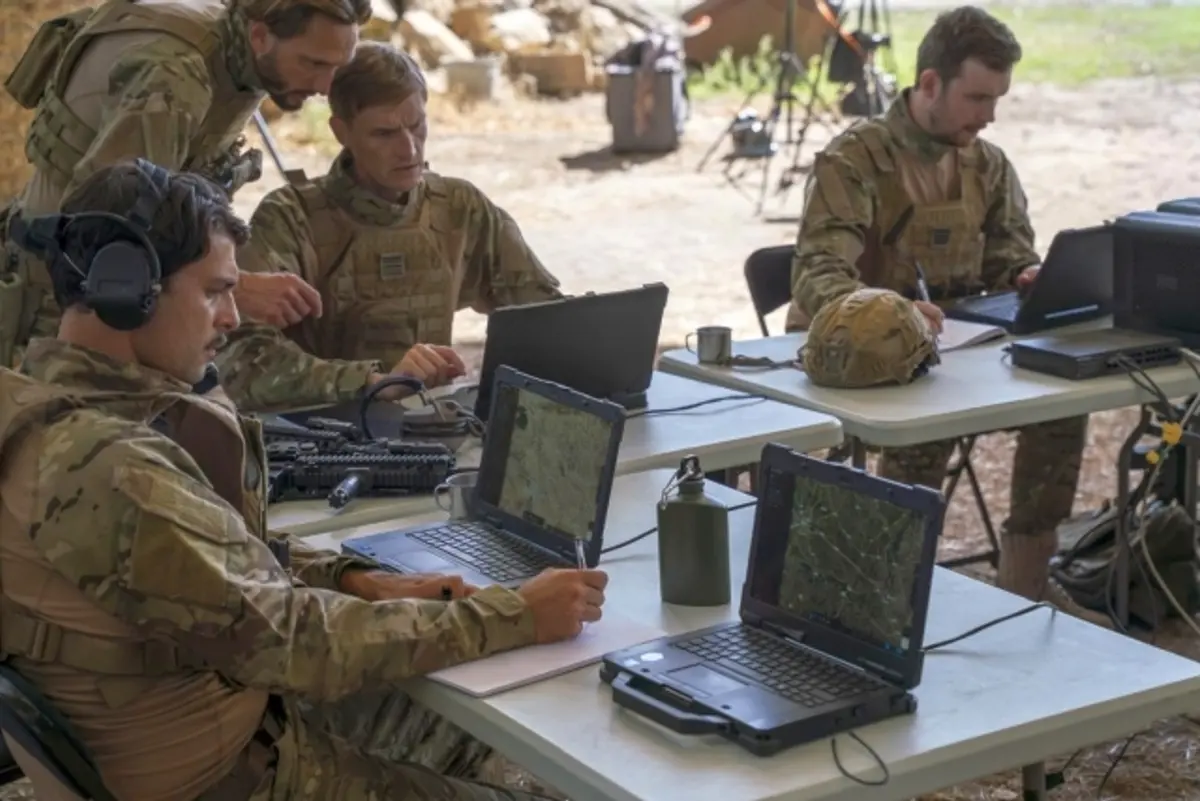
Thales has launched HexaForce, a command-and-control platform that puts artificial intelligence at the centre of military decision-making. The French group announced the system on 17 September, aimed at NATO members and allied nations and sized for high-intensity operations with command requirements covering more than 100,000 personnel.
The platform spans land, air, sea, cyber, space, the electromagnetic spectrum and information operations, and it is built to correlate and prioritise the flood of data coming off sensors, communications systems and open sources. Under the bonnet it uses large language models and agentic AI drawn from cortAIx, the Thales AI accelerator that employs around 800 engineers and data scientists alongside its defence specialists. Thales says trial phases pushed processing capacity from roughly 100 targeting objectives a day to 1,000, and that lessons from Artemis.IA, a data-centric platform working with the French Ministry of Armed Forces since 2023, went into the design.
Interoperability was tested at CWIX 2026, NATO's Coalition Warrior Interoperability eXploration, eXperimentation, eXamination and eXercise, where the alliance checks that different nations' systems can talk to each other. That is a meaningful distinction: passing CWIX shows a system can join a coalition network, not that NATO has bought or deployed it. HexaForce uses open standards and supports Data-Centric Security and Federated Mission Networking, connects to legacy systems from other vendors, and is designed to keep running when communications networks are degraded, which is the claim that matters most to anyone who has watched a battlefield network fall over.
Sovereignty is the sales pitch
Thales is not pretending the American comparison is accidental. HexaForce arrives as European governments look for domestic alternatives to Palantir's Maven Smart System, and Christophe Salomon, the executive vice-president who runs Thales' secure communications and information systems business, put the pitch in procurement terms: some armed forces want a dedicated data platform, others want cross-domain interfaces to link up with allies, and a sovereign system has to be shaped around whichever one a nation needs. The launch follows the company's public call for an international framework on AI development in defence.
Our opinion
The Palantir framing is marketing, but the underlying argument is real. A command system sees where a nation's sensors are, what its units are doing and how it plans to fight, which makes it the least comfortable thing in defence procurement to run on someone else's cloud. That is why Berlin and Paris spent this year arguing about a European alternative, and why Thales can charge a premium for the word sovereign even when the models underneath are the same commodity large language models everyone else is shipping.
The numbers deserve the usual scepticism. Ten-fold gains in targeting throughput come from the vendor, measured in trial conditions, and CWIX is a laboratory rather than a war. The genuinely hard engineering is the unglamorous part, keeping a distributed data architecture coherent when the network is being jammed, and that is also the part no exercise can settle. HexaForce will be judged when a ministry signs an order, not when a press release clears the wires.