Terafab's name fight moves into a Texas federal court
Tesla, SpaceX and SpaceXAI have filed a declaratory judgment action against TERA-print, arguing that the Terafab name does not infringe its TERA-FAB registration.
Tesla, SpaceX and SpaceXAI want a Texas judge to settle a fight over the word Terafab. The three companies filed a complaint for declaratory judgment against TERA-print, LLC in the US District Court for the Western District of Texas on 15 September, asking the court to rule that their planned AI chip factory does not infringe the Illinois firm's TERA-FAB mark.
What the filing asks for
The complaint, filed in the Austin Division and assigned to Judge Andrew B. Davis, seeks a declaration that the Terafab name creates no likelihood of confusion with TERA-print's registered TERA-FAB mark, US Trademark Registration No. 6,295,482, and does not infringe it. Tesla, SpaceX and SpaceXAI also want an order barring TERA-print from asserting infringement theories that cut against that ruling, plus costs and attorneys' fees. A jury trial is demanded, TERA-print has not yet responded, and nothing has been decided.
Two very different machines
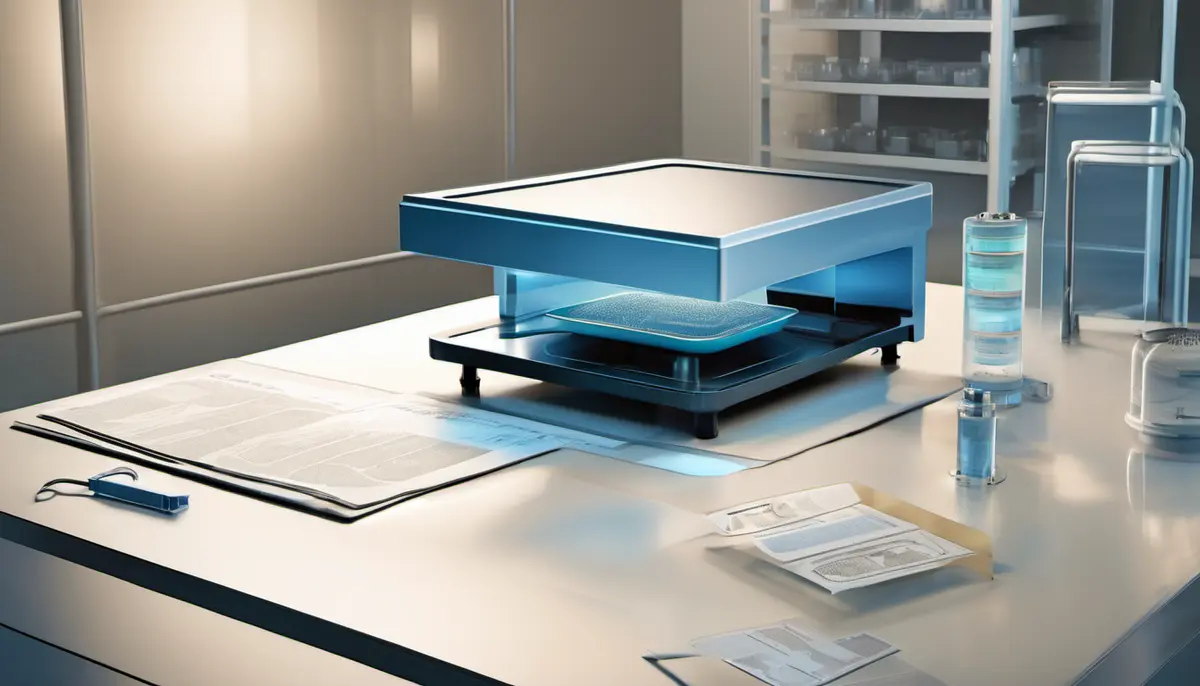
Terafab is the name for a planned 100-million-square-foot factory in Texas that would put chip design, manufacturing, logic, memory and packaging under one roof and produce more than a terawatt of AI compute a year, according to the filing. It has no manufacturing capability and sells no products yet. TERA-print's TERA-FAB line, on the plaintiffs' account, is a desktop nanoprinter that researchers use to draw microscopic patterns, with features of hundreds of nanometres or larger, while the industrial lithography equipment a real fab needs can weigh 165 tons, cost up to $380m and process roughly 200 wafers an hour. Those are characterisations in a lawsuit, not findings.
The timing argument at the centre of it
Tesla filed three Terafab applications on 18 May 2026, covering a stylised mark, a Tesla Terafab mark and a standard-character mark, with priority claimed from Jamaican filings on 30 March. TERA-print's cease-and-desist letter landed on 23 May and a second letter on 10 June threatened suit. The filing leans hard on 22 May, when TERA-print applied to widen its own coverage to semiconductor materials, silicon chips, photolithography and AI design services - four days after Tesla's applications and one day before its own letter. Six meetings between the two sides' lawyers, on 18, 23 and 25 June, 31 July and 14 and 24 August, went nowhere, which is why this is now a court case rather than a licensing discussion.
Our opinion
The interesting part here is not the word, it is the paperwork. A confusion claim turns on what customers actually see, and nobody shopping for a $380m lithography tool is going to wander into the market for a desktop nanoprinter by accident - different buyers, different budgets, different rooms. That should be the whole case. TERA-print's 22 May application is the detail worth watching, because expanding a decade-old mark into silicon chips and AI development days after a rival files looks less like protecting a brand than positioning for a settlement. None of which makes Tesla the sympathetic party: taking a name a small Illinois outfit has traded under since 2021 and then asking a court to bless it is a very large company using very good lawyers to remove a nuisance. The useful outcome would be a quick ruling rather than three years of motions, because Terafab is a factory that does not exist yet, and the AI build-out is not going to wait on a word.