NVIDIA halves Saudi Arabic speech errors with a Nemotron fine-tune
An NVIDIA recipe cut word error rate on Najdi and Hijazi Arabic from 55% to about 30% while English transcription slightly improved rather than slipping.
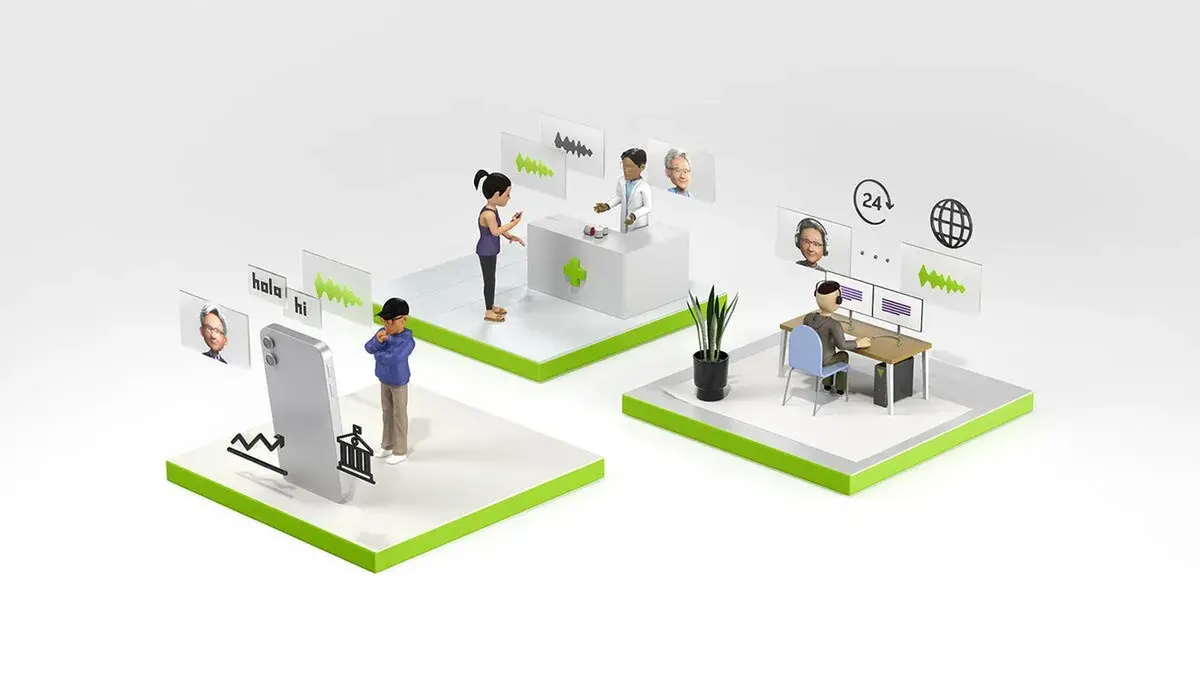
NVIDIA has published a worked example of adapting its Nemotron 3.5 ASR speech model to a regional dialect, and the numbers are refreshingly specific. Fine-tuning on Saudi Najdi and Hijazi speech cut word error rate on the target test split from 55.05% to 29.96%, while English transcription improved slightly, from 11.04% to 10.42%.
Why a 40-language model still needs work
Nemotron 3.5 ASR handles multilingual streaming transcription across 40 language-locales, Arabic included. The argument in the post is that broad benchmark coverage is not the same as deployment coverage: a model can be fluent in Modern Standard Arabic and English yet still struggle with Najdi and Hijazi speech, or with the recording conditions of a call centre. Fine-tuning on the target dialect alone risks weakening everything else, which is the problem the recipe sets out to solve.
The recipe, step by step
The pipeline runs on the NVIDIA NeMo framework and starts with deliberately light curation. NVIDIA kept 103,559 of 125,490 utterances, or 133.7 hours and 82.5% of the starting set, using NeMo Curator to standardise audio and filter badly degraded clips. The stated goal is to remove structurally broken examples, not to throw away hard accents because the base model scores them poorly.
Three changes did the heavy lifting: replay mixing to stop the model forgetting its pretraining, duration-based bucketing to cut padding in training batches, and partial unfreezing of the encoder. The replay mix was 10% FLEURS data, split seven parts English to three parts Arabic, against 90% Saudi speech. The run took 12,000 steps and about 4.5 hours on two RTX PRO 6000 Blackwell workstation GPUs.
Where the remaining accuracy is
A full fine-tune of all 24 encoder layers gave the lowest error rates, at the cost of 230.4 million trainable parameters against 407.6 million frozen; the shorter partial unfreeze cost 2.4 points on error rate, which NVIDIA frames as a trade for thinner corpora or tighter memory. A second lever needs no retraining at all: widening the attention context from the three-frame streaming default to 13 lookahead frames and switching to beam-8 decoding took another 2.71 points off word error rate, at roughly 800 milliseconds of extra buffering that suits batch work such as call archives and meeting recordings.
From transcription to who spoke when
NVIDIA also points at Nemotron 3 Diarization, released alongside the recipe, which extends the same pipeline to speaker-attributed transcription for up to eight speakers by aligning speaker boundaries with ASR timestamps.
Our opinion
The interesting thing here is not the 25-point error-rate drop, impressive as it is, but that NVIDIA shipped the failures alongside it. The post says plainly that replay only protects what its data represents, that partial unfreezing needs re-tuning when the mix changes, and that the workflow is not evidence for every Arabic dialect. That kind of honesty is rarer than it should be in vendor research write-ups, and it is also the most useful part for anyone planning the same exercise. Dialect coverage is where speech recognition quietly fails the people who need it most, and a documented recipe with a stated error budget is worth more than another leaderboard point.