Google.org backs Jigsaw’s AI civic listening tools
A new Jigsaw Partner Program puts open-source sensemaking tools in front of local government at no operational cost.
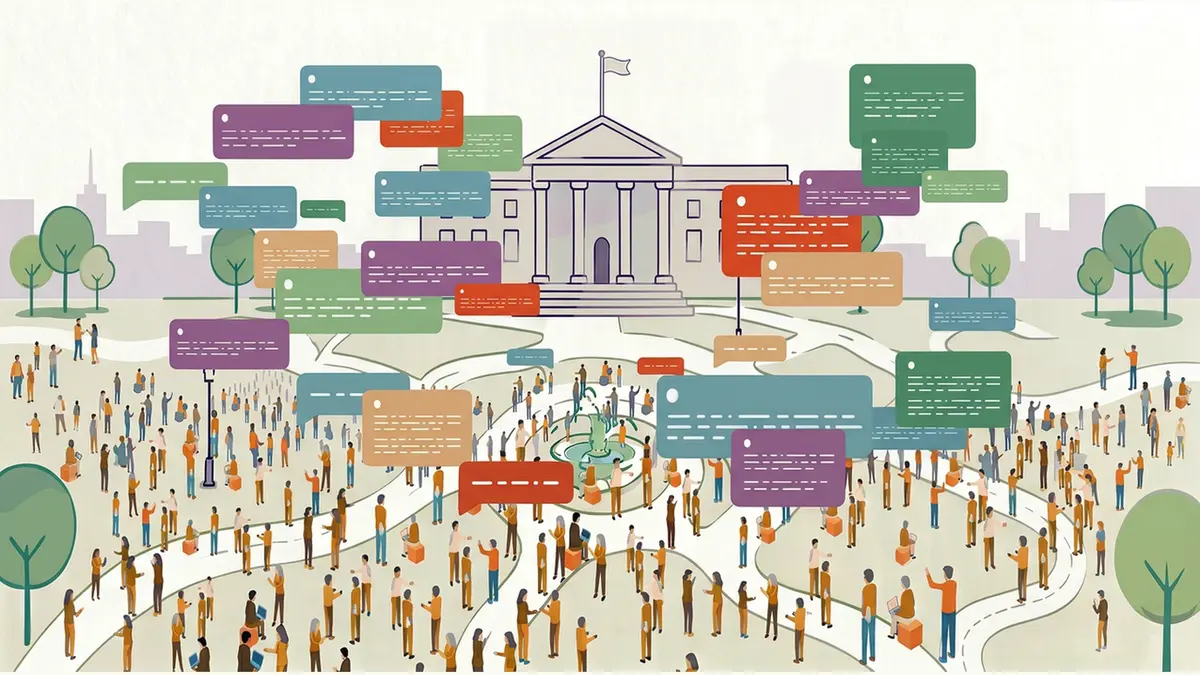
Google.org is putting money behind Jigsaw’s Sensemaking AI so that local governments can use it without paying for it. The new Jigsaw Partner Program, announced on Google’s own blog, gives localities access to a suite of open-source tools that turn large volumes of community feedback into something a council can act on.
Jigsaw, a technology incubator inside Google, launched the tools a year ago to help public leaders deliver policies that reflect what their communities actually need. The partner program is the attempt to get them out of the pilot stage and into ordinary civic practice, with a collaborative fund from Google.org and philanthropic partners underwriting the cost.
What Sensemaking AI does
The pitch is scale rather than novelty. A council consultation normally produces a few hundred submissions, a spreadsheet and a headache; Sensemaking AI is built to read thousands of pieces of feedback at once and surface the themes in them. Through the partner program, localities can run large-scale civic conversations at no operational cost, which is the part that matters for the small municipalities most likely to benefit.
That also sets up the obvious question, which the announcement does not really answer: whether a summary of thousands of opinions is a clearer picture of a community or a tidier one. Any tool that compresses public comment into themes is making an editorial judgement about what counts as a theme.
Where it is already running
Bowling Green, Kentucky is the headline case. Input from 8,000 residents informed a 25-year growth plan, and similar work is under way in Chattanooga, Tennessee, in Riverside, California and in Kitchener, Ontario. Google.org is joined in the fund by philanthropic institutions including Bloomberg Philanthropies and the David and Lucile Packard Foundation, who will support efforts to expand the tools in municipal contexts.
The announcement is signed by Omar Medina, a senior global portfolio manager at Google.org, and Yasmin Green, chief executive of Jigsaw, who invite governors, mayors and local officials to express interest in using Sensemaking AI through the partner program.
Our opinion
Civic consultation is genuinely broken in a specific and boring way: the people who turn up to a public meeting are not the people who will live with the decision for the next 25 years, and everyone involved knows it. A tool that can read 8,000 submissions instead of 200 is attacking the right problem, and the fact that Google is funding it rather than selling it removes the most cynical reading available.
The harder question is auditing. When a planner says the residents want denser housing near transit, the evidence is now a model’s reading of a comment pile that no human has read end to end. That is still better than a hundred people in a hall, but only if the outputs are published and challengeable by the people they describe. Open-source tools help; open methods would help more.