Deliveroo and Coco bring delivery robots to five UK cities
Coco's pavement robots arrive first in Canary Wharf, then Milton Keynes, Leeds, Stockton-on-Tees and Nottingham.
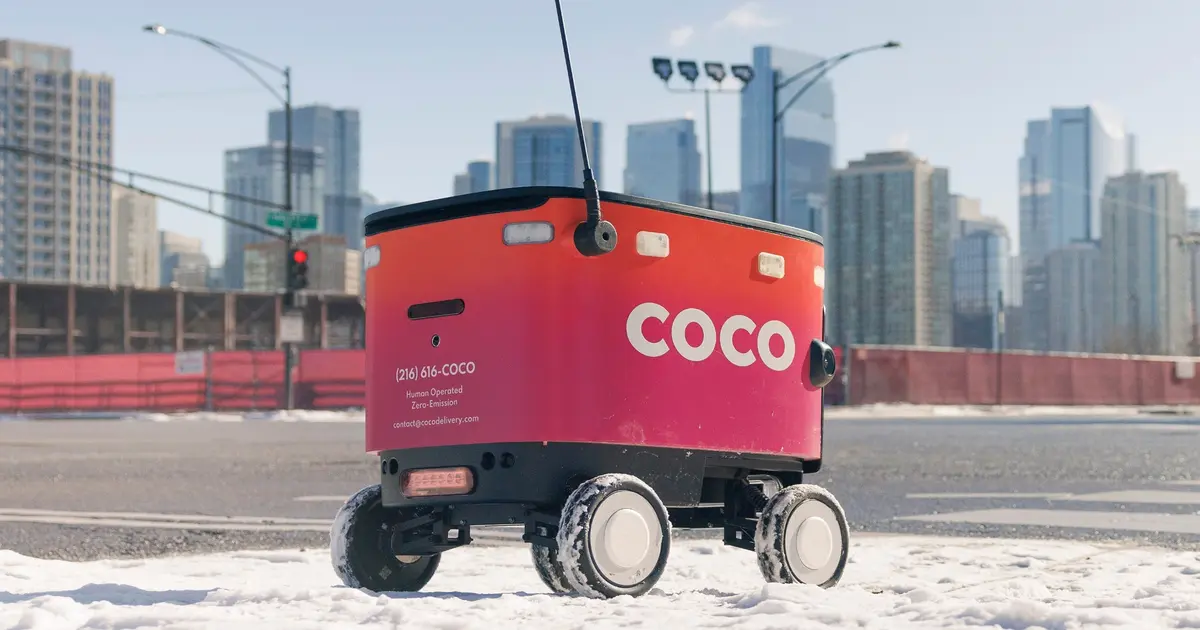
Deliveroo has partnered with Coco Robotics to bring pavement delivery robots to five UK locations, in what the company calls its first use of autonomous delivery vehicles in Britain.
The rollout begins in London's Canary Wharf this October, before moving to Milton Keynes, Leeds, Stockton-on-Tees and Nottingham “in the coming weeks and months”. Coco says it is also in talks with other councils across London and the wider UK.
Early customers will be able to order from merchants such as Patty&Bun, the family-run bakery Signorelli and the Wood Wharf restaurant Beam, with Ole & Steen, Royal China and Din Tai Fung set to follow as the service area grows. In Milton Keynes, Smoke and Pepper is among the first names lined up.
Coco's machines travel at walking pace and are fully electric, the company says, and are aimed at short urban trips rather than replacing riders. Deliveroo stresses that the bulk of orders will still go to its human rider network.
Each robot's onboard sensors and cameras also feed a safety partnership with BlindSquare, a navigation app for blind and partially sighted people. Coco will share real-time data on pavement hazards its robots detect so the app can warn pedestrians about obstacles ahead. Coco is promising local investment in depots, charging and skilled jobs across each region.
Our opinion
Robot delivery has been promised for a decade and delivered in dribs and drabs, so the more interesting detail here is not the hardware but the hazard data. Britain's pavements are already a daily obstacle course of parked vans, e-scooters and uneven kerbs, and blind and partially sighted pedestrians absorb the worst of it. If Coco's robots genuinely sharpen BlindSquare's warnings, that is a public good no marketing budget can fake. The risk is that five cities quietly become two once the novelty fades: Deliveroo's own cautious framing, with riders still handling most orders, hints that the unit economics are not yet proven. Cheap, quiet, zero-emission deliveries are worth having — but only if the robots stay out of the way of the people who need the pavement most.