Brain activity patterns could help sharpen LLM deductive reasoning
Researchers at Peking University and Tsinghua University have found that large language models and the human brain encode deductive reasoning in partially similar ways — and that brain activity patterns can be used to steer LLM representations and improve their logical reasoning.
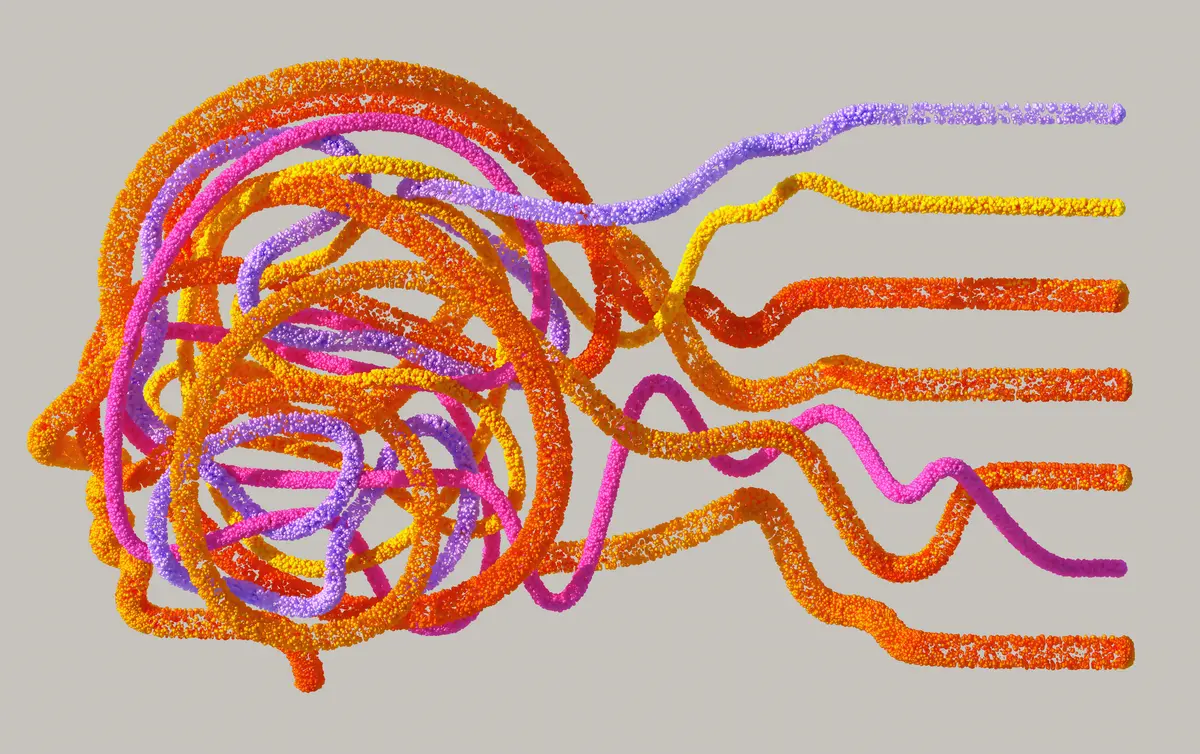
Researchers at Peking University and Tsinghua University have found that large language models and the human brain encode deductive reasoning in partially similar ways — and that brain activity patterns can be used to steer LLM representations and improve their logical reasoning.
The study, published in Nature Machine Intelligence, compared fMRI recordings of human participants solving deductive reasoning problems with the internal activations of ten open-source LLMs, ranging from 1.5 to 72 billion parameters, presented with the same linguistic stimuli.
What the researchers did
The team extracted neural signals from brain regions associated with reasoning rather than only language processing, then measured how well each model’s internal representations could predict brain representations through a linear mapping — a standard NeuroAI approach known as neural predictivity. The results suggest partial alignment: LLMs and reasoning-linked brain regions encode aspects of deductive tasks in similar, but not identical, ways.
From correlation to guidance
The researchers went further, building a brain-guided framework that steers LLM internal representations using brain activity patterns. Tested across the ten models, the approach improved performance on deductive reasoning tasks, with improvements that generalised and complemented conventional language-based supervision.
First author Mingqing Xiao told Tech Xplore that the work was motivated by the observation that language and thought appear dissociable in the human brain, while LLMs learn almost entirely from language yet increasingly display human-like cognition. Future work will examine additional cognitive abilities and neural recording modalities with higher temporal resolution than fMRI.
Our opinion
This is a satisfying result precisely because it is modest. The models are not “thinking like humans” — they are partially aligned, and the differences matter. But the steering result is the real news: if brain signals can nudge a model’s internals toward more robust reasoning in ways text supervision cannot, NeuroAI stops being a comparison exercise and starts being an engineering tool. The caveat is fMRI itself: a slow, noisy signal from small participant pools. Whether brain guidance survives cleaner, faster neural data at scale is the question that decides whether this becomes a technique or a curiosity.
- The study compares fMRI data from reasoning tasks with activations of ten open-source LLMs (1.5–72B parameters)
- LLM and brain representations of deductive reasoning are partially aligned, not identical
- A brain-guided steering framework improved LLM deductive-reasoning performance across all ten models
- Improvements generalised and complemented language-based supervision
- The paper is published in Nature Machine Intelligence (DOI: 10.1038/s42256-026-01278-w)