NVIDIA and Google back a flexible-AI grid alliance
Emerald AI, Google and NVIDIA have launched the AI Energy Management Alliance, a coalition that wants AI data centres to cut their grid draw on demand in exchange for faster connections.
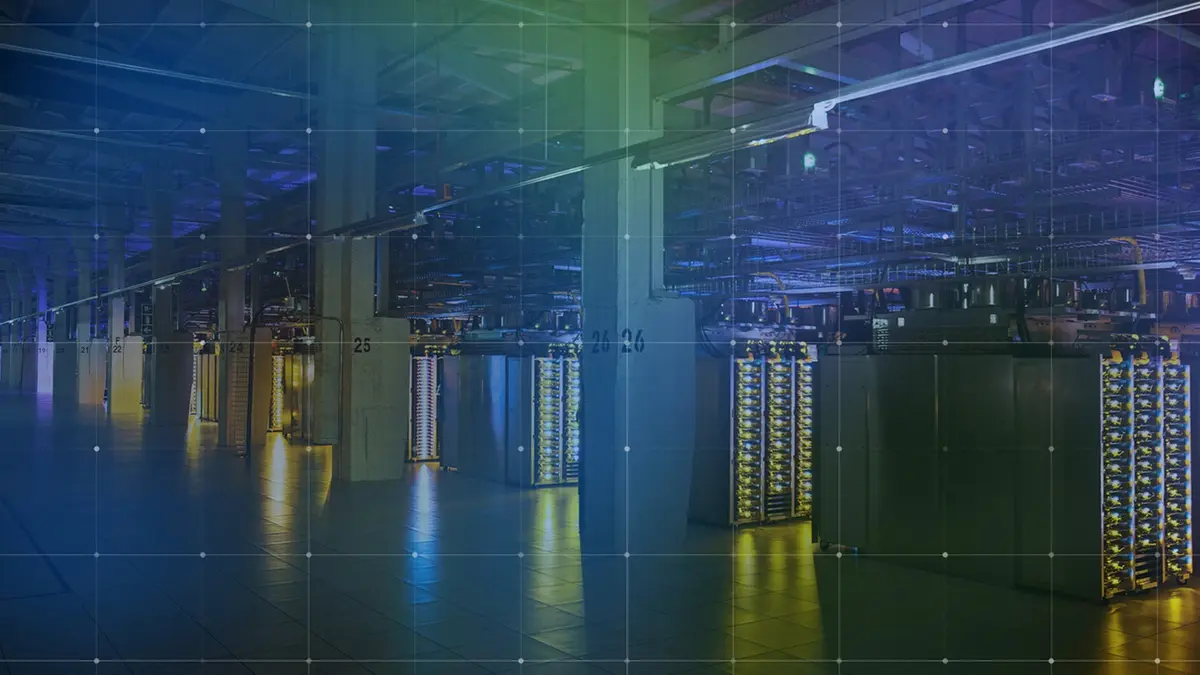
Emerald AI, Google and NVIDIA have launched the AI Energy Management Alliance (AEMA), a coalition built around a single bargain: AI data centres will agree to dial their power use up and down on demand, and in return they want to connect to the grid faster than the current queue allows. The alliance was announced on 16 September and describes itself as a first-of-its-kind group working on data centres that manage their electricity draw in response to grid conditions.
Power is now the bottleneck, not silicon
The pitch is straightforward once you know how interconnection works. Grid operators size connections for facilities with flat, predictable demand, because that is the load they have always had to plan for. An AI campus is nothing like that: it is a huge, spiky consumer that can arrive on a network in a single step and sit in a queue for years. AEMA's argument is that a data centre able to shift workloads, discharge on-site storage, fall back on paired generation or shed load during a system emergency is not an inflexible burden but a controllable resource, and should be treated as one at the interconnection desk.
What the alliance actually commits to
AEMA says it is technology-neutral and performance-based, focused on measurable service, such as response speed, duration, predictability and behaviour during an emergency, rather than on any particular hardware. Its principles call for ride-through, curtailment and contingency-response obligations to be defined before a facility connects, for standardised technical requirements, performance metrics and operational data sharing, and for faster, risk-adjusted pathways for customers that make credible and verifiable flexibility commitments. Interconnection costs, in its framing, should reflect the actual system impact, including upgrades that flexibility avoids.
The numbers on the alliance's own site are ambitious. AEMA claims that half of the power system's capacity goes unused through the year, and that making data centres moderately flexible can unlock 100GW from the existing grid, which it equates to enough power for 100 million homes. It also cites a figure of 3.4% lower utility rates for every 10% improvement in grid utilisation, and demonstrations that cut consumption by a third in under a minute in emergency scenarios. Those are the alliance's figures, not an independent assessment, and they are doing the political work of the project.
Who is in the room
The membership pitch is deliberately broad: AI platforms, infrastructure providers, data-centre operators, technology companies, power producers, utilities and regional grid operators. AEMA says it has relationships with FERC, the Department of Energy, federal agencies and state regulators, and that it coordinates policy on interconnection, transmission and large-load rules. That is the level where this will be decided, because flexibility obligations only matter if a regulator writes them into a connection agreement.
The alliance builds on work NVIDIA and Emerald AI had already started. In March they announced a collaboration with AES, Constellation, Invenergy, NextEra Energy, Nscale Energy & Power and Vistra on AI factories designed to act as grid assets, using NVIDIA's Vera Rubin DSX reference design and its DSX Flex software library, with Emerald AI's Conductor platform orchestrating the flexibility. Google's arrival turns a vendor project into something closer to an industry position.
Our opinion
Nobody should mistake this for altruism. Flexible demand is a genuine engineering answer to a genuine constraint, and the companies funding AEMA are the ones who need power connections fastest. But the bargain is a fair one: a campus that can drop a third of its draw in under a minute is worth more to a grid than a campus that cannot, and pricing that difference honestly is better than pretending every large load is identical. The mismatch AEMA describes, interconnection rules written for steady industrial demand meeting load that can now be scheduled, is not an American invention. It is a feature of every grid built before anyone thought computing would become a bulk electricity customer.
The test will be in enforcement rather than ambition. Performance-based and technology-neutral is the right shape for this, but only if the obligations are in writing before the connection is energised, if the metrics get published rather than summarised, and if a data centre that misses its commitments faces a cost. The sector has a habit of promising flexibility in press releases and delivering static load in practice. AEMA's members are asking regulators to trust them with faster connections; the least they can offer in return is data anyone can check.
- Emerald AI, Google and NVIDIA launched the AI Energy Management Alliance (AEMA) on 16 September 2026
- The alliance wants ride-through, curtailment and contingency-response obligations defined before a facility connects
- AEMA claims flexible data centres can unlock 100GW from the existing US power system