Microsoft Copilot gains Home, Code and Autopilot
Microsoft is reshaping Copilot around a new Home hub, a prompt-driven Code workspace and the autonomous Autopilot assistant.
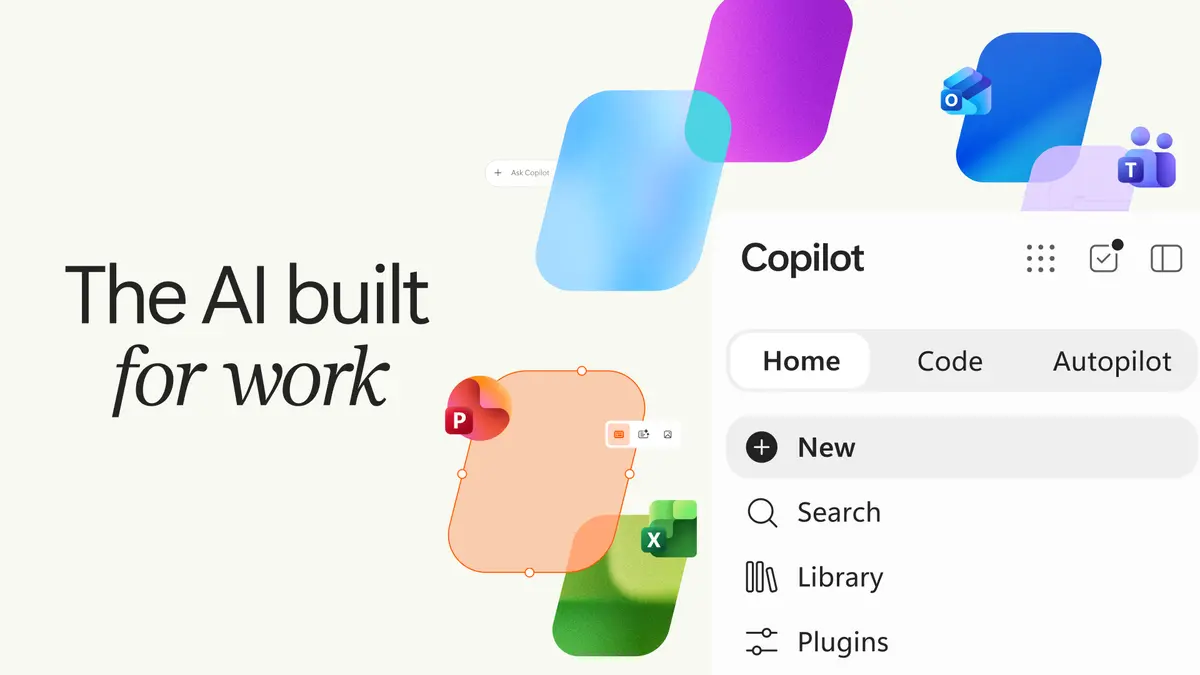
Microsoft is rebuilding Copilot around three ideas: a home for everyday work, a coding surface that lets more people make software, and an autonomous assistant that can keep projects moving. The company announced the new Home, Code and Autopilot capabilities on 25 September, alongside a video explaining where its AI-powered work platform is heading.
Home becomes the new starting point for Copilot, bringing Chat and Cowork together while adding Office in Copilot. Microsoft says users will be able to pick up recent work, receive suggestions and create or edit real Word documents, Excel workbooks and PowerPoint presentations without rebuilding context between apps. The company says the wider Office experience will also offer model selection, specialised Skills and more visibility into changes made in Excel.
Code turns prompts into working tools
Code is aimed at people who need a small tool rather than a traditional software project. Microsoft describes a workflow in which users can explain an app, tracker, dashboard, automation or internal workflow in natural language, then let Copilot choose an approach and build it. The output can include desktop widgets, interactive dashboards and cloud-hosted internal apps that teams can share.
The company says Code uses the same underlying technology as GitHub Copilot, runs in a sandboxed environment and can be hosted within an organisation’s tenant. It is scheduled to roll out to Microsoft’s Frontier programme at the end of September, with broader availability to follow. Microsoft is also introducing Copilot Managed Runtime so code created in Copilot can run inside a company’s Microsoft 365 environment under IT governance.
Autopilot is the more ambitious bet
Autopilot, previously called Scout, is presented as a digital teammate rather than a chat window. Users give it a name, role and goal, and Microsoft says it can monitor channels, follow up on threads, handle recurring work and resume a project later. It can appear in Teams, Outlook, chats, channels and documents, with permissions, audit and governance attached to the organisation’s existing environment.
Microsoft says the new Copilot is rolling out through the Frontier programme, with additional features arriving continuously. Its announcement also points to future capabilities including Today, a proactive command centre for mail, calendars, Teams threads, meetings and tasks. Availability, licensing and the precise limits of each feature will matter more than the launch language once customers can put the tools through ordinary work.
Our opinion
Home is the sensible part of this announcement: people do lose time hunting for the thread, file or half-finished task that matters. Code is the intriguing part, because turning a plain-English request into a small, governed tool could make internal software less dependent on an already overloaded development queue. Autopilot is the claim that needs the hardest proof. An assistant that can act across a tenant is useful only when its boundaries are clear, its memory is inspectable and its mistakes are easy to unwind. Microsoft has supplied the pitch; the rollout will decide whether this is a genuinely better way to work or simply a larger surface for Copilot to occupy.